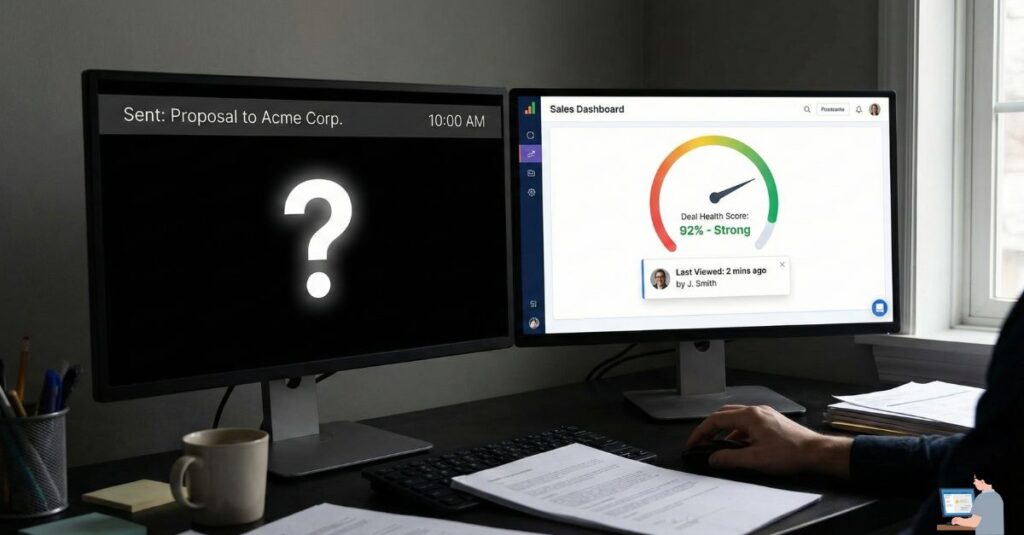
It is the loneliest feeling in sales. You spend three days crafting the perfect proposal. You check the pricing twice. You format the PDF until it looks beautiful. You hit Send. You lean back and think, “This is the one.”
Monday passes. Silence. Tuesday passes. You send a polite follow-up. “Just checking in!” Wednesday passes. Nothing.
You have entered the Proposal Black Hole. The client hasn’t said “No.” They haven’t said “Yes.” They have just vanished. You are stuck in emotional limbo. You mark the deal as “Pending” in your CRM, but deep down, you feel that familiar knot in your stomach.
The worst part isn’t losing; it’s not knowing you’ve lost.
In this guide, we will turn on the lights. We will show you how Predictive AI acts as a radar in the black hole, telling you exactly which deals are dead and which ones are just sleeping—so you never have to guess again.
1. The “48-Hour Rule”: The Science of Silence
First, let’s define the reality. A “Dead Deal” isn’t always a hard “No.” It is often a deal where momentum has reached zero.
We often lie to ourselves. We say, “They are probably just busy.” But AI doesn’t lie. It follows the 48-Hour Rule of Sales:
If a prospect does not engage with your proposal or reply to your follow-up within 48 hours of receipt, the statistical probability of closing drops by 50%.
The Insight: In the modern economy, Urgency = Value. If they aren’t reading it, they aren’t prioritizing it.
2. How AI “Predicts” the Future (Digital Body Language)
Salespeople often ask, “Can AI actually predict if a sale will happen?” The answer is: AI cannot see the future, but it can read Digital Body Language.
When you send a standard PDF attachment, you are flying blind. You don’t know if they opened it, printed it, or deleted it. But when you send a Web-Based Proposal (using AI tools like Highspot, Qwilr, or PandaDoc), the AI tracks every micro-interaction.
The “Truth Serum” Metrics:
AI looks for three specific signals to calculate your Deal Health Score:
- The “Pricing Hover”: Did they spend 4 minutes staring at the “Enterprise Plan” page? (This indicates High Intent/Budget Consideration).
- The “Forward” Signal: Did the document get opened by 3 new IP addresses in a different city? (This is a massive Buying Signal—it means they forwarded it to the CEO or CFO).
- The “Ghost” Open: Did they open it, scroll for 10 seconds, and close it? (This is a “Dead Deal” signal—they looked for the price, found it too high, and left).
Action Step: Stop asking “How do you feel about this deal?” and start looking at the Engagement Score.
- Score 90: They read the contract 5 times today. Call them now.
- Score 10: They haven’t opened it in 7 days. Archive it.
3. The “Lazarus” Effect: Can AI Bring Back the Dead?
Sometimes, a deal looks dead, but it’s actually a “zombie”—it can be revived with the right spark. In sales, we call this Automated Re-engagement.
The AI Wake-Up Call: Imagine a “Dead Lead” from 6 months ago suddenly visits your pricing page.
- Human Reaction: You don’t notice. You are busy closing new deals.
- AI Reaction: It instantly flags the activity in your CRM (like Salesforce or HubSpot) and drafts a personalized email: “Hey John, saw you were checking out our new pricing tiers. We actually just updated that feature you asked about last year. Want a quick peek?”
The Result: The dead deal resurrects. This is how you predict sales based on historical data—by monitoring the graveyard for signs of life.
Bonus Strategy: The “Trojan Horse” Pricing Page
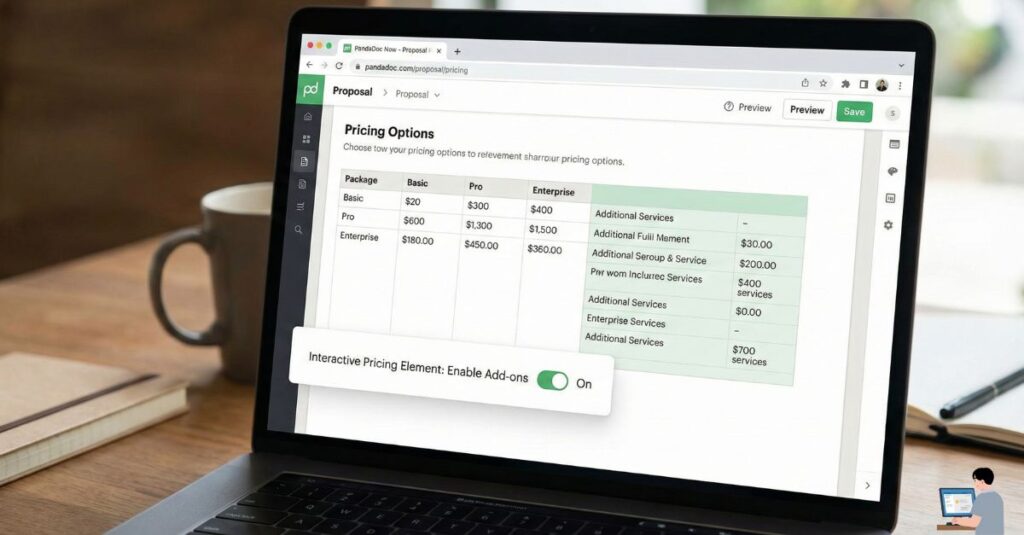
Most salespeople send a static PDF with a price at the bottom. This is a mistake. Smart deal-makers use “Interactive Triggers” inside the proposal.
The Strategy: Instead of listing a flat price of “$10,000,” insert an interactive toggle or slider inside the web-based proposal (e.g., “Slide to add more users” or “Toggle to see Annual Discount”).
Why this works:
- It Forces Engagement: The client must interact to see the final number.
- It Reveals Budget: If AI sees them sliding the bar down to the “Basic” tier, you know they are price-sensitive before you get on the call. You can prepare your negotiation strategy instantly.
4. The Cost of Hope: Why You Must Let Go
The most expensive thing in business is not a “No.” It is a “Maybe.” Keeping a dead deal in your pipeline costs you three things:
- Mental Energy: You waste hours worrying and writing “checking in” emails.
- Forecast Inaccuracy: You tell your investors you will make $100k, but $40k of that is “Ghost Money.”
- Opportunity Cost: Every minute you spend chasing a ghost is a minute you aren’t spending on a real buyer who is ready to say “Yes.”
The Solution: Use AI to be ruthless. If the AI Probability Score drops below 20%, archive the deal. Tell yourself: “I am not losing a deal. I am gaining my time back.”
FAQ: The Predictive AI Reality Check
Q: Can AI predict if a deal will definitely fail?
A: AI analyzes “decay rates”—how quickly communication slows down. If a client usually replies in 2 hours but now takes 4 days, AI flags this as a 90% Failure Risk. It doesn’t predict the future; it predicts the pattern of failure so you can stop wasting resources.
Q: How accurate is AI sales forecasting compared to humans?
A: Humans are optimistic; AI is realistic. A human sees a “Maybe” and thinks “50% chance.” AI sees “No reply in 5 days” and calculates “12% chance.” In almost every study, AI forecasting is more accurate because it removes emotion from the math.
Q: What is the best AI tool for proposal tracking?
A: There is no single “best” tool, but leaders in this space include Gong (for analyzing calls), Clari (for revenue forecasting), and PandaDoc/Highspot (for proposal analytics). The best tool is the one that integrates seamlessly with your CRM.
Q: How do I stop “Projected Sales” from being wrong?
A: Stop using spreadsheets. Use an AI tool that calculates Weighted Pipeline.
- Manual: “I have $100k in the pipe.”
- AI Weighted: “You have $100k, but based on the ‘Digital Body Language’ of these clients, your Real Projected Revenue is actually $32,000.”
Conclusion: Stop Chasing Ghosts
The “Proposal Black Hole” is only dark because you are closing your eyes. AI turns on the light.
When you see the data—when you see that they forwarded your proposal to the Legal Team, or that they haven’t opened it in weeks—you regain your power.
- You stop begging for attention.
- You stop feeling anxious.
- You start focusing on the people who actually want to work with you.
Don’t let a PDF determine your self-worth. Let the AI track the document, while you track the relationship.