It usually starts the same way. You need to edit a PDF urgently. You find a tool, sign up for the “7-Day Free Trial,” enter your credit card details, and finish your task. You tell yourself, “I’ll cancel this before Monday.”
Life happens. You forget. Three years later, you spot a $19.99 charge on your statement. You have paid over $700 for a tool you used exactly once.
This is a “Zombie App.” It is dead to you—you don’t use it, you don’t need it—but it keeps walking, eating your brains (and your bank balance) every single month.
In the digital age, the biggest leak in your budget isn’t lattes or avocado toast. It is Unused SaaS Subscriptions.
In this guide, we will perform a “Zombie Audit” to identify, isolate, and eliminate these financial parasites. Plus, in our Bonus Phase, we will give you the exact prompts to train ChatGPT to do this for you automatically.
Phase 1: The Diagnosis (The “Shadow IT” Problem)
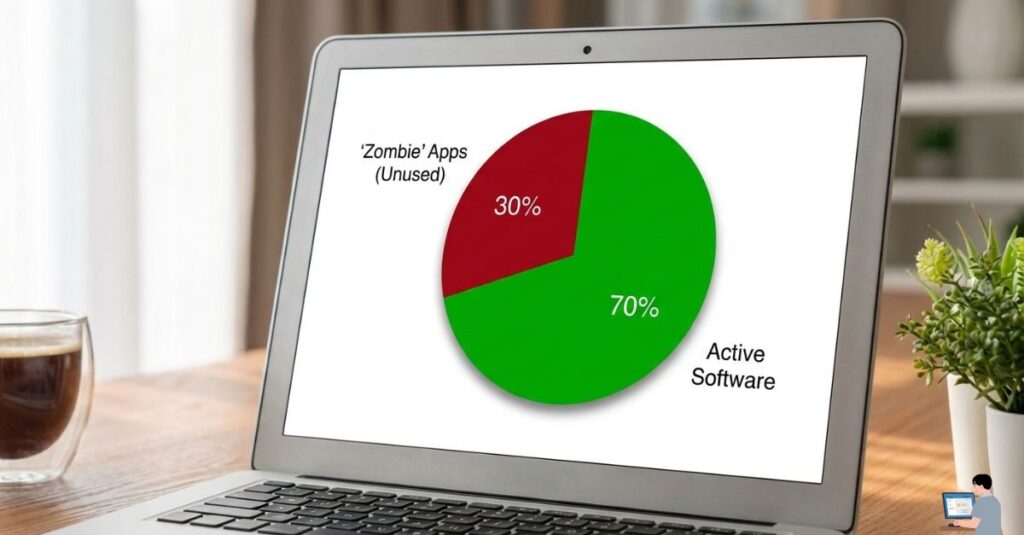
You aren’t alone. Research suggests that the average small business wastes 30% of its software budget on unused licenses. In the industry, we call this “SaaS Sprawl.”
1. The “Shadow IT” Leak
This happens when employees buy software on their own company cards without telling the IT department. You might have three different teams paying for three different project management tools (Asana, Monday, and Trello) when you only need one.
2. The “Ghost Seat” Problem
You bought 50 seats for your Salesforce or Slack account, but you only have 35 active employees. You are paying for 15 ghosts every month.
The Definition of Waste: In SaaS (Software as a Service), “waste” is defined as any recurring payment for a tool that has not been logged into for 90+ days.
Phase 2: The Manual Audit (For Solopreneurs)
If you are a freelancer or small business owner, you don’t need expensive enterprise software to fix this. You need a Saturday morning and a spreadsheet.
Step 1: The “Bank Feed” Scrub
Do not just check your phone’s home screen. Deleting an app icon does not cancel the subscription on the backend.
- Action: Export your last 3 months of bank and credit card statements to Excel/CSV.
- The Filter: Search for keywords like “SaaS,” “.com,” “Recurring,” “Digital,” or specific vendor names like “Adobe,” “Zoom,” or “Dropbox.”
- The Shock: You will likely find 3-4 subscriptions you thought you cancelled years ago.
Step 2: The “OAuth” Check (The Secret Weapon)
Most of us sign up for apps using “Sign in with Google” or “Sign in with Facebook.” This creates a digital paper trail that most people ignore.
How to check:
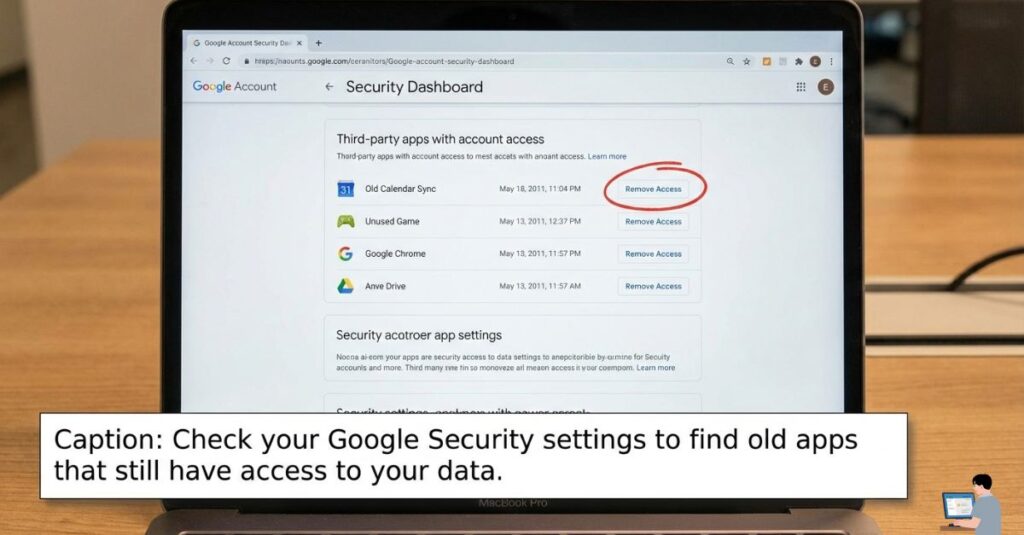
- Go to your Google Account.
- Select Security > Your connections to third-party apps.
- The Purge: This list reveals every app you have ever granted access to. If you see a “Random PDF Tool” from 2021, revoke access immediately and check if they are still billing you.
Phase 3: The AI Audit (For Growing Companies)
If you run a company with 10+ employees, checking statements manually is impossible. This is where AI Finance Automation steps in.
1. Automated “Sentiment” Analysis
Modern expense management tools (like Ramp, Brex, or Airbase) use AI to analyze usage.
- How it works: The AI connects to your Single Sign-On (Okta/Google Workspace). It matches login activity with billing activity.
- The Alert: “Alert: You are paying $5,000/year for Zoom, but 4 users haven’t hosted a meeting in 6 months.”
2. Duplicate Detection
A common source of waste is Redundancy.
- Marketing uses Trello.
- Engineering uses Jira.
- Sales uses Asana. The Fix: You are paying for three tools that do the exact same thing. Consolidating into one workspace can save 60% of your overhead immediately.
Phase 4: The Security Risk (It’s Not Just Money)
Why do we keep paying? It’s the Sunk Cost Fallacy. You think: “Well, I already paid for the annual plan, and I might need it next month.”
The Hard Truth: Is it good to delete unused apps? YES. Not just for money, but for Cybersecurity.
- Data Leaks: Every unused app is a potential “backdoor” into your data. If that old PDF tool gets hacked, your email and password are exposed.
- Privacy: If you aren’t paying for the product, you are the product. They sell your usage data. Deleting the account protects your corporate privacy.
Bonus Phase: Train Your Own AI Finance Bot (Copy & Paste)
You don’t need to hire a CFO to analyze your bank statements. You can train a standard AI (like ChatGPT Plus or Claude) to act as your Expense Auditor.
Safety Rule: Never upload full credit card numbers or passwords to an AI. Only upload “Description,” “Date,” and “Amount.”
Prompt 1: The “Subscription Hunter”
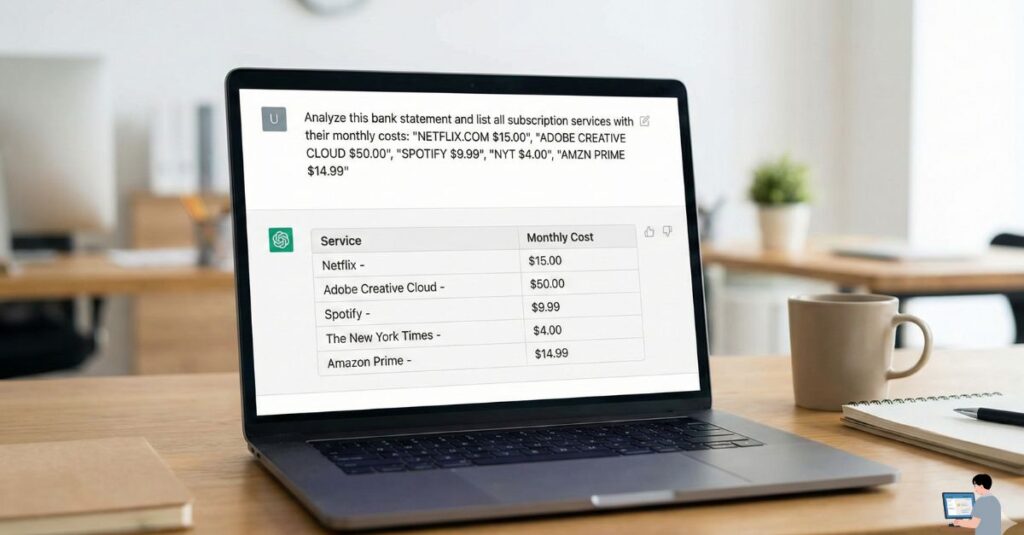
Upload your bank statement CSV (with sensitive info redacted) and use this prompt:
Role: Act as a Senior Forensic Accountant. Task: Analyze the attached CSV of my bank transactions. Goal: Identify all recurring subscription payments. Look for monthly patterns (same amount on the same day). Output: Create a table with 3 columns: “Vendor Name,” “Monthly Cost,” and “Annualized Cost.” At the bottom, calculate the Total Annual Waste if I cancelled all of them.
Prompt 2: The “Negotiator” Script
Found a tool you want to keep but it’s too expensive? Ask AI to write the email.
Role: Act as a Procurement Manager. Task: Write an email to [Software Name] requesting a discount. Context: I have been a loyal customer for 3 years. I rarely use the “Pro” features anymore. I am considering cancelling to switch to a cheaper competitor. Goal: Convince them to give me a 20% discount or downgrade me to a hidden “Legacy Plan” to keep my business. Keep the tone professional but firm.
Phase 5: The “Zombie Killing” FAQ
Q: What is the #1 waste of money in business?
A: Unused Software Licenses. It is silent, recurring, and scales automatically as you hire more people. Other top wastes include automatic renewals for memberships and redundant insurance coverage.
Q: How do I stop a subscription if I can’t find the cancel button?
A: Companies use “Dark Patterns” to hide the cancel button. The Fix: Contact your bank and ask for a “Stop Payment Order” on that specific merchant. Alternatively, use a Virtual Credit Card service (like Privacy.com) for trials, which allows you to “pause” the card instantly.
Q: Can money be a tool?
A: Money sitting in a “Zombie Subscription” is dead capital. Money moved to Advertising or Employee Bonuses is a tool. It generates more money. The goal of this audit is to revive dead capital.
Conclusion: The “Zero-Based” Mindset
To permanently fix this, adopt a Zero-Based Budget. Every year, assume your software budget is $0. Every app must “fight” for its life to be added back in. If an app can’t prove it saves you time or makes you money, it is a Zombie.
Kill it.