
It’s a Tuesday morning. The coffee is hot. You open your email, ready to crush the day. Then you see it.Subject: Cancellation Notice.
Your stomach drops. It’s not just any client—it’s one of your best. You panic. You reply immediately: “Is there anything we can do? Can we jump on a call?”Radio silence.
They didn’t leave today. They left 30 days ago in their mind. You just didn’t know it. This is the most painful part of business. We obsess over acquiring new customers, but we rarely talk about the emotional toll of losing them.
When that email hits, many founders panic and frantically search for “customer retention strategies,” but by then, it is often too late. But the real question you should be asking is: “How could I have seen this coming?”
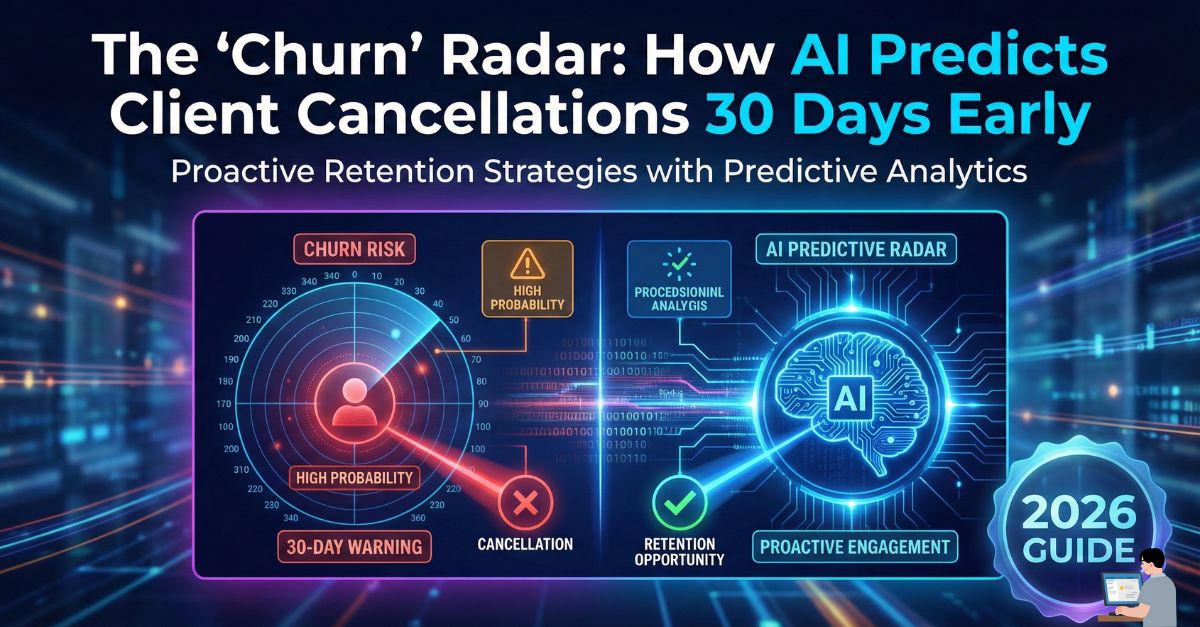
In this executive guide, we are building your ‘Churn’ Radar. We will explore how Predictive AI Models flag these exits weeks in advance, and how you can save the relationship before the cancellation letter ever arrives.
1. The Science of “Silent” Quitting: How AI Predicts Behavior
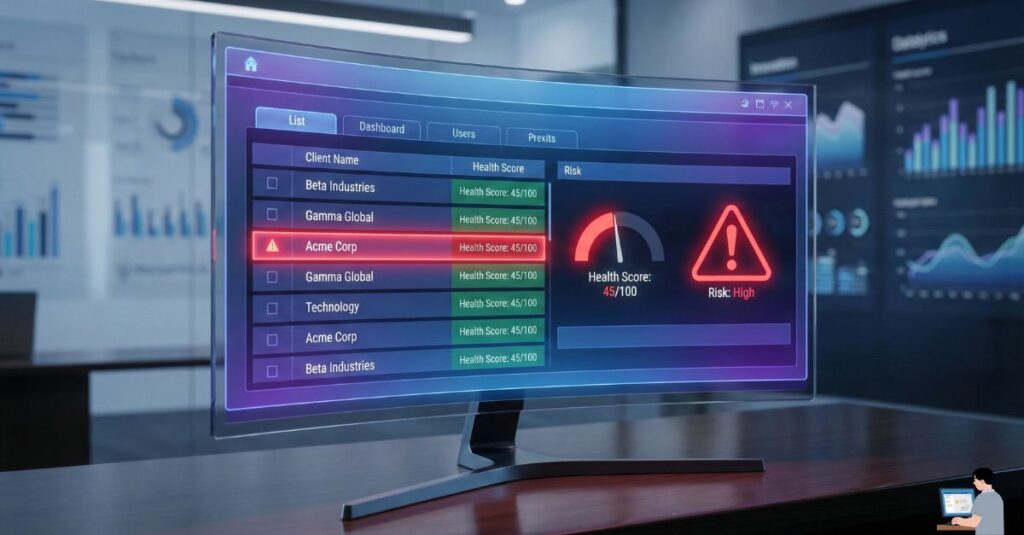
Clients rarely wake up and decide to quit. It is a slow fade. To a human, everything looks fine. To an AI, the warning signs are flashing red.
How the “Radar” Works: AI Churn Prediction doesn’t use magic; it uses Pattern Recognition. While you are busy running the business, AI models (using algorithms like Random Forests and Logistic Regression) are analyzing thousands of data points to answer one question: “Is this person acting like someone who is about to quit?”
It looks for Leading Indicators that humans miss:
- The “Login” Drop: Did their login frequency drop from daily to weekly? (This is the first sign of disengagement).
- The “Ticket” Silence: A client who complains is engaged. A client who stops complaining has given up. Silence is a massive churn signal.
- The “Champion” Exit: Did the person who hired you leave the company? AI tools can scrape LinkedIn to see if your key contact changed jobs, alerting you immediately.
The Result: The AI gives every client a “Customer Health Score” (0-100).
- 90-100: Safe.
- 50-70: At Risk (The AI flags this 30 days early).
- 0-50: Gone (It’s too late).
2. The “10/20/70” Rule: Why Buying Software Isn’t Enough
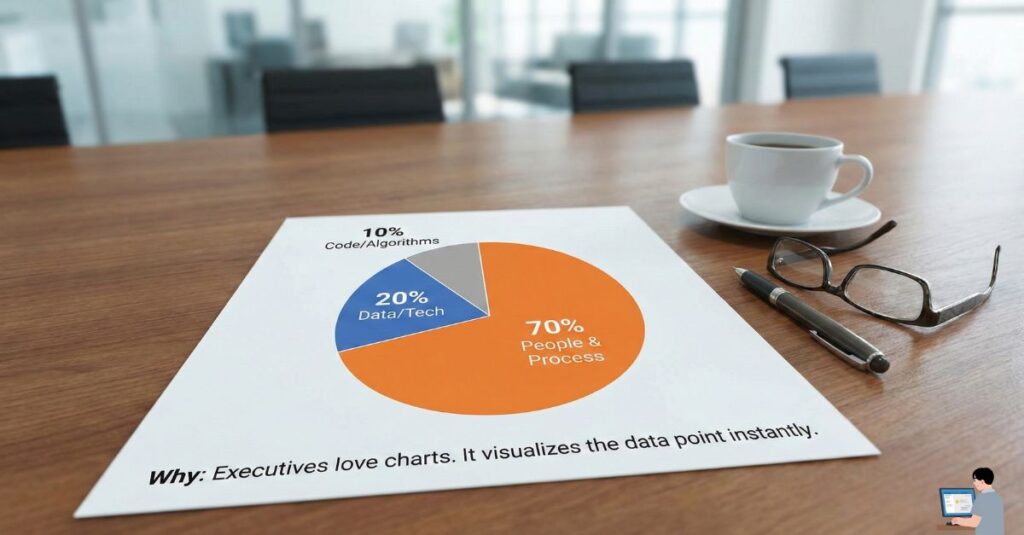
Many business owners fail because they think buying an AI tool fixes the problem. It doesn’t. According to the Boston Consulting Group, successful AI adoption follows the 10/20/70 Rule:
- 10% Algorithms: The code itself is the smallest part.
- 20% Technology/Data: The software and the clean data you feed it.
- 70% People & Processes: This is where you fail. If your AI predicts a cancellation, but your team doesn’t have a “Save Process” to call them, the prediction is useless.
The Lesson: You don’t need better AI; you need a better Response Plan.
3. Understanding the “Exit”: Cancellation Policies & Law
When the radar pings, you need to know your rights—and theirs. There is often confusion about “30-day cancellation policies” and what is legally enforceable.
The 30-Day Clause
A 30-day cancellation clause means a client must pay for one final month of service after giving notice.
- Why it exists: It protects your cash flow. It gives you 30 days to replace that revenue or offboard them smoothly.
- The Emotional Trap: Don’t hide this clause. Be transparent. If a client feels trapped, they won’t just leave; they will leave a 1-Star Review.
The Three Types of Churn
To fix the problem, you must identify why they are leaving:
- Revenue Churn: They downgrade to a cheaper plan (but stay a client).
- Logo Churn: They cancel entirely (the most painful).
- Involuntary Churn: Their credit card failed, and they didn’t fix it. (This is pure wasted money—fixable with Dunning Management Software).
4. The “Save” Playbook: How to Re-engage At-Risk Clients
So, the AI says John Smith is 80% likely to cancel. What do you do?Do not send a generic “Checking in!” email. That is annoying.
Step 1: The “Pattern Interrupt” (The Human Touch)
If AI predicts churn, pick up the phone.
The Script: “Hey John, our system noticed you haven’t logged in for a while. Honestly, I’m not calling to sell you anything. I just want to know—did we fail you somewhere?”
Why it works: Vulnerability builds trust. You are addressing the Emotional Disconnect head-on.
Step 2: The “Success Plan” Reset
If the model was right and they are unhappy, offer a “Success Audit.”
The Offer: “Let’s pause your billing for 30 days. I want to personally help you set up the account again to make sure you get value.”
The Result: You move them from “Churn Risk” to “Loyal Fan.”
FAQ: Handling the Hard Conversations
Q: Can a client cancel their contract immediately?
A: Yes, most industries have a “cooling-off period” (usually 14 days) where you can cancel without penalty. However, specific B2B contracts often lock you in. Always check the “Termination” clause.
Q: What is a polite business response to clients who cancel appointments?
A: Empathy first, policy second.
- Bad: “You owe us $50.”
- Good: “I hope everything is okay! We usually require 24 hours notice, so we do have to charge a small fee to cover the team’s time, but let’s get you rescheduled for when things are calmer.”
Q: How do you fire a bad client?
A: Sometimes, you need to initiate the breakup. If a client is abusive or unprofitable, use the “Capacity Argument.”
“We’ve reviewed our capacity, and we unfortunately can’t give your account the attention it deserves right now.”
Conclusion: Don’t Fear the Churn, Fix the Relationship
The “Churn Radar” isn’t about trapping people in contracts. It’s about Empathy at Scale.
When you ask “How to stop losing money in business?”, the answer isn’t to sell harder. It’s to listen better. AI gives you the superpower to listen to 1,000 clients at once. It taps you on the shoulder and says, “Hey, Sarah is unhappy. Go talk to her.”
Trust the signals.Respect the 30-day notice.But fight for the relationship.
Because the client you save is always more profitable—and more grateful—than the new one you just found.