Flying With Diabetes: TSA Rules for Insulin, Pumps, and CGMs
You shouldn’t have to brace for a fight at security just to carry what keeps you alive. Here’s what’s actually allowed, and how to say it clearly.
There’s a specific kind of dread that builds up in the security line when you’re carrying insulin, a pump, needles, and a bag full of things that look, to an untrained eye, alarming.
You’ve heard the horror stories. A confiscated cooler pack. A pump sent through an X-ray it wasn’t supposed to touch. A rushed conversation with an officer who’s never seen a CGM before.
Most of that fear comes from not knowing, in plain terms, exactly what you’re entitled to bring and say. So here it is, in plain terms.
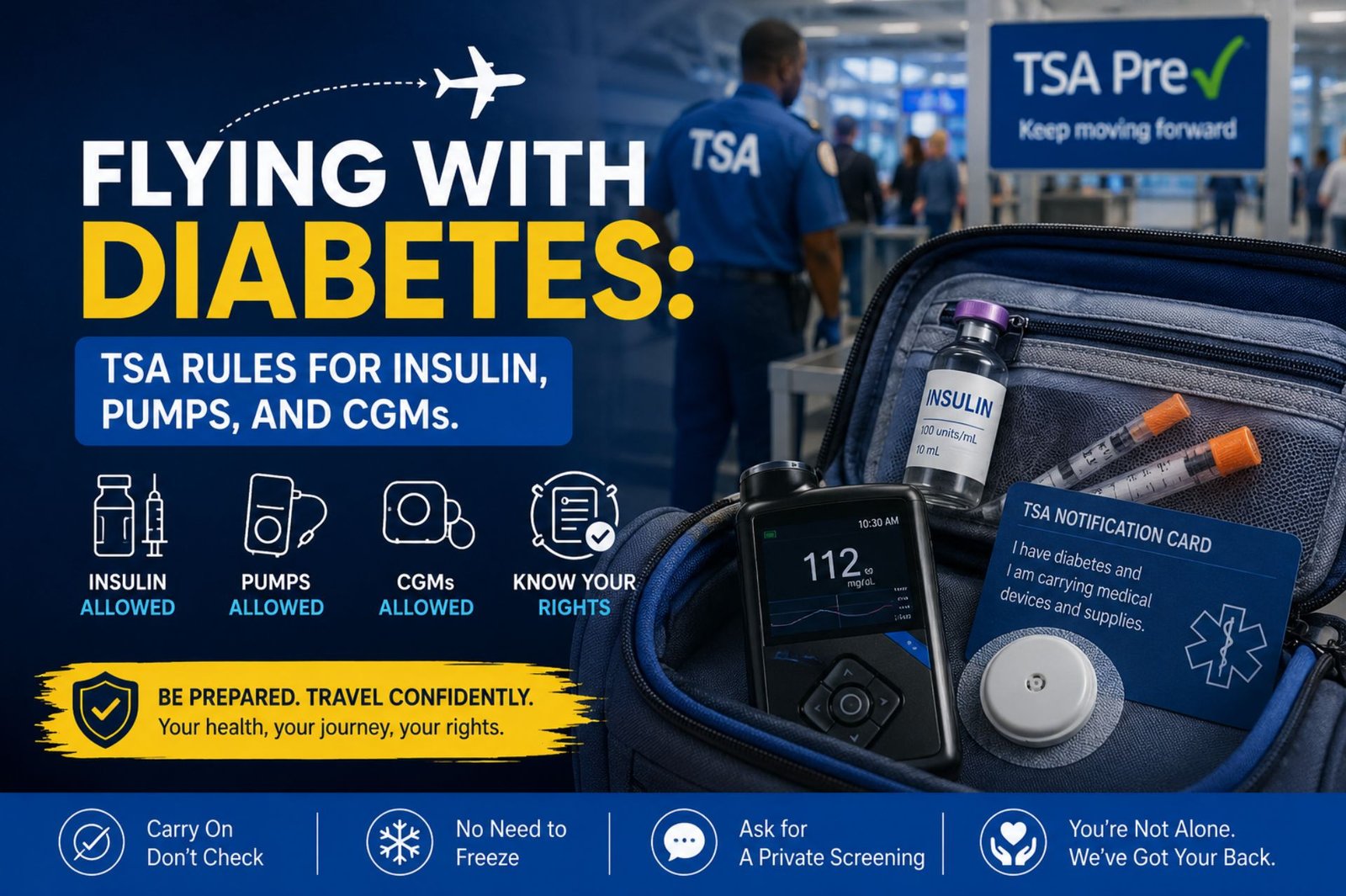
Insulin is exempt from the 3.4oz liquid limit — declare it separately. You can wear your pump or CGM through a metal detector, but many manufacturers advise against full-body scanners — you can request a pat-down instead, no reason required. Insulin should never go in checked luggage.
01Why This Feels Harder Than It Should
Airport security is built around fast, generic rules. Diabetes management doesn’t fit neatly into generic rules.
The friction isn’t really about whether you’re allowed to bring your supplies — you are. It’s about whether the officer in front of you knows that as clearly as you do.
That gap in knowledge is exactly what this guide is meant to close, on both sides of the conversation.
This is a logistics guide, not medical advice
Everything here covers airport rules and packing logistics. Any change to your dosing schedule, especially across time zones, should be worked out with your own doctor before you travel.
02What to Know for Your Specific Device
Tap what you’re carrying.
Screening Guidance by Device
General guidance — always confirm your specific device’s manufacturer instructions.
Insulin — Vials, Pens, or Cartridges
Exempt from the liquid limit. Under normal conditions, insulin can safely pass through standard X-ray screening, though you can request a hand inspection instead if you prefer. Never pack it in checked luggage — cargo hold temperature and pressure swings can damage it, and lost bags mean lost medication.
Insulin Pump
Safe to wear through a standard metal detector. Many manufacturers advise against full-body scanners, since imaging technology hasn’t been confirmed safe for all pump models. You can request a pat-down instead — tell the officer before screening begins, since the infusion set can’t simply be removed.
Continuous Glucose Monitor
Can be worn through a metal detector. As with pumps, some manufacturers recommend avoiding full-body scanners. A pat-down is an available alternative at any U.S. checkpoint, and it’s worth packing a few spare sensors, since long flights can occasionally affect adhesion.
Needles, Syringes & Lancets
Permitted when accompanied by insulin or another injectable medication. A small travel sharps container is worth packing for used needles on longer trips, and unused syringes in reasonable quantities are generally not an issue when clearly related to your supplies.
03Your Pre-Flight Checklist
Before You Fly
04What To Say At Security
“I have diabetes and I’m carrying medical supplies, including insulin and [a pump / a CGM]. I’d like these liquids hand-inspected, and a pat-down instead of the body scanner for my device.”
“My infusion set can’t be removed — it’s under my skin with tubing attached.”
05Flying Internationally
Everything above applies to U.S. airports specifically. Rules vary once you land somewhere else — some countries are stricter about syringes and injectable medication than U.S. checkpoints are.
A letter from your doctor, while not required domestically, becomes genuinely useful here. It’s one document that can resolve a lot of confusion fast, in a language barrier or an unfamiliar system.
06What Real Travelers Are Saying
People who fly with diabetes regularly tend to repeat the same few pieces of hard-earned advice.
Themes From the Diabetes Travel Community
Common patterns reported across diabetes advocacy resources and traveler communities — shared experience, not individual endorsements.
Travelers consistently describe leading with a clear declaration before screening begins as the single biggest factor in a fast, friction-free checkpoint experience.
Frequent flyers repeatedly note that explaining a pump or CGM briefly, rather than assuming familiarity, avoids most delays before they start.
Splitting supplies across bags and over-packing slightly is described again and again as the habit that turns a lost-bag scare into a non-event.
07Frequently Asked Questions
Yes. Insulin and other diabetes-related liquids and gels are exempt from the standard 3.4-ounce limit. Declare them to a TSA officer and have them screened separately from other liquids.
You can wear these devices through a metal detector. For full-body scanners, several manufacturers advise against it. You can request a pat-down instead at any U.S. checkpoint, no reason required.
TSA doesn’t require one for domestic flights. It’s commonly recommended for international travel, larger supply quantities, or carrying a glucagon kit, since it can help resolve questions quickly.
No. Insulin should always stay in carry-on luggage, since cargo holds can reach damaging temperature and pressure extremes, and checked bags can be lost or delayed.
A note on accuracy: this guide covers general airport logistics, not medical advice. Device compatibility with security scanners varies by manufacturer and model — always check your specific device’s guidance, and talk to your doctor about any schedule or dosing questions before you travel.

5 thoughts on “Flying With Diabetes: TSA Rules for Insulin, Pumps, and CGMs.”