
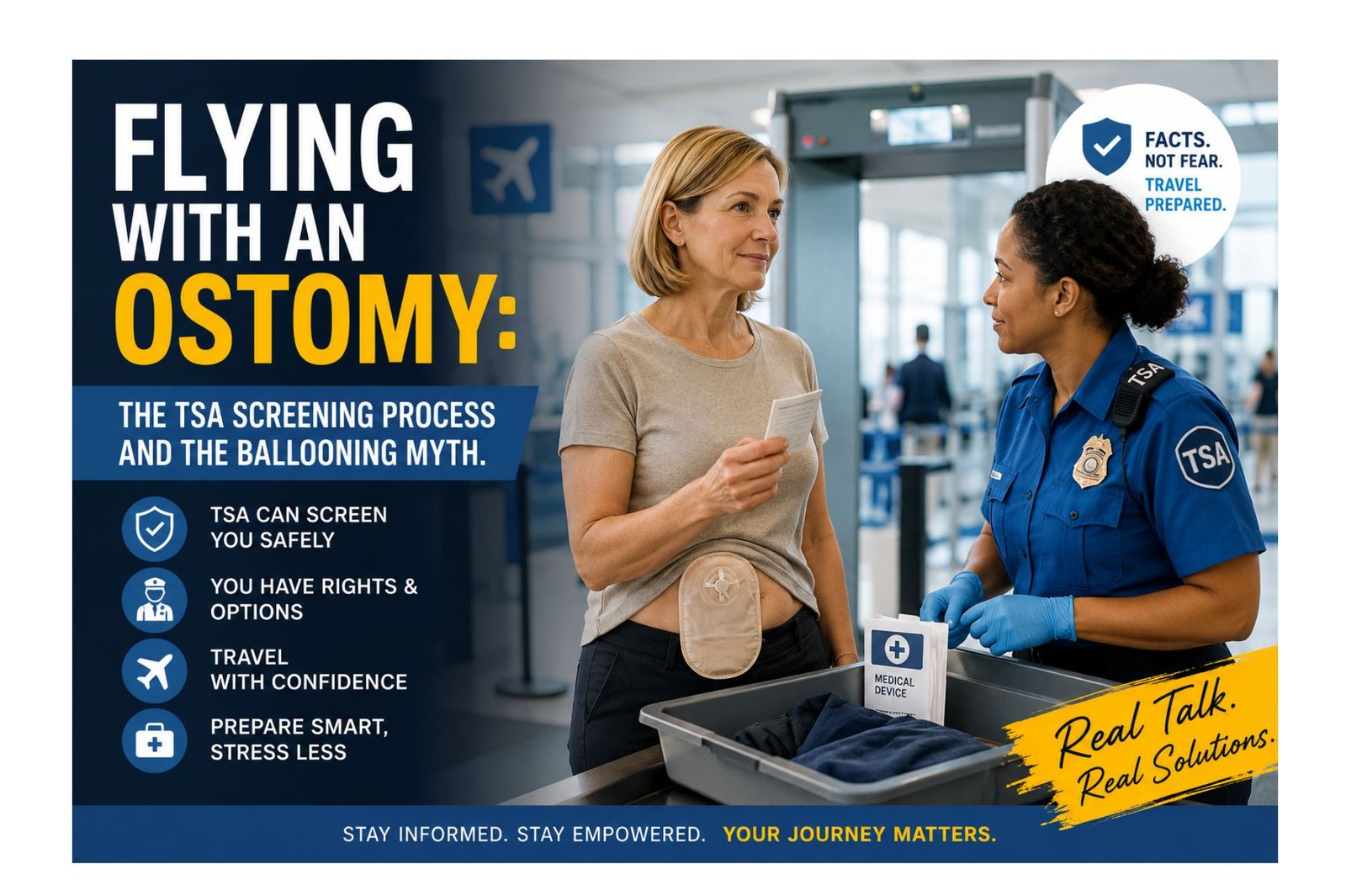
Flying With an Ostomy: The TSA Screening Process and the Ballooning Myth
The fear isn’t really about the pouch. It’s about being singled out in a crowded checkpoint. Here’s exactly what to expect, so nothing catches you off guard.
If you’ve never flown with an ostomy before, the anxiety usually isn’t about the pouch itself.
It’s about the checkpoint. The wondering whether a stranger in uniform is about to ask you to explain something deeply personal, in a line full of people, with no privacy and no warning.
That fear shrinks fast once you know exactly what’s actually going to happen, and exactly what your rights are before you get there.
You never have to remove or expose your ostomy pouch during TSA screening. You can request a discreet or private screening at any time. A free Travel Communication Card from UOAA lets you explain your situation without saying a word, and cabin pressure is not the main cause of ballooning — diet is.
01What Actually Happens at the Checkpoint
TSA officers are trained to screen ostomy pouches without requiring you to remove or expose them.
If your pouch requires additional screening, that typically means a self pat-down of the area, done by you, over your clothing, followed by a hand swab for the officer to test for trace substances. Nobody touches your body without your involvement in the process.
You’re also entitled to request private screening at any point, for any reason, without needing to justify why.
This is a logistics guide, not medical advice
Everything here covers airport screening and packing logistics. Any question about your specific ostomy care, diet, or recovery timeline belongs with your ostomy nurse or doctor.
02The Ballooning Myth, Corrected
A lot of first-time flyers worry specifically about cabin pressure causing the pouch to inflate mid-flight. It’s a reasonable thing to picture, and it’s mostly not how it works.
Cabin pressure changes are the main reason ostomy pouches balloon during flights.
Modern aircraft cabins are pressurized specifically to prevent this kind of effect. Ballooning is generally driven by gas from food and drink, not altitude.
If it happens, there’s nothing you can do until you land.
A quick trip to the restroom to release the gas resolves it. Pouches with a built-in filter or vent can reduce the issue significantly before it starts.
03What to Pack, and Where
Before You Fly
04What To Say At Security
“I have an ostomy pouch attached to my body, located here [gesture]. I’d like to be screened without removing it, and I’d prefer a private area if one’s available.”
“I have a Travel Communication Card if that’s helpful for your records.”
05During the Flight
- Empty your pouch right before boarding, so you’re starting the flight with margin.
- Skip carbonated drinks and known gas-triggering foods in the hours before and during the flight.
- Stay hydrated — cabin air is dry, and dehydration can affect output more than altitude does.
- Talk to a flight attendant if something comes up. They’re generally accustomed to handling quiet, discreet requests without making a scene of it.
06What Real Travelers Are Saying
People who fly regularly with an ostomy tend to repeat a few of the same reassurances to first-timers.
Themes From the Ostomy Travel Community
Common patterns reported across ostomy advocacy groups and patient communities — shared experience, not individual endorsements.
Experienced ostomates consistently describe the first flight as the most anxiety-inducing, with each following trip feeling noticeably more routine.
Travelers frequently report that TSA officers handle the screening quietly and professionally, contrary to the embarrassment many expect beforehand.
Almost every seasoned traveler mentions packing more than they think they’ll need, and almost none describe ever regretting the extra weight.
07Frequently Asked Questions
No. TSA states travelers can be screened without removing or exposing their ostomy pouch. It may require additional screening, including a self pat-down over your clothing followed by a hand swab.
It’s a common concern, but ballooning is generally caused by gas from food and drink rather than cabin pressure, since aircraft cabins are pressurized. Avoiding carbonated drinks and gas-producing foods reduces the risk more than anything related to altitude.
It’s a printable card, free from the United Ostomy Associations of America, that discreetly informs a TSA officer of your ostomy without requiring a verbal explanation at a crowded checkpoint.
Yes. Ostomy supplies are permitted in carry-on luggage. Liquids, gels, or pastes over 3.4 ounces required for a medical condition are allowed but must be declared separately for additional screening.
A note on accuracy: this guide covers general airport logistics, not medical advice. If you’re newly post-surgery, talk to your ostomy nurse or doctor before planning travel. Screening procedures can vary slightly by airport and officer discretion — TSA Cares can help set expectations for your specific airport in advance.
