Traveling With Epilepsy: The Seizure Action Plan and Packing List That Actually Help
Epilepsy doesn’t have to shrink your world. It just means the planning looks a little different, and a lot of that planning is simpler than it feels from the outside.
There’s a quiet worry that comes with epilepsy and travel: what happens if something happens somewhere unfamiliar, surrounded by people who have no idea what to do.
That worry is real, and it’s also very solvable. The gap usually isn’t your capability to travel. It’s whether the people around you — companions, flight crew, a hotel front desk — actually know what to do if they need to.
This guide is built around closing that gap, piece by piece.
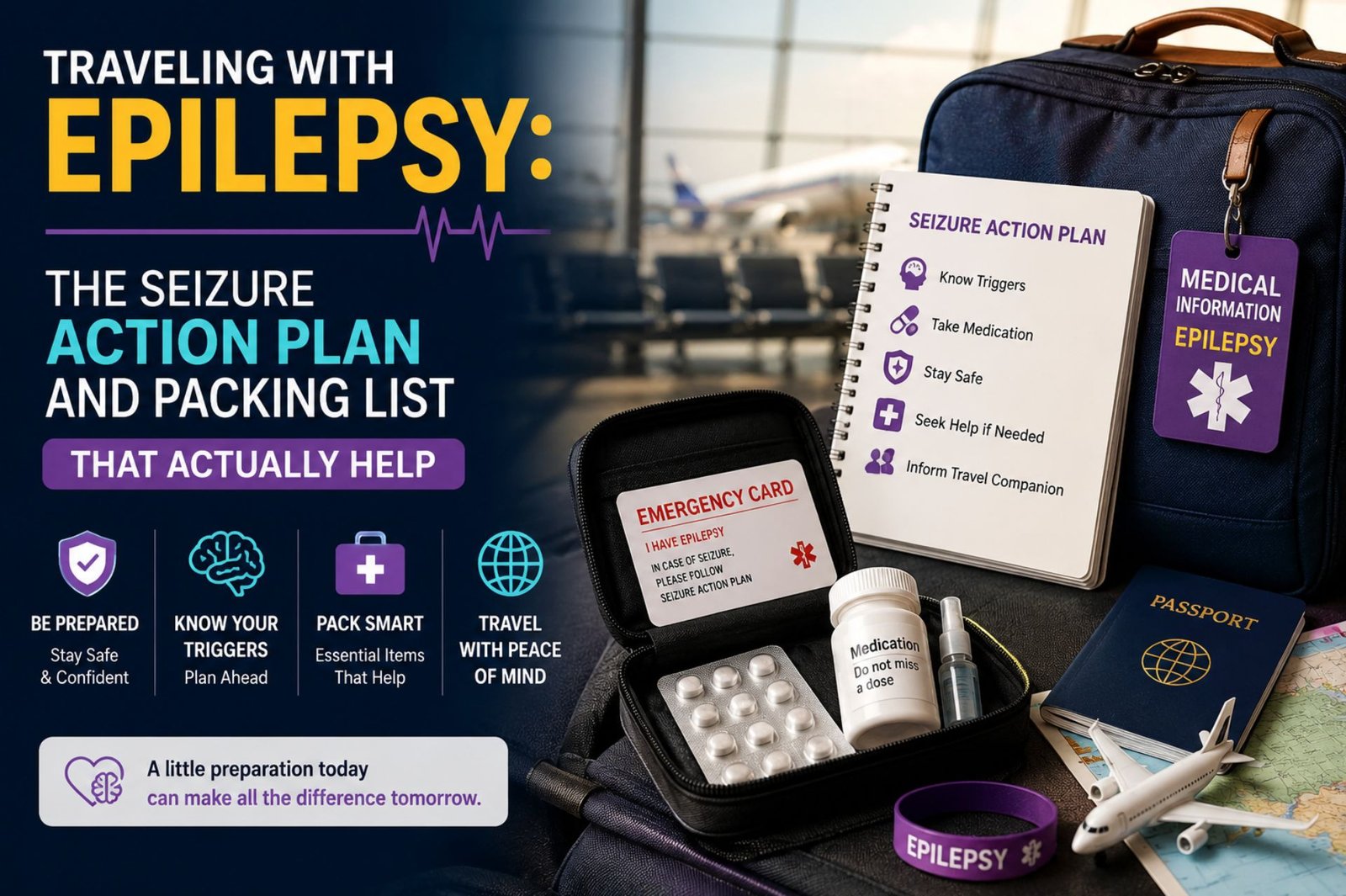
Keep medication in your carry-on, never checked, with roughly a week’s extra supply. Carry a written seizure action plan your companions can actually follow. A doctor’s letter listing medications and devices speeds up security. Disclose epilepsy on travel insurance so a seizure abroad is actually covered.
01Your Rights, Briefly
People with epilepsy are protected under the Americans with Disabilities Act (covering airports, buses, rail, and cruise ships) and the Air Carrier Access Act (covering the flight itself) — even during periods with no active seizures.
That protection exists whether or not you disclose your condition. Disclosing is still worth doing in most cases, simply because it means the people around you can actually help if something happens.
This is a planning guide, not medical advice
Everything here covers travel logistics. Questions about your specific seizure risk, medication timing, or whether a particular trip is advisable belong with your neurologist, not a travel article.
02Build a Seizure Action Plan Your Companions Can Actually Use
This is the single most useful document you can travel with. It doesn’t need to be complicated — it needs to be usable by someone with zero training, in a stressful moment.
What Belongs on the Plan
What a typical seizure looks like for you specifically, and roughly how long it usually lasts.
Basic first aid steps: what to do, and just as important, what not to do.
Rescue medication instructions, if you have one, including exact dosing and how to administer it.
The specific point at which to call emergency services — for example, a seizure lasting longer than a set number of minutes.
Your emergency contact and any relevant medical device information, like a VNS implant.
Share this with anyone traveling with you before the trip starts, not on the way to the airport. Keep a copy on your phone and a printed copy in your bag.
03Managing the Time Zone and Sleep Factor
Sleep deprivation is a documented seizure trigger for many people, and long-haul travel is basically a machine for producing sleep deprivation.
If jet lag or disrupted sleep is a known trigger for you, arriving a day or two before anything important gives your body real time to adjust rather than running on a deficit through an already demanding trip. Setting phone alarms for medication times, especially across time zones, helps prevent a missed or double dose from slipping through in the confusion of travel days.
04Documents Worth Carrying
- A doctor’s letter listing your medications, dosages, and any implanted devices — genuinely useful for speeding up airport security screening.
- Copies of prescriptions, separate from your medication, in case you need an emergency refill.
- An epilepsy ID card or wearable, so a stranger can identify what’s happening even if you’re traveling alone.
- A translated version of your condition and key instructions, if you’re heading somewhere English isn’t widely spoken.
05Your Pre-Trip Checklist
Before You Travel
06What Real Travelers Are Saying
People who travel regularly with epilepsy tend to repeat a small set of hard-earned habits.
Themes From the Epilepsy Travel Community
Common patterns reported across epilepsy advocacy resources and traveler accounts — shared experience, not individual endorsements.
Frequent travelers consistently describe keeping medication in carry-on without exception, treating a checked bag as something that could disappear at any point.
For those affected by sleep-related triggers, building in an extra adjustment day before anything important is repeatedly described as worth the cost.
Travelers describe a real shift once companions actually understand the action plan — the anxiety of “what if” becomes a lot more manageable.
07Frequently Asked Questions
Always carry-on, never checked, since checked bags can be lost, delayed, or exposed to temperature extremes in the cargo hold that carry-on storage avoids.
A short, written document explaining how to recognize a seizure, what to do to help, when to call emergency services, and any rescue medication instructions, written so a companion or stranger can follow it without prior training.
It’s not required, but many people choose to inform the airline or request an empty adjacent seat, since staff who are aware in advance can respond more quickly and calmly.
Yes. It should be disclosed as a pre-existing condition when purchasing travel insurance, since failing to do so can result in a denied claim if treatment is needed for a seizure while traveling.
A note on accuracy: this guide covers general travel logistics, not medical advice. Seizure triggers, medication needs, and safe travel practices vary significantly by individual — always follow guidance from your own neurologist for anything specific to your condition.

1 thought on “Traveling With Epilepsy: The Seizure Action Plan and Packing List That Actually Help”