There is something about the coast that calls to nearly everyone — the rhythm of the surf, salt on the breeze, warm sun on your skin. But if you use a wheelchair, a beach trip can feel less like a simple pleasure and more like a logistics puzzle. Sand swallows standard wheels, boardwalks end without warning, and the word “accessible” on a tourism website doesn’t always mean what you hope it means.
Here is the genuinely good news: wheelchair accessible beaches are far more common — and far easier to enjoy — than most people realise. With the right equipment, from beach wheelchairs to Mobi-Mats, and a little planning, you can roll right up to the water’s edge on your own terms. This guide explains how it all works, where to find it, and how to plan a beach day that actually feels relaxing.
Why Sand Stops a Standard Wheelchair
Most wheelchair users learn this quickly: sand and standard wheels are a terrible match. Narrow casters sink and spin, tyres dig in, and even a strong manual chair user can end up stuck after a few metres. It’s physics, not you: a standard wheel concentrates weight onto a small patch, and loose sand gives way. Power chairs fare no better — sand and saltwater are brutal on motors and electronics. The beach isn’t off-limits, though — you just need beach-specific solutions. Once you know what to ask for, the coast opens up beautifully.
How Beach Wheelchairs Actually Work
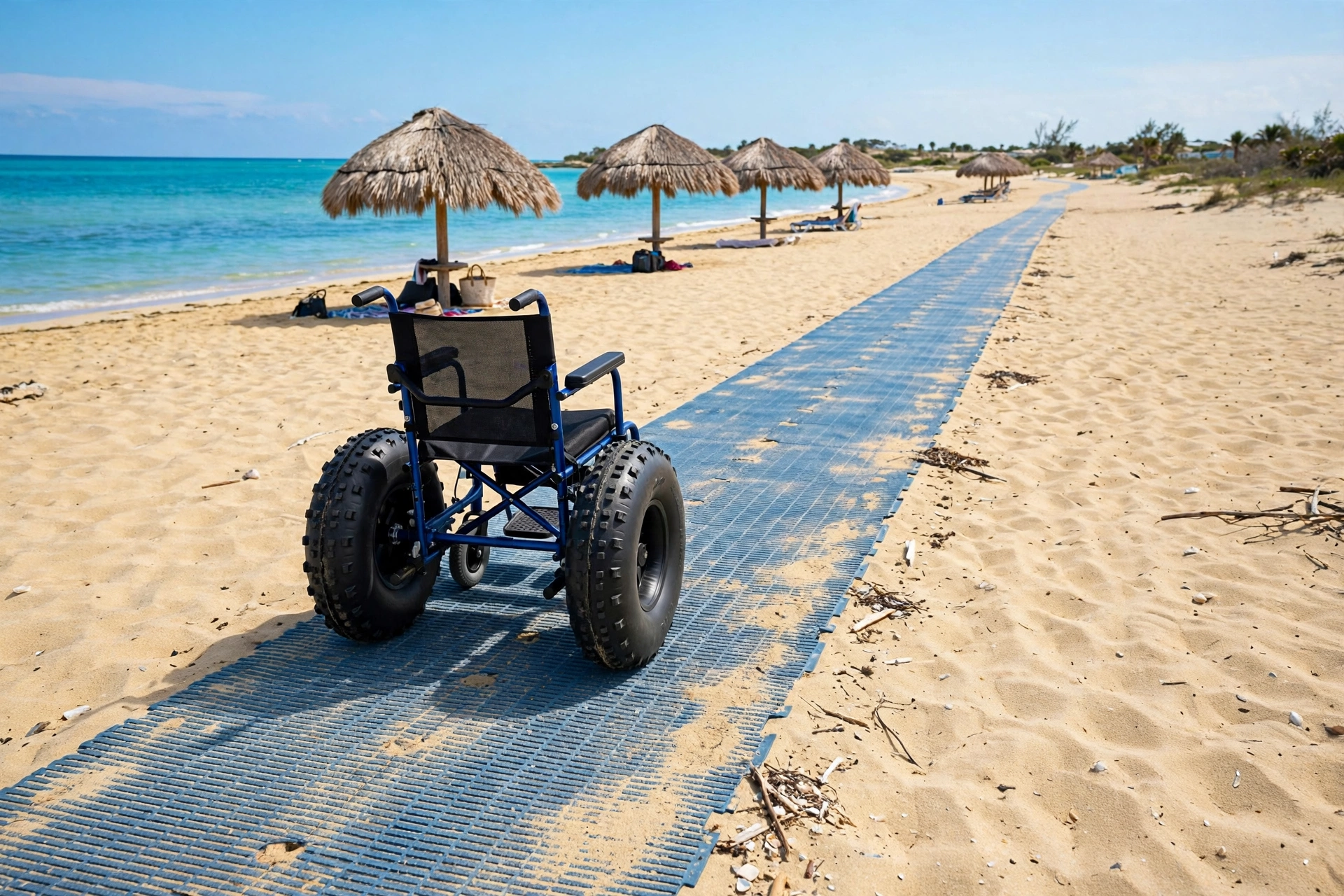
Beach wheelchairs look a little unusual the first time you see one — and that’s precisely the point. Every part of them is engineered to do what a standard wheelchair can’t: travel over sand instead of fighting it.
Balloon Tyres and a Low, Wide Stance
The defining feature is the balloon tyre: a large, wide, low-pressure tyre that spreads your weight across a much bigger patch of sand. Think stiletto heel versus snowshoe — where a narrow caster digs in, a balloon tyre rolls on top. Frames are usually PVC or marine-grade materials that shrug off saltwater, with mesh sling seats that drain and dry fast.
Push-Style vs. Self-Propelled Models
You’ll generally come across two kinds:
- Push-style chairs: the most common type, pushed by a companion — small front casters (or none) and big balloon tyres at the back. Simple, sturdy, and the kind most lifeguard stations and resorts lend out.
- Self-propelled chairs: oversized rear balloon tyres with hand rims so you can push yourself. Real independence on the sand, but heavier and pricier — more common through specialist rental companies and adaptive recreation programmes.
There are also floating (amphibious) models built to be taken right into the surf, with buoyant frames and a secure, reclined seat — many travellers find them the highlight of the trip.
Where to Borrow or Rent a Beach Wheelchair
One of the best-kept secrets of accessible travel: you often don’t need to buy anything at all. Contact the provider a day or two before your visit — availability can be tight on summer weekends, and some ask for ID or a refundable deposit. Here is where beach wheelchairs are typically available:
- Lifeguard stations: many staffed beaches keep one or two chairs for free use — first-come, first-served or by reservation. Call ahead.
- Resorts and hotels: beachfront properties increasingly offer them to guests — ask the concierge or accessibility coordinator before you book.
- Local rental companies: in popular coastal areas, hire firms offer beach wheelchairs by the day or week, sometimes delivering to your hotel.
- Parks departments: coastal park authorities often run free loan programmes, sometimes with online booking.
- Adaptive recreation non-profits: many coastal cities run beach days with equipment, volunteers, and trained staff.

Mobi-Mats and Beach Access Mats, Explained
If beach wheelchairs are the vehicle, access mats are the road. A Mobi-Mat — the best-known brand — is a portable, roll-out pathway laid over the sand, creating a firm, stable surface for wheels, walkers, and feet.
- How they work: linked, rigid or semi-rigid slats — often recycled materials — spread weight so wheels don’t sink. They roll up for transport and are laid out or taken up with the tides.
- Where they lead: usually from the boardwalk, car park, or entrance toward — sometimes right up to — the water’s edge. Check how far the mat extends; some end well before the surf.
- How to find them: beaches with mats usually say so on their official visitor pages — search your destination plus “accessible beach mat”.
A mat changes everything: roll your own chair along it, then switch chairs — or head for the water — at the end.
What to Look for in a Truly Accessible Beach
Not every beach that calls itself “accessible” offers the same thing. This checklist tells you more than any marketing slogan:
- Accessible parking near the entrance, with van-accessible spaces and a step-free path to the sand.
- A firm, step-free route — boardwalk, paved path, or access mat — running as close to the water as possible.
- Accessible toilets and changing facilities nearby, ideally with an adult-sized changing bench.
- An accessible outdoor shower or rinse station for sand and salt.
- A staffed lifeguard station — ideally one that lends beach wheelchairs.
- Honest information online — beaches that publish specifics about mats, loans, and facilities tend to take access seriously.
The best predictor of a good beach day? A quick phone call — two minutes with the lifeguard station tells you more than any webpage.
Coastlines and Regions Known for Accessible Beaches
Accessible beach infrastructure is growing worldwide. Programmes change, so verify before travelling — these are solid starting points:
- Florida, USA: many state parks and county beaches offer free beach wheelchair loans and have been steadily adding access mats.
- California, USA: a growing number of state beaches provide beach wheelchairs and access mats, some with powered chairs by reservation.
- The UK: increasing numbers of beaches, from England’s south coast to Scotland, offer wheelchairs and mats — often bookable ahead.
- Australia: many councils in New South Wales, Queensland, and Victoria run beach matting and free wheelchair programmes.
Local disability organisations and accessible-travel directories are gold mines of current information.

Packing and Sun-and-Heat Tips for Wheelchair Users
Sun, heat, salt, and sand hit harder when you’re sitting in one place. A little preparation makes the day far more comfortable:
- Reapplyable sun protection: sunscreen, a wide-brimmed hat, and a UPF cover-up. Reapply often — the sea breeze masks how fast you’re burning.
- Your own shade: a pop-up tent or large umbrella, especially where natural shade is scarce.
- Water and salty snacks — heat plus the effort of transfers means hydration matters more; bring extra.
- A pressure-relief cushion for the beach chair, plus reminders to shift your weight.
- Corrosion care: if you roll your own chair on a mat, rinse it with fresh water afterwards and dry the moving parts.
- A dry bag for your phone, medications, and anything that can’t handle sand or spray.
Getting Into the Water: Transfer Basics
For many, the whole point of the beach is the water — and getting in is doable with the right setup.
- Use a floating beach wheelchair if available: buoyant frames designed to be rolled into the surf with you in the seat.
- Pick firm, wet sand near the water’s edge — far easier than soft, dry sand — and a calm entry away from currents.
- Bring a buddy: waves are unpredictable, and an extra pair of hands is reassuring.
- Tell the lifeguards your plan — adaptive-programme staff may be trained to help.
- If the red flags are flying, enjoy the shoreline instead — there’s no shame in a beach day without a swim.
The ocean doesn’t care how you reached the water’s edge — only that you came. An accessible beach isn’t a special favour; it’s simply a beach that kept its promise to everyone.
Frequently Asked Questions
Are beach wheelchairs free to use?
Often, yes — many lifeguard stations, parks, and resorts lend them free, sometimes asking only for ID or a deposit. Rental companies charge by the day or week. Reserve ahead in peak season.
Can I take my own wheelchair onto the sand?
On firm, wet sand or along access mats, many people do. But deep, dry sand bogs down a standard chair fast, and saltwater can damage motors and electronics. A beach wheelchair is the safer choice.
What exactly is a Mobi-Mat?
A brand of roll-out beach access mat creating a firm path over sand for wheels, walkers, and pushchairs. Not every accessible beach has one — check the official visitor page before you go.
Are beach wheelchairs safe in the water?
Standard push-style chairs are for sand and shoreline, not floating. For the surf, look for a floating (amphibious) chair designed for water entry. Stay in lifeguarded areas and never go in alone.
How do I find wheelchair accessible beaches near my destination?
Search the official tourism or parks site for “accessible beach”, “beach wheelchair”, or “beach access mat”. Accessible-travel directories help too — or just call the lifeguard station.
Related Guides
Keep planning with more Clearway Travel guides:
- How to book an accessible hotel room — the questions to ask before you reserve.
- Accessible all-inclusive resorts — how to choose one that actually works for you.
- Solo travel with a disability — safety, confidence, and practical tips.
Your Beach Day Is Waiting
You don’t need to be an athlete or an expert planner to enjoy the coast — just the right equipment, a beach that has done its homework, and the knowledge that you belong at the shoreline. Start with one beach and one sunny afternoon. The water has been waiting for you.
Sources & verification
Key details in this guide were checked against official sources on 18 October 2026.
- The National Park Service’s accessibility hub for visitors with disabilities — the official NPS page describing accessibility across national parks and recreation areas.
