
It’s 3:00 AM.
The glow of your monitor is the only light in the room. You open a new tab, navigate to your Google AdSense dashboard, and your stomach instantly drops.
Your pageviews have exploded. You are seeing a massive 400% traffic spike.
Normally, you would be celebrating. You would be texting your friends that your hard work finally paid off.
But then your eyes drift to the revenue column.
It is completely flat. Your RPM (Revenue Per Mille) has cratered to zero.
A cold sweat breaks out. You haven’t run any shady paid ads. You haven’t bought cheap traffic. You haven’t clicked your own ads.
Yet, deep down, you know exactly what that terrifying combination of high traffic and zero clicks means.
It is the silent assassin of the digital publishing world: Invalid Traffic (IVT).
You refresh your inbox, terrified that the dreaded email—“Your Google AdSense Account Has Been Disabled”—is waiting for you.
Take a deep breath. You are not alone. And more importantly, this is not your fault.
We are currently surviving an aggressive, highly sophisticated surge of AI scrapers and botnets. Millions of honest publishers are watching their hard-earned livelihoods hang in the balance.
Let’s secure your digital fortress right now.
The Heartbreak of the Unseen Enemy
Before writing this, I spent hours analyzing the raw, emotional panic inside publisher communities.
The pain points are everywhere. Honest creators are losing their minds—and their incomes. Here are the exact, desperate cries for help publishers are posting right now:
- “Google just clawed back 99% of my monthly revenue for ‘Invalid Traffic,’ but I only use organic SEO. How do I even fight this?”
- “My AdSense was hit with an ad-serving limit. I didn’t buy traffic! It’s bots from AWS data centers clicking my site. Why am I being punished?”
- “Scrapers are cloning my WordPress site and triggering IVT flags on my account. I feel completely helpless.”
The underlying emotion here is betrayal.
You play by the rules. You pour your heart, your late nights, and your weekends into creating high-quality, helpful content.
And yet, an army of faceless, automated scrapers is weaponizing your own site against you.
These bots are stealing your architecture. They are cloning your hard work for massive spam networks. Worst of all, they are generating the exact fake ad impressions that put your AdSense account squarely in Google’s crosshairs.
It is time to take your power back. Here is the ultimate, policy-compliant survival guide to protect your revenue and your peace of mind.
Step 1: Facing the Uncomfortable Truth in Analytics
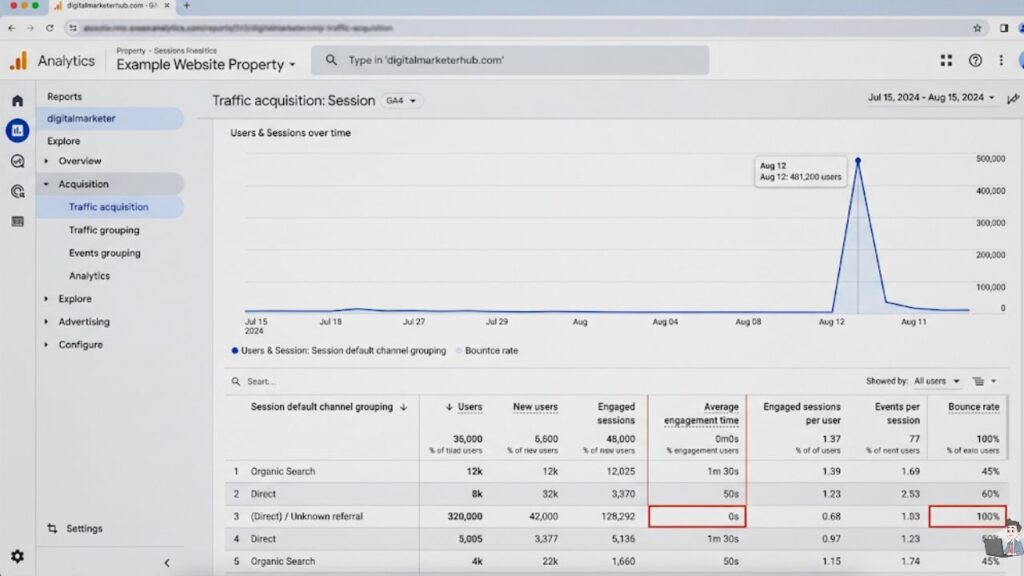
Before you can block the threat, you have to look the monster in the eye.
I know checking analytics during a bot attack is incredibly stressful. It feels like watching your house get robbed. But bots always leave a footprint.
Stop looking at your AdSense dashboard and open Google Analytics 4 (GA4). You are looking for the “Phantom Triad.”
First, look for the Zero-Second Read. If you have a massive spike in visitors but the average engagement time is near zero, humans are not reading your work.
Second, look for the 100% Bounce Rate from Nowhere. Check your location data. Real people do not browse your lifestyle blog from Amazon Web Services server racks in Ashburn, Virginia.
Third, hunt for the Ghost Devices. If a massive chunk of your traffic is running obsolete operating systems or shows up as “(not set),” you are being scraped.
Step 2: Hitting the Brakes (The Human Workflow)

When a bot attack hits, having your website running on “autopilot” is dangerous.
If you use automated social media schedulers or auto-publishing plugins, scrapers will learn your rhythm. They will hit your site the millisecond your content goes live.
You must take your hands back and introduce human friction.
When I sense an IVT attack, I immediately halt all automated workflows. I configure my content systems so that absolutely nothing happens automatically.
The system must wait for an explicit, manual green signal from me.
Nothing proceeds. No creative tasks are generated, no posts are published, and no images are rendered without my direct, human approval.
This breaks the bot’s predictive scraping patterns. It also proves to Google’s quality algorithms that a real, caring human being is actively managing the site’s ecosystem.
Step 3: Erasing the Target on Your Back (The Identity Purge)
Here is a chilling reality that keeps publishers awake at night.
Bots are not just clicking your ads. They are actively stealing your human identity to make their spam networks look legitimate.
When scraping networks clone your website, they copy the entire source code. If your personal brand is plastered everywhere, your reputation gets dragged into their toxic, ad-violating ecosystem.
You must ruthlessly clean your visual assets. Maintain a simple, professional aesthetic.
Go through your design templates and command the total removal of specific personal social media lines. Strip your personal profile pictures out of your site-wide sidebars, headers, and author boxes.
If you use handles in your templates, remove them immediately. Follow the instructions of a clean redesign.
By removing these identifying markers, you stop automated scrapers from effortlessly stealing your brand identity. You refuse to let your face be associated with their cloned domains.
Step 4: Locking the Front Door with a Bouncer
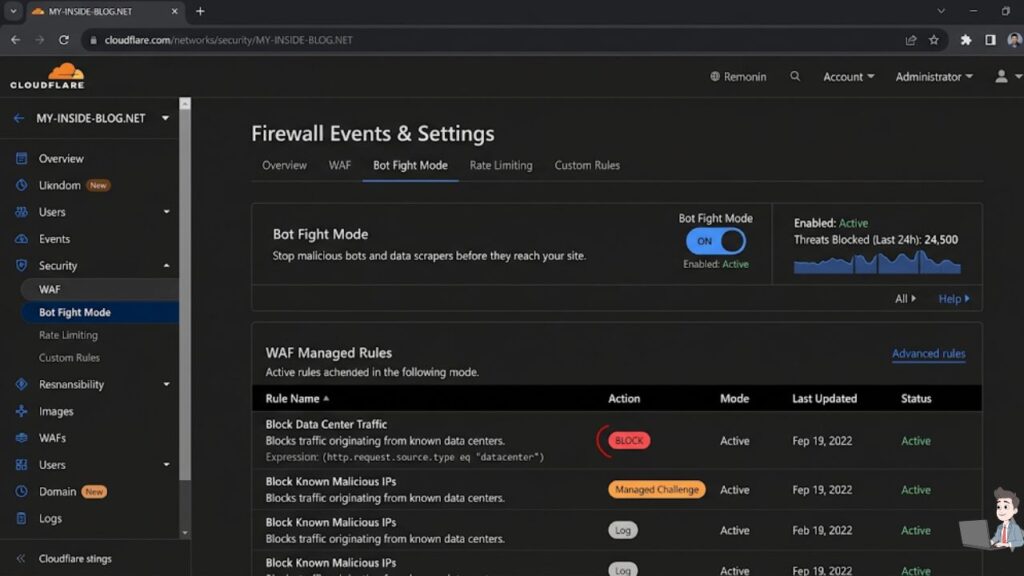
Once you have stopped the internal bleeding, you have to lock the front door.
These malicious scripts should never even get the chance to load an AdSense unit. If the ad never loads, the invalid impression never happens.
You need a Web Application Firewall (WAF) acting as your digital bouncer.
If you are not using a premium proxy network like Cloudflare, your front door is wide open in a bad neighborhood.
Route your DNS through a proxy. Turn on strict Bot Management to actively challenge traffic that looks automated.
Set up WAF rules to instantly block or challenge any traffic originating from “Known Data Centers.” Real humans do not surf the web from data centers.
Step 5: The Policy-Compliant Server Trap
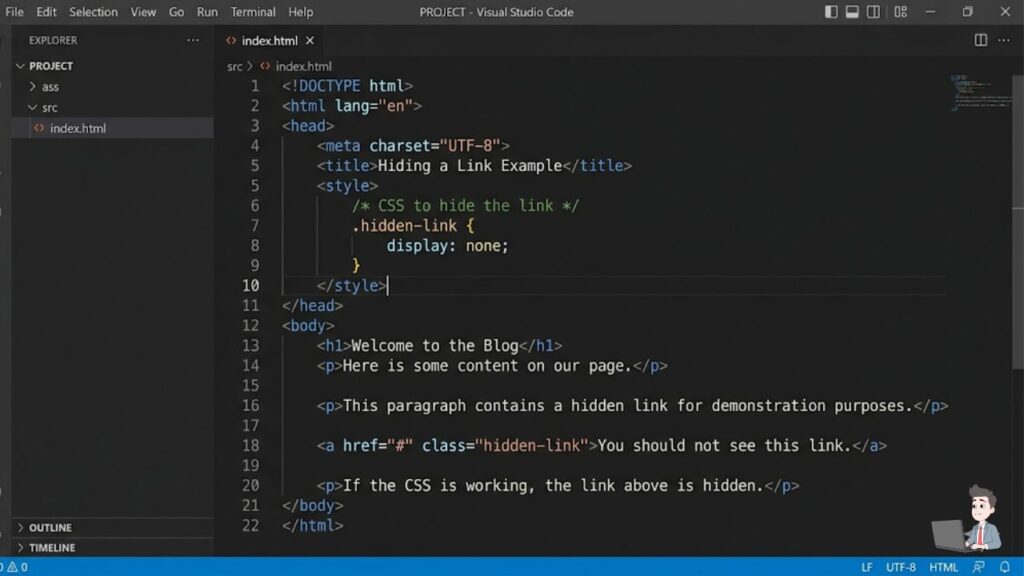
Many desperate publishers try to trap bots by hiding invisible links in their website’s code using CSS.
Never do this.
Hiding text or links is a massive violation of Google’s Spam Policies. You cannot fight an IVT violation by committing a Webmaster Policy violation. It will get your account permanently banned.
Instead, implement Server-Side Challenges.
Use invisible tools like Cloudflare Turnstile or reCAPTCHA Enterprise. These sit between the user and your server.
They evaluate browser behavior and JavaScript execution before your AdSense ads are ever allowed to load.
It is a zero-false-positive trap. Real humans pass seamlessly without clicking a thing. Automated scraping bots are halted at the server level, neutralizing the IVT threat instantly and legally.
🎁 Bonus: Your AI Survival Toolkit
To help you take back control, I am giving you the exact, high-level AI prompts I use to defend my digital properties.
Copy and paste these into your favorite AI tool to build your defenses today.
Bonus Prompt 1: The Server Log Auditor
When you need to find the exact IP addresses attacking your AdSense revenue, feed a snippet of your raw server logs to an AI with this prompt:
“Act as a strict Cybersecurity and AdOps Analyst. I am pasting a snippet of my recent server access logs. Analyze these logs deeply and identify any suspicious IP addresses or User-Agents that indicate scraping, botnets, or Invalid Traffic (IVT). Look for patterns such as excessively high request rates, missing referrers, or data-center IPs. Provide a clean, comma-separated list of the malicious IPs I should immediately block via my Web Application Firewall to protect my AdSense revenue.”
Bonus Prompt 2: The Iron-Clad Shield
Stop AI scrapers from legally stealing your hard work by generating a bulletproof robots.txt file:
“Act as a Technical SEO and Web Security Expert. Generate a strict, highly comprehensive robots.txt file for my digital publishing website. I want to allow Googlebot and Bingbot to crawl my site perfectly for SEO. However, I want to explicitly Disallow all known AI scrapers, LLM training bots (like GPTBot, CCBot, Anthropic), and aggressive SEO crawlers. Ensure the syntax is perfectly compliant to protect my intellectual property and reduce server load.”
Final Thoughts: From Victim to Protector
Watching your AdSense revenue get threatened by automated forces outside of your control is one of the most isolating, stressful experiences a creator can go through.
It feels deeply unfair. But you are no longer powerless.
By facing your analytics, you uncover the truth. By halting automation and demanding a manual green signal, you prove your human value. By simplifying your templates and setting up aggressive, policy-compliant firewalls, you take your power back.
You are transitioning from a stressed-out victim of the algorithm into a fierce protector of your digital business.
Secure your traffic. Guard your peace. And keep building the beautiful, human-centric content your audience actually needs.