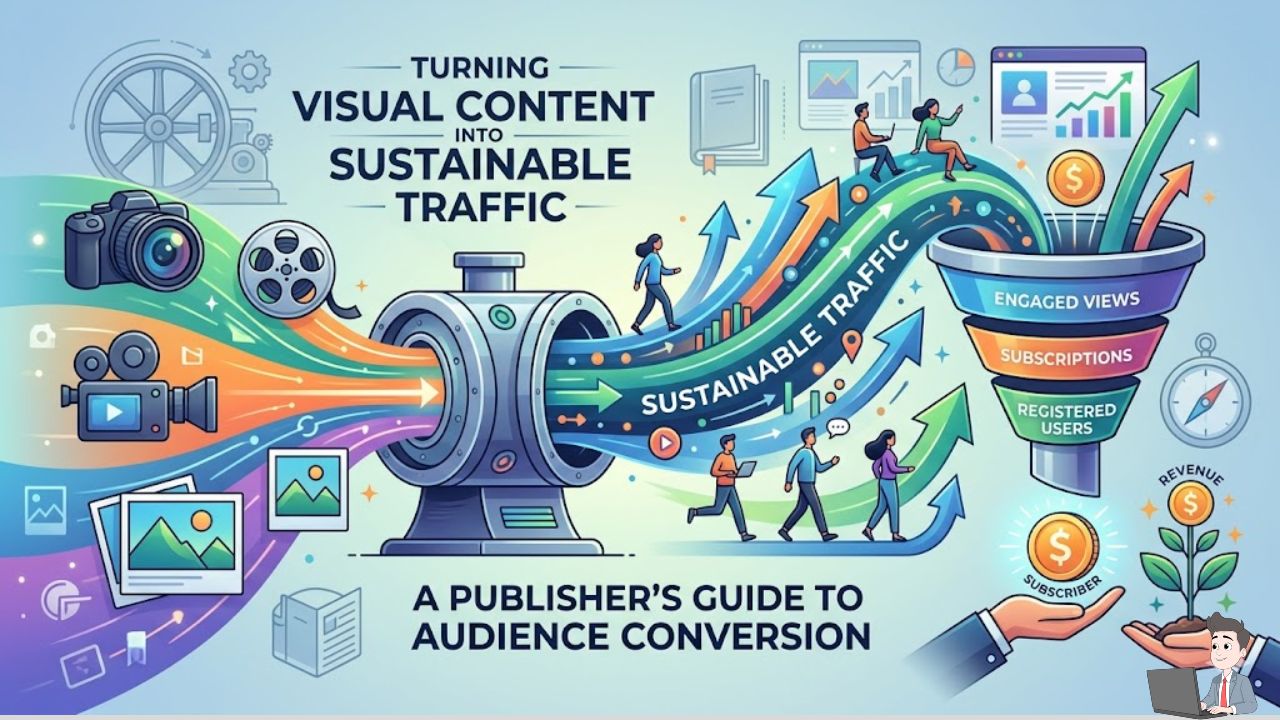
Publishing a stunning piece of visual content can yield an immediate, intoxicating rush. Whether it is a flawless, high-end rendering of a minimalist organic kitchen or a meticulously curated design mood board, the resulting social media metrics can be staggering. Notifications pour in, likes multiply, and the engagement metrics suggest a viral success.
For a brief moment, the psychological reward is absolute. The hours spent mastering design software, tweaking lighting, and curating a digital aesthetic appear to have paid off.
But then comes the reality of running a digital publishing business. You log into your analytics dashboard and your Google AdSense portal to review the tangible metrics of yesterday’s viral success, only to find a flat line. The revenue column barely registers.
This is a common frustration for digital publishers. You may have an automated integration firing perfectly, generating hundreds of thousands of impressions and repins for clean, modern, and vintage interior design styles. Yet, the accompanying website traffic remains stagnant.
You are engagement-rich, but your digital properties are starving. If you are investing resources into creating high-quality digital assets only to see zero financial return on your monetized sites, the problem is solvable. Below, we diagnose why social media traffic often fails to convert and outline policy-compliant, user-centric strategies to build a sustainable publisher ecosystem.

Diagnosing the Problem: Why Visuals Fail to Convert
Before patching the leak in a revenue stream, publishers must understand the user behavior driving it. From a policy and traffic-quality standpoint, here are the three core reasons high-quality visuals fail to generate valuable website sessions.
1. The “Inspiration vs. Action” Disconnect (Thin Content Risk)
When a user views a photorealistic image on a social feed, they are in a state of passive consumption. If your caption merely reads, “Obsessed with these natural wood tones,” there is zero incentive for them to navigate to your website.
Furthermore, if they do click through to a page that only features the same image with no additional text, this risks violating Google’s Thin Content or Low-Value Content policies. Publishers must provide original, substantive value that justifies the user’s click.

2. Navigational Friction (Deceptive Site Behavior Risk)
In the digital publishing world, friction kills conversion and damages account standing. If a user clicks a link expecting details on a specific minimalist bedroom design, they must land exactly on that content.
If your link directs them to a generic, chaotic homepage where they are forced to hunt for the article, you create a frustrating user experience. Google AdSense strictly prohibits Deceptive Site Navigation. Users must be able to easily find what was promised to them without excessive clicking, misleading layouts, or unexpected redirects.
3. Aesthetic Shock and Poor User Experience (UX)
There is an implicit contract between a creator and a user. If your social media promises a high-end, soothing visual, but your landing page features dense, unformatted text obscured by slow-loading elements or intrusive pop-ups, the user will bounce.
High bounce rates from social media traffic can sometimes be flagged by automated systems as Invalid Traffic (IVT), as it mimics unnatural or accidental clicking behavior. The transition from social media to your website must be seamless, fast, and visually respectful.
The Fix: A Framework for Policy-Compliant Revenue
Turning passive traffic into tangible, AdSense-compliant revenue requires transitioning from a “content creator” mindset to a strategic digital publisher. Here is a framework to transform an engaged visual audience into consistent, high-quality website traffic.
Step 1: Write Value-Driven Hooks
Your visual asset is the hook; your accompanying text is the bridge. Stop relying purely on aesthetics and begin writing highly searchable, value-packed summaries.
Instead of a basic caption, provide actionable insight: “3 Crucial Lighting Mistakes Making Your Modern Kitchen Feel Cold.” List the first two tips directly in the post to provide immediate, undeniable value. Then, create a genuine knowledge gap: “For the final lighting strategy—and the exact color temperature bulbs used in this render—read the full guide on the site.”
This ensures that the traffic arriving at your website has high intent, which translates to longer session durations and higher ad viewability.

Step 2: Ensure a 1-to-1 Landing Page Experience
Respect the user’s journey. When a follower clicks a specific image on an automated feed, the link must take them to a dedicated, high-quality article about that exact topic.
To maintain strict adherence to AdSense guidelines, your User Experience (UX) must be flawless:
- Speed: Ensure the page loads instantly.
- Layout: Keep layouts clean and modern, mirroring the high-end aesthetic of your visuals.
- Ad Placement: Place ads respectfully so they complement the reading experience. Ads must never obscure content, push primary content below the fold, or encourage accidental clicks.
Step 3: Publish Substantive, Original Content
AdSense rewards sites that prioritize the user. People do not just want to look at a nice room; they are searching for the context behind it.
When writing the accompanying article, provide deep, original insight. Do not simply list furniture pieces. Discuss the mechanics of the design, the architectural choices, and how clean lines and organic textures solve specific design problems.
By providing comprehensive, original content, you satisfy Google’s requirement for high-quality publishing while building trust with the reader.
The Takeaway: Building a Resilient Digital Business
In digital asset management, social media likes are vanity metrics; time-on-page, session depth, and organic audience loyalty are the true indicators of value.
By fundamentally changing how you frame visual content, ruthlessly fixing navigational friction, and adhering strictly to user-first publishing guidelines, you can transform your social presence. It stops being a static portfolio and becomes a sustainable, policy-compliant engine for a resilient digital business.