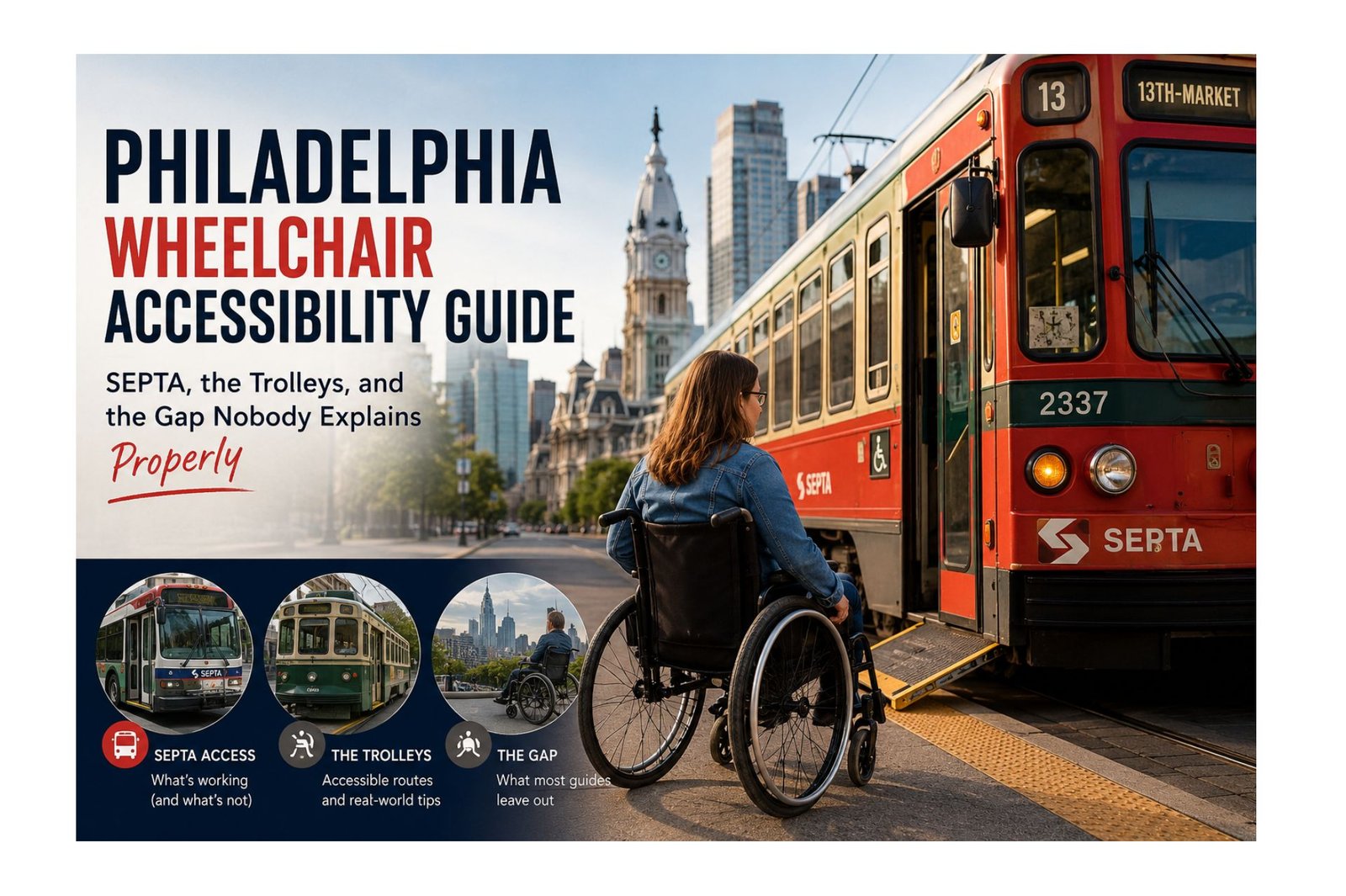
Philadelphia Wheelchair Accessibility Guide: SEPTA, the Trolleys, and the Gap Nobody Explains Properly
Philadelphia doesn’t come up as often as Chicago or New York when accessible travel gets discussed. That’s a little strange, because SEPTA has quietly become one of the more accessible big-city transit systems in the country — and also because almost everything written about it online is out of date.
Fares changed twice in the past year. Two long-inaccessible stations finally got elevators. And the one genuine gap in the system — the historic trolley network running underneath Center City — is rarely explained clearly, even by guides that otherwise mean well. This one is current, and it’s honest about what’s still difficult.
Philadelphia’s SEPTA Metro (subway) is largely wheelchair accessible, with elevators at over 100 stations and a goal of 99% accessible Metro trips by 2034. The base fare is $2.90. The exception is the subway-surface trolleys (routes 10, 11, 13, 34, 36), which still use step-only vehicles — even at stations where the underground platform itself has an elevator. SEPTA Access paratransit costs $5.75 per one-way trip.
01Why the Trolleys Are the Real Problem, Not the Stairs
Most transit accessibility guides focus on one thing: does the station have an elevator. In Philadelphia, that framing misses the actual issue.
SEPTA’s underground network is really two systems sharing the same tunnels in Center City. The Broad Street Line and Market-Frankford Line are heavy-rail trains built with accessible cars, and — at over 100 stations — elevators to street level. Underneath the same streets, five “subway-surface” trolley routes climb out of the tunnel and run at ground level through West Philadelphia, still using older vehicles with steps at the door and no lift.
That means a station can show up as “accessible” on SEPTA’s map because the subway platform has an elevator, while the trolley line stopping at the very same platform is unusable for a wheelchair. It’s the single most common source of confusion for anyone planning a trip through West Philadelphia or University City.
Even accessible stations can have a temporary elevator outage. SEPTA runs a 24-hour elevator status line at 877-SEPTA4U (877-737-8248) and posts live outages online — checking before you head out takes thirty seconds and can save an hour.
02Broad Street & Market-Frankford Stations With Elevator Access
This is the list worth screenshotting before your trip. SEPTA has quietly added elevator access to two stations that older guides — some published within the last year — still mark as inaccessible.
| Line | Confirmed accessible stations (elevator, street to platform) |
|---|---|
| Broad Street | 8th & Market, Allegheny, AT&T Station, Cecil B. Moore, Fern Rock Transportation Center, Girard, North Philadelphia, Olney Transportation Center, Oregon, Race-Vine, Spring Garden, Walnut-Locust, Tasker-Morris NEW |
| Market-Frankford | 2nd Street, 5th Street/Independence Hall, 8th Street, 13th/City Hall, 15th/City Hall, 30th Street, 40th Street, 46th Street, 52nd Street, 56th Street, 60th Street, 63rd Street, 69th Street Transportation Center, Allegheny, Berks, Church, Erie-Torresdale, Frankford Transportation Center, Girard, Huntingdon, Millbourne, Somerset, Tioga, York-Dauphin, Arrott Transit Center NEW |
Tasker-Morris and Arrott Transit Center finished accessibility construction most recently — if a guide doesn’t list them, it’s out of date.
The Broad Street and Market-Frankford lines cross at Girard and Allegheny, and both stops are accessible for the connection. You’ll need a new fare tap unless you’re using a SEPTA Key transfer.
The trolleys underneath the subway aren’t on this list — on purpose
Routes 10, 11, 13, 34 and 36 dip underground through the same Center City tunnels as the Market-Frankford Line, sharing platforms at stops like 30th Street, 22nd Street and 40th Street. The station elevator gets you to the platform. The trolley car itself still has steps. If your route runs through West Philadelphia on one of these lines, plan on a bus or Regional Rail alternative instead.
03Getting Around: Your Real Options
Tap each one to see the honest tradeoff.
Philadelphia Transit Options
Metro (Subway) & Bus
$2.90 base fare with two free transfers within 120 minutes if you tap the same card. Every bus has a ramp, and every listed Metro station above has an elevator — the most affordable, most reliable option for trips within the city.
Regional Rail
All three Center City hubs — 30th Street, Suburban, and Jefferson Station — are accessible, as is every stop on the Airport Line. Fares start around $3.75–4 one-way. Staff bring a bridge plate to close the gap between platform and train; wait near the front of the platform and flag the operator.
SEPTA Access (Paratransit)
$5.75 per one-way trip for registered riders, with a free seat for a personal care attendant. Registration takes a few days, so book at least 24 hours ahead — this isn’t a same-day option. Visitors can register in advance for free paratransit through SEPTA’s ADA Visitor Registration form.
PHLASH Downtown Loop
A wheelchair-accessible loop bus connecting Independence Hall, the Museum of Art, and Reading Terminal Market for a flat $5 all-day pass. No narration — just transportation, every 15 minutes through the tourist core.
04What’s Actually Accessible: The Highlights
Independence National Historical Park
Fully accessibleThe Liberty Bell Center and Independence Visitor Center are step-free with ramped entrances, and the outdoor spaces between the sites are flat, paved, and easy to navigate.
Reading Terminal Market
AccessibleGround-level entrances on both Filbert and 12th Street, wide aisles between vendor stalls, and accessible restrooms make this one of the easiest food stops in the city.
Philadelphia Museum of Art
AccessibleSkip the famous “Rocky steps” — there’s a dedicated accessible entrance with elevator access to every gallery floor, plus wheelchairs available to borrow at the front desk.
Spruce Street Harbor Park
Partly accessibleThe boardwalk sections are wheelchair-friendly, but some floating hammock and lounge areas are not. Fine for a stroll and a drink; check ahead if a specific seating area matters to you.
05What Real Travelers Are Saying
Wheelchair users who know Philadelphia well tend to describe the same workarounds, almost word for word.
06Frequently Asked Questions
Is the Philadelphia subway wheelchair accessible?
Are SEPTA buses wheelchair accessible?
How much does SEPTA Access paratransit cost?
Are the Philadelphia trolleys wheelchair accessible?
Sources
- Southeastern Pennsylvania Transportation Authority (SEPTA) — Accessibility, Station Accessibility Program, Fares, and ADA Paratransit pages, septa.org
- Visit Philadelphia — “A Guide to Accessible Philadelphia,” visitphilly.com
- WheelchairTravel.org — “Wheelchair Accessible Public Transportation in Philadelphia”

1 thought on “Philadelphia Wheelchair Accessibility Guide: Getting Around the City”