
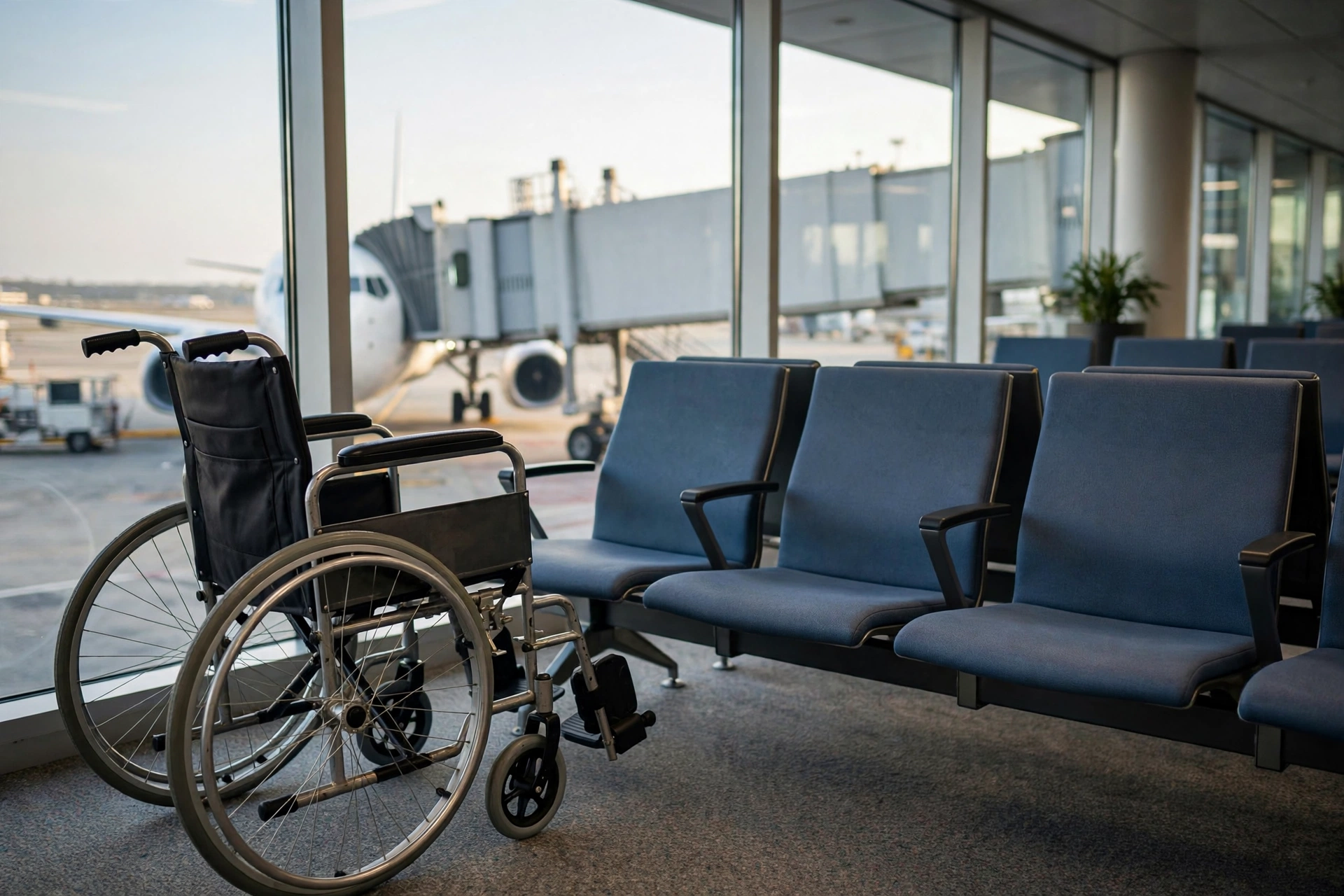
For manual wheelchair users, few moments of a journey feel as uncertain as handing over your chair at the aircraft door. Your wheelchair is not luggage — it is your mobility, your independence, and often a precisely fitted medical device. Gate checking is the system that keeps it with you for as long as possible: instead of surrendering it at the check-in counter, you roll it all the way to the aircraft door, where the crew stows it in the cargo hold at the last moment and returns it to you at the aircraft door on arrival.
This guide walks through exactly how gate checking a wheelchair works — what to do at check-in, security and the gate, how to prepare your chair so it survives the hold, and what your rights are if the airline damages it. Whether this is your first flight with a wheelchair or your fiftieth, the steps below will help you roll through the airport with confidence.
What gate checking a wheelchair actually means
When you gate check, your wheelchair travels in the aircraft’s cargo hold, but it is loaded last and unloaded first — handled separately from ordinary checked baggage. That matters: it minimises the time your chair spends in the baggage system, and it means the chair comes back to the aircraft door, not the baggage carousel. Gate checking is free — mobility devices do not count against your baggage allowance on virtually all airlines.
This guide is written for manual wheelchairs, both rigid and folding. Power wheelchair users can usually gate check too, but batteries add a layer of airline rules you must clear in advance — see our guide to flying with a power wheelchair for the battery specifics.
On international flights the same principle applies, though procedures vary by airport — at some airports you may be asked to transfer to an airport wheelchair at the gate rather than rolling your own chair down the jet bridge. Ask the gate agent what to expect so there are no surprises.
Gate checking step by step
- Before you leave home: photograph your chair from every angle, remove everything detachable, and label the frame with your name, phone number and flight details on a sturdy tag.
- At the check-in counter: tell the agent you are gate checking a manual wheelchair and need it to the aircraft door. Ask for the gate-check tag to be prepared — some airlines issue it at check-in, others at the gate.
- At security: you will be screened in your chair or a screening chair. Send removable parts — cushion, side guards, tools — through the X-ray belt in a tray.
- At the gate: arrive early and introduce yourself to the gate agent. Confirm the gate-check tag is attached and that the chair will be returned to the aircraft door (not the carousel) on arrival — ask for this to be noted on your booking.
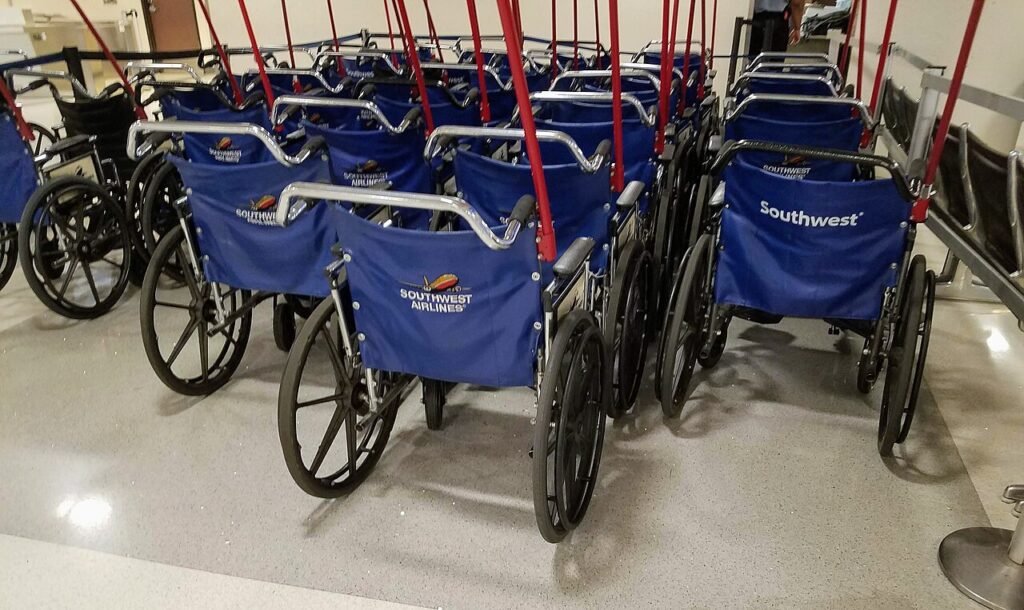
- Pre-boarding: you will board first. Roll down the jet bridge to the aircraft door, transfer to the narrow aisle chair, and the crew will stow your folded, secured chair in the hold.
- During the flight: keep your cushion with you — it protects your skin on the airline seat and cannot be damaged in the hold.
- On arrival: wait on board until your chair is brought back to the aircraft door. This can take 10–20 minutes; it is normal. Deplaning last is the price of getting your own chair back.
How to prepare your chair before the airport
An hour of preparation at home prevents most gate-check damage. Work through this checklist:
- Strip it down: remove quick-release wheels, the cushion, footrests, armrests, side guards and any bags or accessories. Parts carried into the cabin cannot be damaged in the hold.
- Photograph everything: take clear, dated photos of the frame, wheels and upholstery from all angles. These are your evidence if you need to claim.
- Label the frame: attach a sturdy luggage tag to the frame itself — not a removable part — with your name, mobile number and flight number.
- Secure what remains: tape or strap down brakes, folding mechanisms and loose fittings so nothing snags on handling equipment.
- Pack a small toolkit: a multi-tool that fits your chair’s bolts, plus a spare inner tube or puncture kit if you use pneumatic tyres.
- Keep the cushion with you: it is expensive to replace quickly, and you will want it on the aircraft seat anyway.
Tips that protect your chair from damage
- Use a protective cover if one exists for your chair model — it will not prevent every knock, but it stops scratches and snags.
- Brief the crew politely: a 20-second explanation (“please lift from the frame, not the push handles”) is remembered more than you would expect.
- Fold and lock: if your chair folds, fold it and lock it folded — a compact, locked chair is harder to damage.
- Never surrender your chair at check-in if you can gate check instead: the longer it spends in the general baggage system, the higher the risk.
- Check the tag: make sure the destination on the gate-check tag matches your final destination, especially on connections.
Your wheelchair is not luggage — it’s your legs. Treat every handoff as a conversation, not a transaction, and your chair stands a far better chance of coming home in one piece.
If the airline damages your chair: your rights
Even with perfect preparation, damage happens — airline damage to wheelchairs is common enough that we have written a full guide to it. The essentials: report damage at the airport immediately, before you leave; the airline is responsible for repairing or replacing a damaged mobility device; and on US domestic flights, Department of Transportation rules require airlines to prioritise wheelchairs and provide a loaner while yours is repaired. Read our step-by-step guide to what to do if an airline damages your wheelchair for the full claims process, including what to document and how to escalate.
Keep every document: your dated photos, the baggage tag, the damage report and any receipts for repairs or replacement parts. Airlines and insurers settle claims on paperwork, and the travellers who are paid fastest are the ones who can produce it.
What to do on arrival
The last ten minutes of the journey matter as much as the first.
- Wait on board until your chair arrives at the aircraft door — do not let yourself be rushed into an airport wheelchair before your own chair appears unless you choose to.
- Inspect before you roll away: check the frame, wheels, brakes and folding mechanism right there on the jet bridge.
- Report damage immediately: if anything is damaged, report it at the airport and get a written report (a Property Irregularity Report on international flights) — claims made after leaving the airport are far harder to win.
- If your chair does not arrive, ask for a loaner chair on the spot and get a reference number for the delayed item.
Frequently asked questions
Is gate checking a wheelchair free?
Yes. Airlines carry mobility devices free of charge, and they do not count against your baggage allowance — on virtually all scheduled airlines worldwide.
Can I gate check a power wheelchair?
Usually yes, but power chairs involve battery rules (spillable versus lithium batteries) that you must clear with the airline in advance, typically at least 48 hours ahead. See our guide to flying with a power wheelchair for the details.
Will gate checking damage my wheelchair?
The risk is lower than counter-checking because the chair spends less time in the baggage system, but handling damage still happens. Stripping removable parts, photographing the chair and using a protective cover cut the risk substantially.
What if my wheelchair isn’t waiting at the aircraft door?
Stay calm and ask the crew immediately — it may still be on its way up from the hold. If it is genuinely missing, request a loaner chair and a reference number before leaving the airport, then follow the airline’s tracing and claims process.
Can I stay in my own wheelchair until boarding?
Yes — that is the whole point of gate checking. You transfer to an aisle chair at the aircraft door, and your chair goes into the hold from there.
