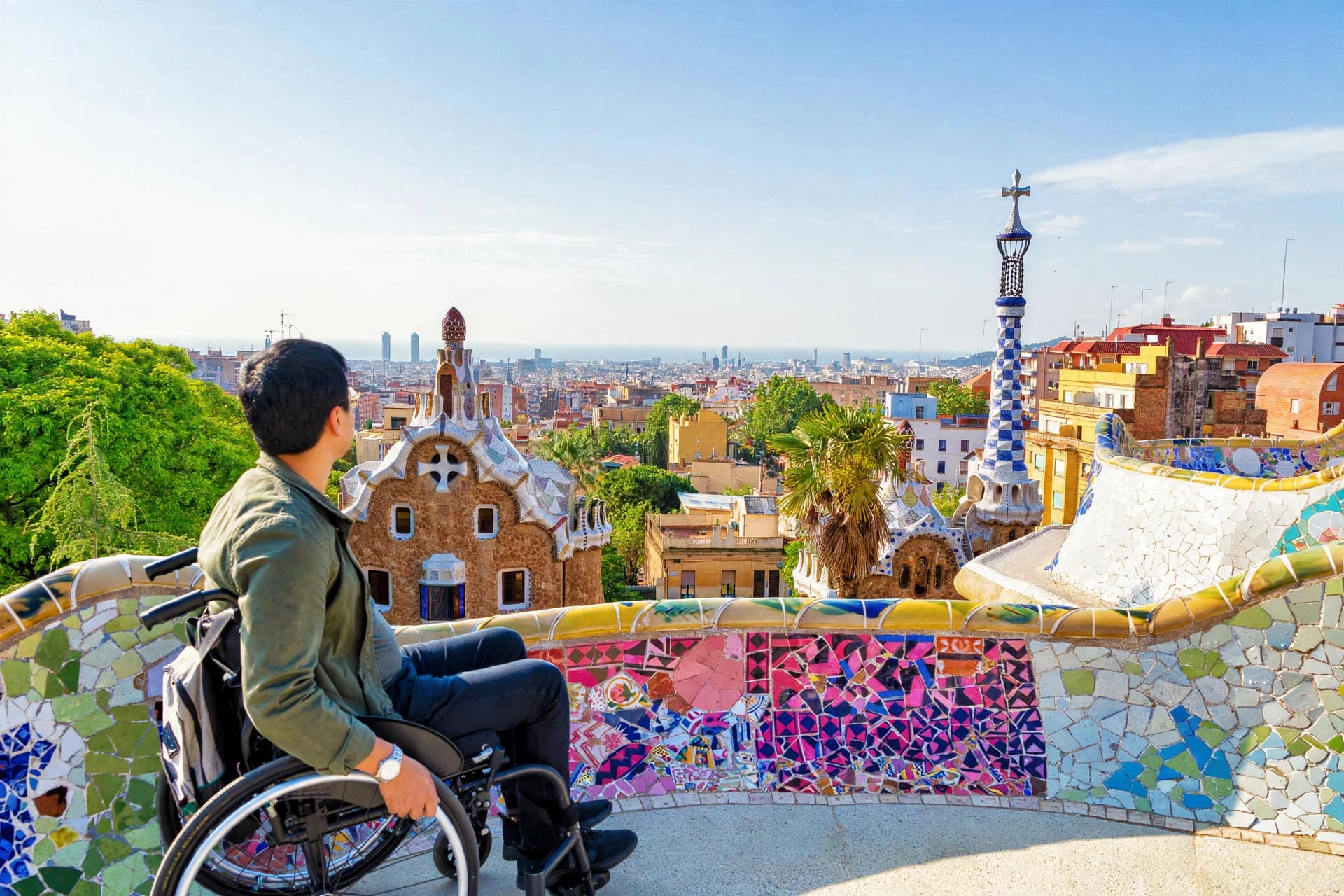
Barcelona is one of the most rewarding city breaks in Europe for wheelchair users — but it is not uniformly easy. The Eixample’s wide, flat grid, the step-free waterfront promenades, and an accessible beach programme that lends amphibious chairs in summer make large parts of the city genuinely easy to enjoy. Then you roll into the Gothic Quarter’s medieval lanes, with their narrow passages and uneven stone paving, and the city asks a little more of you.
This guide gives you the honest, practical picture of Barcelona wheelchair access: where rolling is effortless, where it takes planning, how the accessible beaches work, what to expect at the Sagrada Família and Park Güell, and how to get around by metro, bus and taxi.
Barcelona wheelchair access at a glance
- Flat, easy districts: wide pavements with regular dropped kerbs across the Eixample grid and the seafront promenade from Barceloneta to the Forum.
- Buses: every city bus is low-floor with a boarding ramp. Many metro stations have lifts, but coverage is station-by-station — check before you travel.
- Beaches: four beaches run assisted bathing points with amphibious chairs and accessible changing rooms during the summer season.
- Gaudí sights: the Sagrada Família and Park Güell both offer step-free routes, and visitors with accredited disabilities usually enter free with one companion.
- Old Town: the Gothic Quarter and El Raval are beautiful but demanding — narrow streets, cobbles and occasional steep lanes.
The Old Town: Gothic Quarter and El Raval
Barcelona’s Ciutat Vella (Old Town) is the city’s medieval core — and the part that demands the most from wheelchair users. These streets were laid out centuries before accessibility was a concept, so go in with a plan rather than hoping for the best.
The Gothic Quarter
The Barri Gòtic’s lanes are narrow, the paving is irregular stone, and corners can be tight. That said, the main routes are manageable: Carrer de Ferran, running from La Rambla toward the cathedral, is one of the flatter and wider options, and the plaza in front of Barcelona Cathedral is open and level.
Enter from the Jaume I / Via Laietana side rather than climbing up from the port, visit early when crowds are thin, and after rain treat the polished stone as slippery — because it is.
- Plan routes along the widest streets (Ferran, Jaume I, Laietana) and skip the tightest lanes around Sant Felip Neri unless you have assistance.
- Many small shops and historic bars have a step at the entrance — larger restaurants on the plazas are usually easier.
- Accessible public toilets are scarce here; use the cathedral museum or nearby department stores.
El Raval
Just across La Rambla, El Raval mixes medieval streets with broad modern interventions. The Rambla del Raval is wide, flat and easy, with step-free access to the MACBA contemporary art museum, which has lifts throughout. The Maritime Museum (Museu Marítim), housed in the old royal shipyards, is also step-free. After dark, stick to the main thoroughfares.
Eixample: the flat, easy grid
If you want the smoothest possible base, stay in the Eixample. Its 19th-century grid was designed with unusually wide pavements, gentle chamfered corners and regular dropped kerbs — rolling here is about as easy as city travel gets. Passeig de Gràcia, the grand boulevard running through the district, is flat and step-free from end to end.
This is also Gaudí’s boulevard: Casa Batlló and La Pedrera (Casa Milà) both sit on it. Both have lifts and accessible visits, but historic interiors include tight or stepped sections — book the accessible route in advance.
Barcelona’s accessible beaches
Barcelona runs one of Europe’s best organised accessible beach programmes. During the bathing season — typically late June to mid-September — assisted bathing points at Nova Icària, Bogatell, Mar Bella and Nova Mar Bella provide amphibious chairs, accessible changing rooms and showers, and trained staff and volunteers who help with transfers.
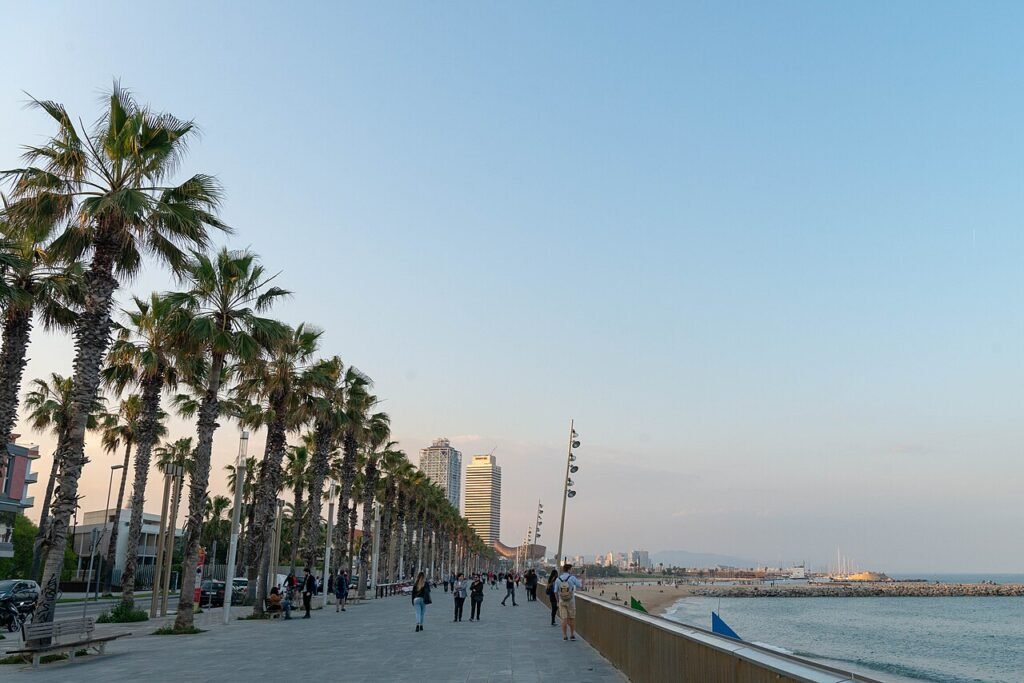
Wooden walkways cross the sand at the main beaches, and the whole seafront promenade from Barceloneta to the Forum is flat and step-free — excellent for an evening roll outside the bathing season too.
- Arrive before midday in July and August — amphibious chairs are limited and allocated on a first-come basis.
- Check the city council website for the season’s exact dates before you travel — they shift slightly each year.
- Bring sun protection and water — shade is limited near the bathing points.
Gaudí’s masterpieces: Sagrada Família and Park Güell
Sagrada Família
The basilica’s main visitor entrance, on the Carrer de la Marina side, is step-free, and the nave, museum level and shop are fully accessible by lift. The interior is vast, level and easy to move through — one of Europe’s more accessible major churches. The one hard limit: the towers are not wheelchair accessible. They are reached only by narrow spiral staircases with no lift, so plan to enjoy them from below.
Visitors with an accredited disability and one companion are generally admitted free of charge. Book timed tickets well ahead — weeks ahead in high season — and mention access needs so staff can direct you to the step-free entrance.
Park Güell
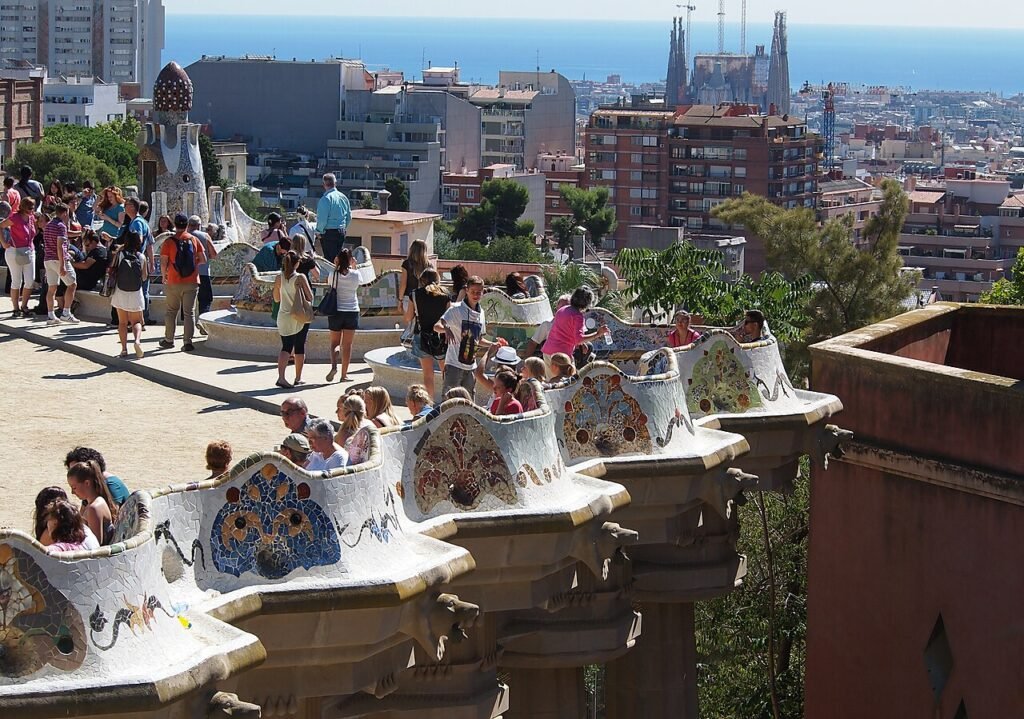
The Monumental Zone is built on a hillside, so be realistic: some paths are steep and a few are gravel. But the headline experience — the mosaic terrace (Plaça de la Natura) with its serpentine bench and city views — is reachable step-free. Use the accessible entrance on the Carrer de Larrard side, where the gradient is gentler.
Accredited disabled visitors plus one companion are generally admitted free. Solid tyres handle the park’s gravel and steep ramps more comfortably than soft pneumatics.
Getting around: metro, buses and taxis
Public transport is where Barcelona shines — with one caveat that matters.
- Buses: the entire TMB bus fleet is low-floor with boarding ramps. For most journeys, the bus is the simplest and most predictable accessible option.
- Metro: many stations have lifts, but coverage is not universal — it varies station by station and even by entrance. Key tourist stations with step-free access include Sagrada Família (L2/L5), Diagonal, Passeig de Gràcia (L3) and Espanya — but lifts go out of service, so check the TMB app on the day and always have a bus alternative.
- TMB app: shows real-time lift and escalator status — download it before you fly.
- Adapted taxis: Eurotaxis can be booked by phone or app; allow extra waiting time at peak hours.
- Sightseeing bus: the Barcelona Bus Turístic has wheelchair spaces — reserve one when you book your ticket.
Honest planning tips for wheelchair users
- Base yourself in the Eixample or along Diagonal for the flattest daily rolling. The Old Town is wonderful to visit but tiring as a base.
- Book the big sights ahead: Sagrada Família tickets weeks in advance, Park Güell days in advance in summer — timed entry sells out.
- Learn the word “ascensor” (lift) — you will ask for it, and staff respond faster when you do.
- Plan rainy days indoors: cobbles are slippery when wet, and museums like MACBA and the Museu Nacional d’Art de Catalunya are fully accessible backups.
- Carry your disability accreditation — it unlocks free or reduced entry at most major sights, usually including one companion.
Barcelona rewards preparation: check metro stations lift by lift, book the big sights ahead, and the city opens up beautifully.
Frequently asked questions
Is Barcelona wheelchair accessible overall?
Yes, with caveats. The Eixample grid, the waterfront and the bus network are genuinely easy; the medieval Old Town is challenging but visitable with planning; and the metro is accessible station-by-station rather than everywhere. Plan station routes, stay in a flat district, and you’ll have an excellent trip.
Is the Gothic Quarter accessible for wheelchairs?
Partially. Carrer de Ferran and the cathedral plaza are manageable, but many lanes are narrow with uneven paving. Visit early, stick to wider streets, and treat it as a half-day excursion.
Can wheelchair users swim at Barcelona’s beaches?
In summer, yes. Nova Icària, Bogatell, Mar Bella and Nova Mar Bella offer assisted bathing with amphibious chairs, accessible changing rooms and support staff (roughly late June to mid-September). Outside the season the promenade is still fully step-free.
Is the Sagrada Família wheelchair accessible?
The nave, museum and shop are step-free with lift access, and disabled visitors with a companion are generally admitted free. The towers are not accessible — they are reached only by narrow spiral staircases with no lift.
Which Barcelona metro stations are step-free?
Coverage varies by station and entrance, and lifts can be out of service. Sagrada Família (L2/L5), Diagonal, Passeig de Gràcia (L3) and Espanya are key accessible stations — verify lift status on the TMB app on the day.
