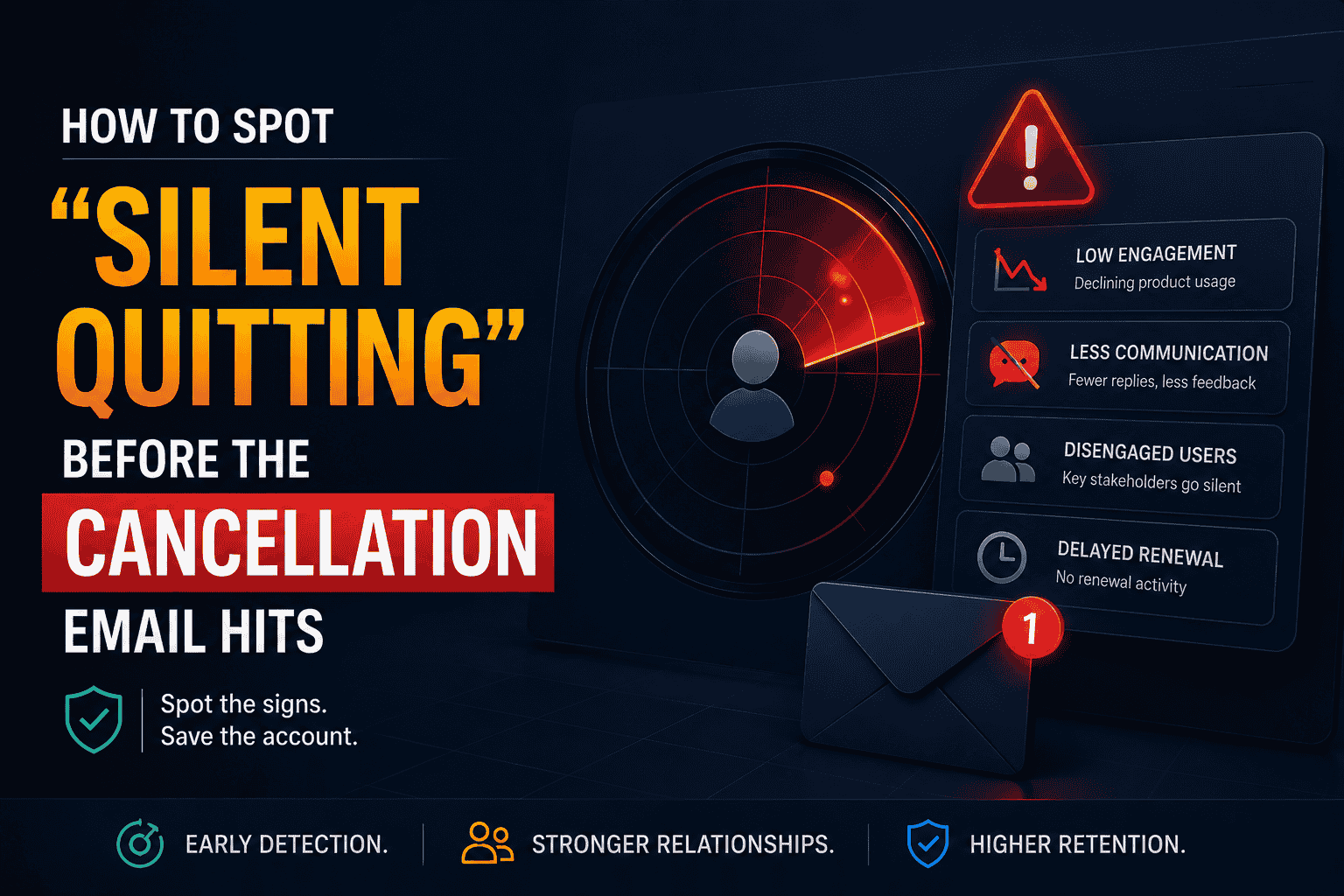
I remember a specific Tuesday morning vividly. The coffee was hot, the quarterly reports looked solid, and I was ready to crush the day.
Then, my inbox pinged.
Subject: Cancellation Notice.
My stomach dropped into my shoes. It wasn’t just any client—it was one of our most consistent, highest-paying accounts. I immediately went into full panic mode and replied: “I am so sorry to hear this! Is there anything we can do to fix it? Can we jump on a call?”
Radio silence. They were gone.
I spent the next week obsessing over what went wrong. I reviewed our recent deliverables and dug into our analytics dashboard. That’s when the brutal truth hit me: They didn’t leave on that Tuesday.
They had mentally checked out 30 days prior. I just didn’t see the signs because I was too busy hunting for new business to notice the back door was wide open.
In the digital business world—whether you are managing high-ticket SaaS retainers or building traffic generation strategies for digital assets like ProfitShieldAI.com—we obsess over acquisition. We spend fortunes on marketing and SEO. But we rarely talk about the silent, devastating cost of losing the people who already trusted us.
When that cancellation email hits, most founders frantically search for “retention strategies,” but by then, you are performing an autopsy.
Here is how you can completely overhaul your approach to retention. By building a “Churn Radar” using predictive data, you can spot an exit weeks in advance and step in to save the relationship before the cancellation letter is ever drafted.
Phase 1: The Telemetry of “Silent Quitting”
Clients rarely wake up, get angry, and abruptly decide to quit. It is almost always a slow fade.
To a busy human account manager, everything looks fine because the client isn’t actively complaining. But to a machine learning model monitoring telemetry data, the warning signs are flashing bright red.
Predictive Churn Analytics isn’t magic. It is pattern recognition on steroids. If you are leveraging the processing power of a Google AI Pro plan, you already have the computational horsepower to feed your raw user data into an LLM and ask it to identify subtle behavioral drop-offs.
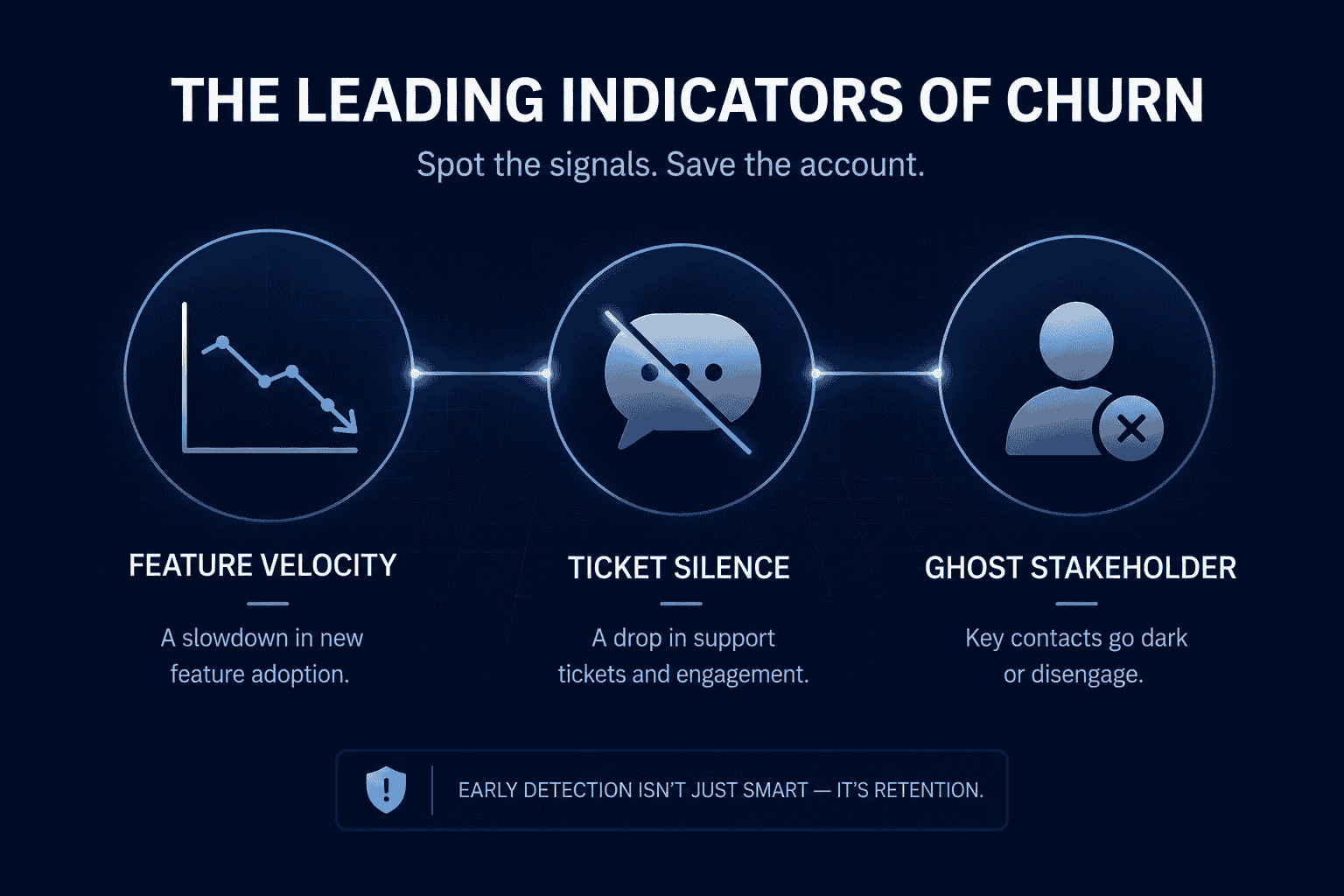
Instead of looking at basic “logins,” you must track the Telemetry Triangle:
- Feature Velocity Drop: It is not about if they log in; it is about what they do once inside. If a user drops from using three core features a day to just briefly opening the dashboard once a week, they are disengaging.
- The “Ticket Silence” Trap: We hate getting support tickets because they feel like complaints. The truth is, a client who complains is a client who still cares. Absolute silence is the loudest churn signal in existence. When a client stops asking questions, they have given up on getting value from your service.
- The “Ghost Stakeholder”: Often, you sell your service to a specific “Champion” inside a company. If that Champion stops opening your weekly recap emails or takes 4 days to reply to a Slack message instead of 4 hours, your account is immediately at risk.
If you want to stop guessing why your clients are leaving, watch this 11-minute masterclass by B2B expert Dan Martell. He breaks down the exact predictive retention frameworks used by the fastest-growing SaaS companies in the world.
Phase 2: Building Your Proprietary Health Score
Most businesses measure churn after the damage is done using the standard formula:
Gross Revenue Churn (%) = {Revenue Lost During Period} ÷{Total Revenue at Start of Period} x 100
To solve the root problem, you must intercept the behavior before this formula is triggered. You do this by calculating a weighted Customer Health Score (CHS).
Assign a mathematical weight to your specific platform’s actions:
{CHS} = (W_1 x Usage Depth} + (W_2 x Support Engagement} – (W_3 Friction Events}
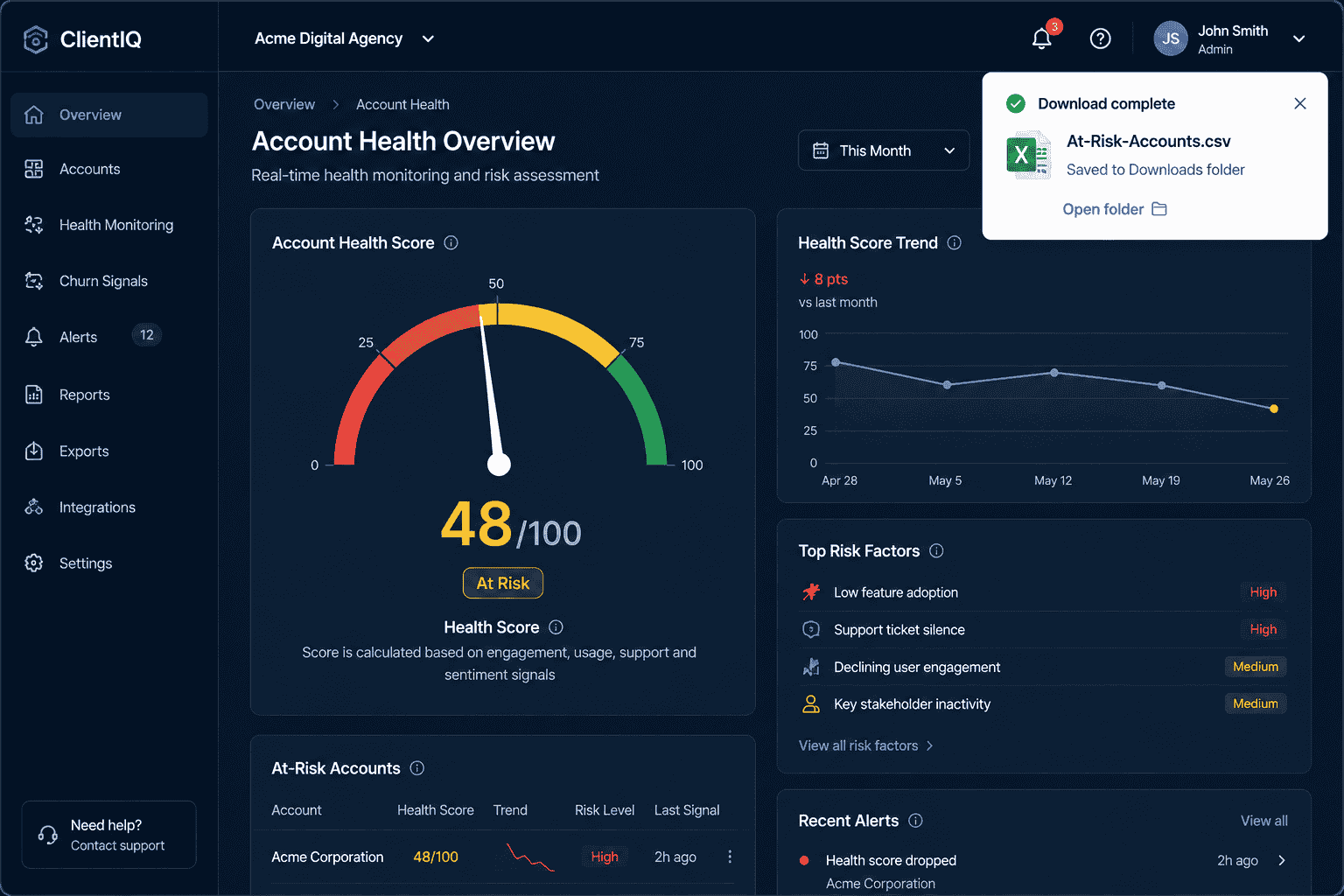
If a client’s CHS drops below a 50/100, the system triggers an immediate manual intervention.
Phase 3: The 10/20/70 Rule of Predictive Data
I see business owners make a massive mistake here. They buy expensive churn-prediction software, hook it up to their CRM, and expect their retention rates to magically improve.
They don’t.
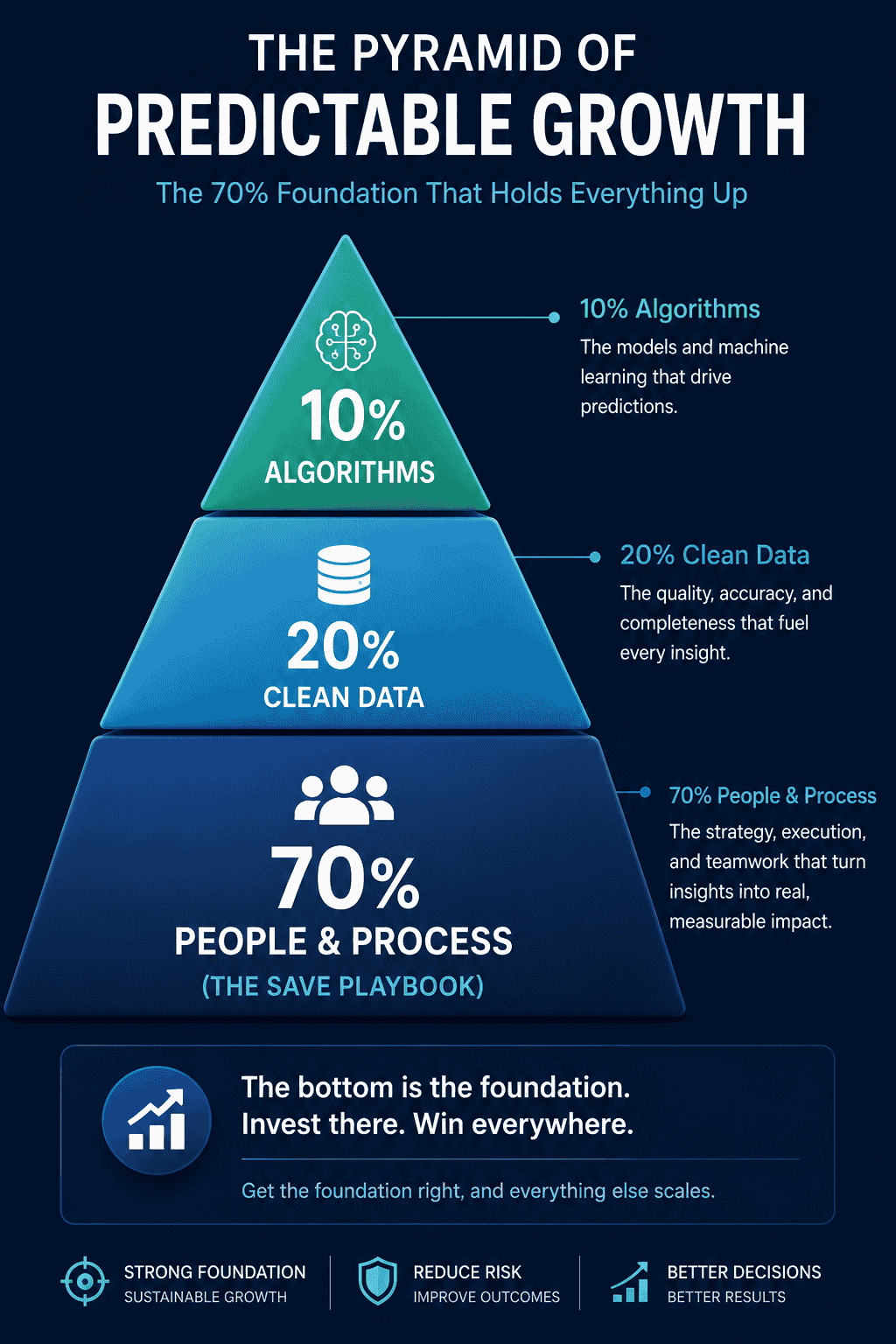
According to enterprise consulting frameworks, successful AI and data adoption follows the 10/20/70 Rule:
| Component | Weight | The Reality |
| Algorithms | 10% | The underlying code predicting the churn is the easiest part of the battle. |
| Technology/Data | 20% | The software UI and the clean, integrated data you feed it. |
| People & Process | 70% | The human element. If your AI predicts a cancellation but your team lacks a “Save Process,” the prediction is useless. |
The Operational Fix: You don’t just need a smarter AI; you need a better human response plan. Set up an automation so that every Friday at 4:00 PM, a CSV report of all “At-Risk” clients is automatically exported to the download section of your PC. Your executive team must review those specific downloaded files before logging off for the weekend.
Phase 4: The 30-Day “Save” Playbook
So, your Churn Radar just pinged. A high-value account dropped into the critical health zone. What do you do right now?
Rule #1: Do NOT send a generic “Just checking in!” email.
If they are frustrated, a breezy, automated-sounding email will just annoy them. You need to deploy a highly intentional, pattern-interrupt sequence.
Step 1: The Vulnerable Executive Call
When the data flags a high-value client, do not email. Pick up the phone.
Say exactly this: “Hey John, I was looking at our backend dashboard and noticed your team’s usage dropped off a cliff this month. Honestly, I’m not calling to sell anything or push a renewal. I just want a blunt answer—where are we failing you right now?”
Extreme vulnerability builds instant trust. You are naming the elephant in the room.
Step 2: The ‘Success Audit’ Reset
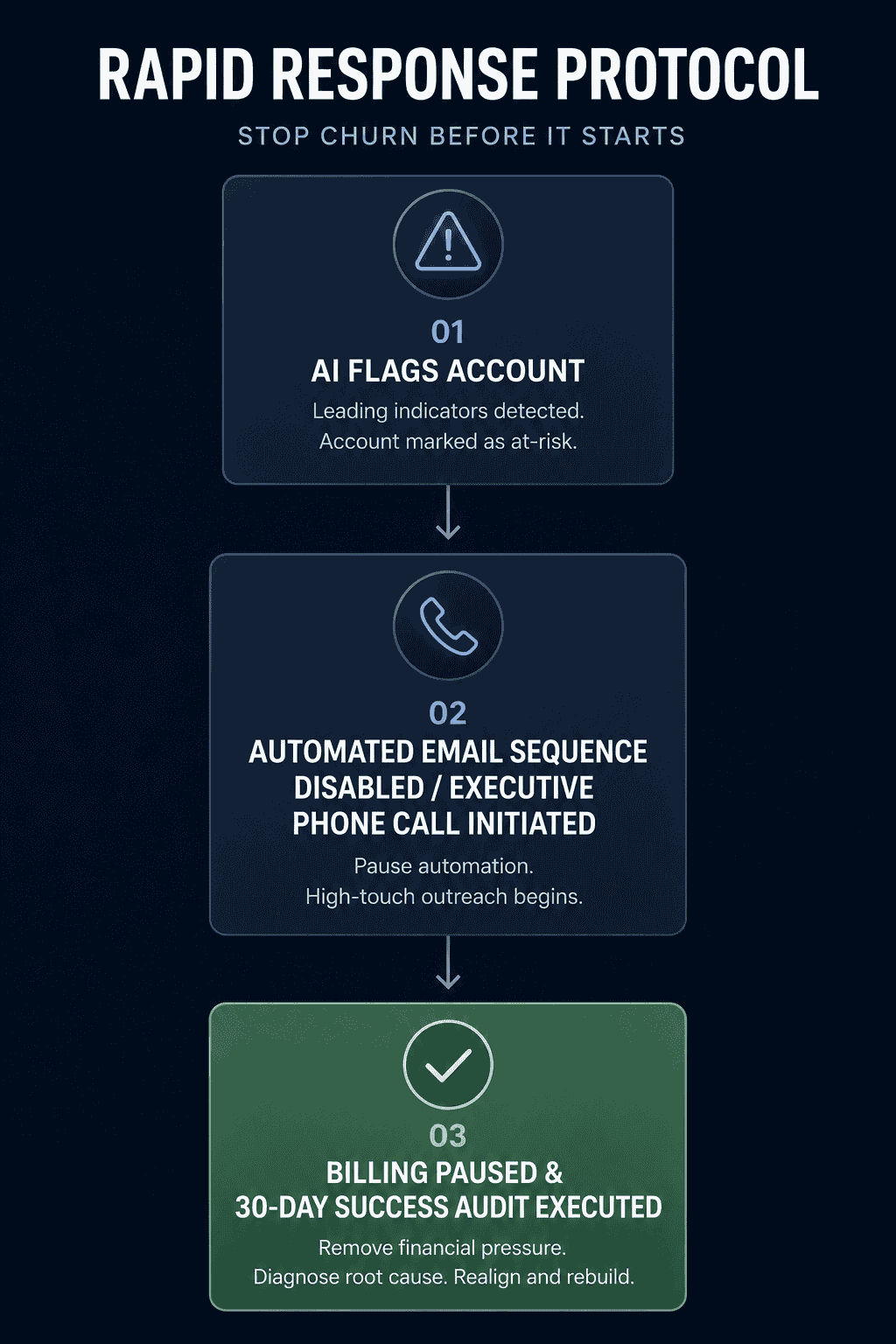
If the predictive model was right and they admit they are struggling, you have to hit the reset button immediately to stop the bleed.
Offer the save: “Let’s pause your billing for 30 days. I want to personally rip your account down to the studs and rebuild the setup to make sure you get the exact ROI you paid for.”
You sacrifice one month of short-term revenue to secure years of long-term loyalty and protect your recurring revenue base.
Frequently Asked Questions (Navigating the Exit)
Q: Can a client cancel their contract immediately?
A: Yes, most global business frameworks have a “cooling-off period” (usually 14 days) where they can cancel without penalty. Always verify the specifics of your Master Service Agreement (MSA). However, lean toward flexibility. Holding a deeply unhappy client hostage to a contract will result in reputational damage that costs far more than the final invoice.
Q: What is a polite business response to clients who cancel appointments or ghost?
A: Lead with empathy, follow with policy.
Bad: “You owe us $50 for the late cancellation.”
Good: “I hope everything is okay on your end! We usually require 24 hours notice so we do have to charge a small fee to cover the team’s time, but let’s get you rescheduled for when things are calmer.”
Q: How do you fire a toxic client?
A: Sometimes, you must initiate the breakup to protect your team. Use the objective “Capacity Argument”: “We’ve reviewed our current operational capacity, and we unfortunately cannot give your account the massive, dedicated attention it deserves right now. We are going to refund this month’s retainer and fully assist in transitioning your assets to a new provider.”
The Bottom Line
A predictive “Churn Radar” isn’t about trapping people in contracts. It is about Empathy at Scale.
When you ask “How do I stop losing money in my business?”, the answer isn’t always to sell harder or launch a new product. It is to listen better.
Data telemetry gives you the superpower to “listen” to a thousand clients at once. Trust the signals. Respect the 30-day notice. But fight fiercely for the relationship. Because the client you successfully save from the brink is always more profitable—and infinitely more loyal—than a brand new lead.