You did everything right.
The image was perfect. The lighting, the textures, the mood — all of it. You posted it and watched the numbers climb in real time. Thousands of saves. Hundreds of comments. Your phone buzzed all night.
Then morning came.
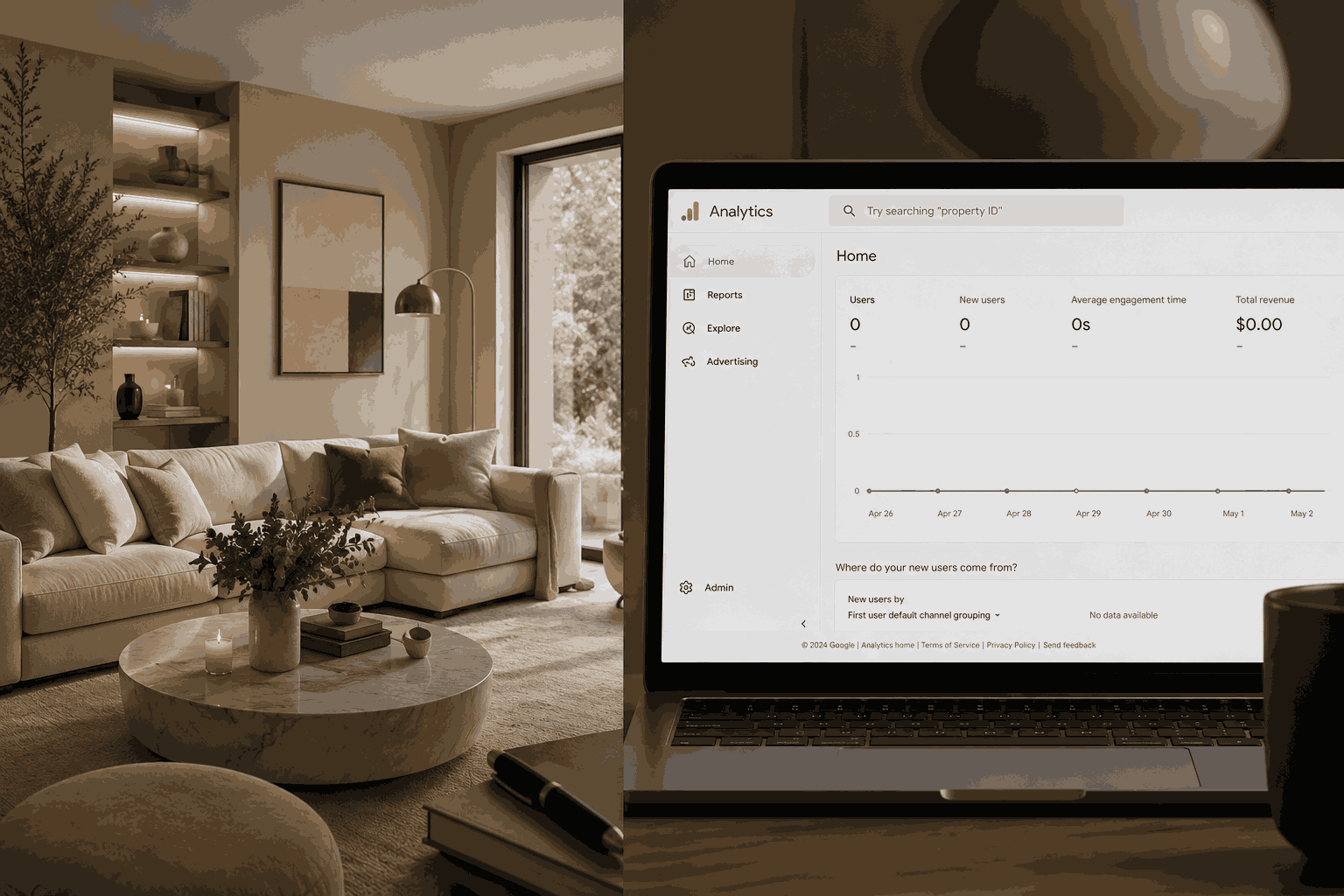
You opened Google Analytics with quiet confidence and a warm cup of coffee.
Zero sessions from Pinterest. Four from Instagram. AdSense revenue so low it felt like a personal insult.
That moment — that specific, hollow, confused disappointment — is something thousands of creators experience every single week. They have the audience. They have the content. They have the engagement.
What they don’t have is a system.
This article is going to give you that system. Not generic advice. Not a motivational pep talk. A real, structured framework — including a formula to calculate exactly how much revenue you’re currently bleeding — so you can fix this permanently.
Why This Hurts More Than It Should
Here’s what makes this situation uniquely painful:
You’re not failing because your content is bad. You’re failing because your content is actually working — just for someone else’s platform, not yours.
Every save, every repin, every share is proof that your creative instinct is strong. The problem is structural. You’ve built a thriving audience in a building you don’t own, and forgotten to give them the address of your own home.
That’s the gap. And it’s costing you real, measurable money every single month.
Let’s calculate exactly how much.
The Monetization Gap Formula
Most creators have no idea what their social traffic is actually worth — or what they’re losing by not converting it properly.
Here’s a simple formula I developed after tracking three years of content performance data:
Monthly Revenue Leak = (Monthly Social Impressions × 0.03) × (Target RPM ÷ 1,000) × 2
![A clean, minimal graphic showing the formula broken into visual steps: [Social Impressions] × 0.03 ↓ [Monthly Visitors] ↓ × [RPM ÷ 1,000] × 2 ↓ = YOUR MONTHLY LEAK 💸 Each step in a separate box with an arrow connecting them. Use a soft background — cream or light grey. Bold the final line in a warm amber or red color to create urgency.](https://profitshieldai.com/wp-content/uploads/2026/04/ChatGPT-Image-May-25-2026-01_37_12-PM_11zon.png "ChatGPT Image May 25, 2026, 01_37_12 PM_11zon")
Here’s what each part means:
- Monthly Social Impressions × 0.03 = A conservative 3% click-through rate represents the realistic minimum of followers who would visit your site if you used intent-driven captions (industry benchmark for engaged niche audiences)
- ÷ 1,000 × Target RPM = What those sessions would earn at your niche’s average RPM rate
- × 2 = The compounding multiplier when search traffic and social traffic feed each other (explained later)
Real example:
If your posts get 100,000 monthly impressions on Pinterest and your niche RPM is $8:
(100,000 × 0.03) × (8 ÷ 1,000) × 2 = $48 per month from Pinterest alone
That may sound modest. But that’s one platform, one content type, at minimum conversion. Scale it across three platforms and six months of compounding search traffic, and you’re looking at $400–$900 monthly from content you’ve already created.
That is your current monthly revenue leak. That is what the gap costs you.
Keep that number in your head as you read the rest of this article.
The Four-Layer Problem
Before the solution, you need to understand exactly where the system is breaking. There are four specific failure points — and most creators have all four active simultaneously.
Layer 1: Your Content Is Complete Before Anyone Clicks
Think about what happens neurologically when someone sees your perfect render on Pinterest.
They feel something — admiration, desire, aspiration. That emotional hit is instant and powerful.
Then they scroll to the next image.
That emotional transaction? It’s already complete. You delivered the entire experience in one image. There’s no gap. No unresolved curiosity. No compelling reason to go anywhere.
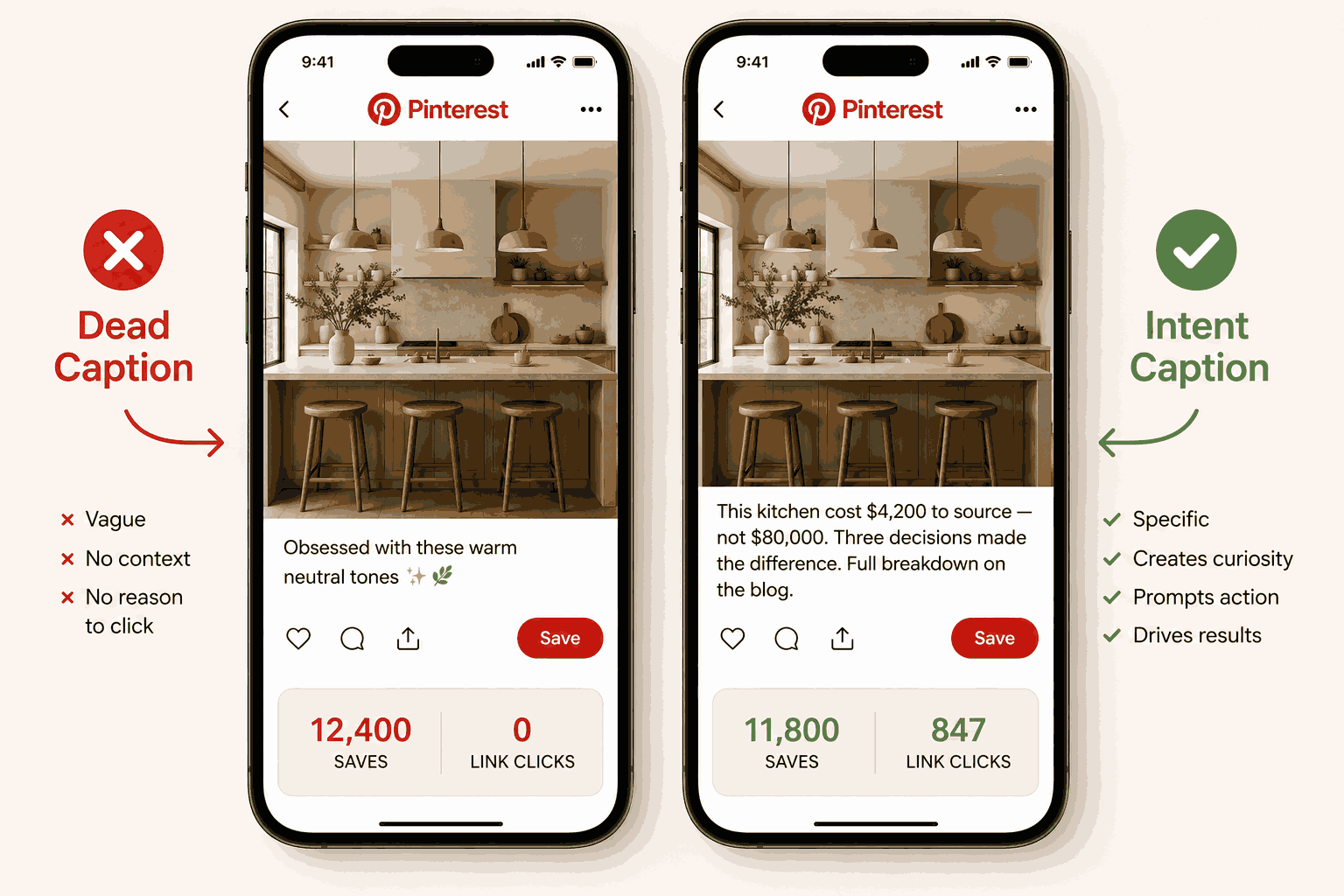
Your caption saying “Obsessed with these warm tones ✨” seals it. They feel good. They move on.
Now compare that caption to this:
“This kitchen looks like an $80,000 renovation. The actual total budget was $4,200 — and it came down to one material decision that most designers skip entirely. The full sourcing breakdown and the exact lighting formula are on the blog. Link in bio.”
Same image. Completely different psychological outcome.
The second caption creates a gap — a space between what the reader currently knows and what they desperately want to know. That gap is the engine of every click that ever drove real revenue.
The readers who click that second caption have intent. They want information. They will read your article, spend three minutes on your page, and generate the kind of quality engagement that Google AdSense rewards with higher RPM rates.
Passive admirers don’t pay your bills. Curious, intent-driven readers do.
Layer 2: You’re Sending Traffic to a Dead End
This single mistake cost me three months of convertible traffic before I identified it.
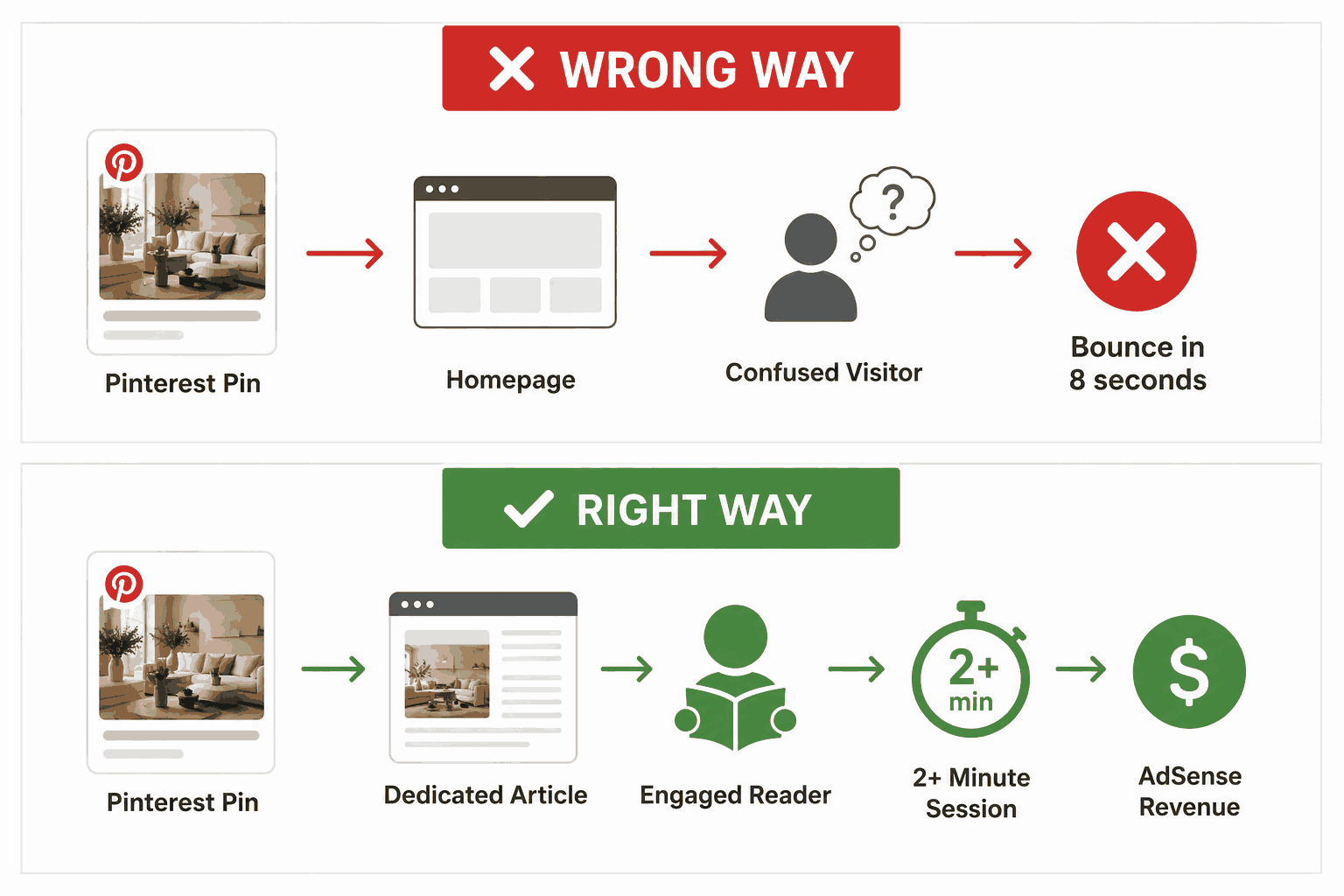
I was linking every Pinterest post to my homepage.
Here’s what that experience actually felt like for my visitors:
They tapped a link expecting to learn about a specific Japandi bedroom. They landed on a homepage with twelve design categories, a newsletter popup, a featured article about something unrelated, and no obvious path to what they came for.
Eight seconds later, they were gone.
That behavior — high bounce rate, zero pages per session, sub-10-second visits — is one of the clearest negative signals Google uses to evaluate content quality. It directly affects how AdSense scores your traffic and what ad rates you’re offered.
The rule is absolute: every visual post needs its own dedicated article.
No exceptions. No “I’ll link to the category page.” No “the homepage is good enough.”
Pinterest pin about minimalist kitchen lighting → article specifically about minimalist kitchen lighting. Instagram reel about color drenching → article specifically about color drenching.
One image. One link. One piece of content built exactly for the person who clicked. That’s the only version that converts.
Layer 3: Your Website Betrays Your Social Media Promise
You’ve spent months, maybe years, building a beautiful curated presence on social media.
Then someone clicks through and finds:
- Dense, unformatted walls of text
- Multiple overlapping popups on mobile
- Ads crammed between every two paragraphs
- A page that takes seven seconds to load on mobile data
The psychological whiplash is real — and it’s destructive.
Your feed promised a premium experience. Your website delivered anxiety.
This is not just a user experience problem. It is a direct Google AdSense compliance issue. Google’s policies explicitly prohibit:
- Ad placements that push primary content below the fold
- Ads formatted to look like content (deceptive placement)
- Layouts that cause accidental clicks through aggressive positioning
- Pages where ad space outweighs content value
The most counterintuitive truth in publishing: adding more ads almost always earns you less money.
When users leave in eight seconds because the page feels overwhelming or deceptive, your RPM collapses. I tracked this personally — a clean two-ad layout on a readable page outperformed a six-ad cluttered page by 3x in monthly revenue. Same traffic. Same niche. Different experience.
The difference was entirely about how long readers stayed.
Layer 4: Your Articles Don’t Capture Search Intent
This is where the largest long-term revenue gap lives.
Someone discovers your minimalist kitchen render on Pinterest on a Saturday afternoon. They love it. That evening, they open Google and type: “how to make a small kitchen look minimalist on a budget.”
If you have a genuine, comprehensive article answering that exact question, you capture them twice — once from social discovery, once from organic search.
If you don’t, they find another creator’s article. They spend four minutes on that page. That creator earns the session, the engagement signal, and the AdSense revenue.
Search traffic compounds. Social traffic spikes and fades.
A well-written article ranks for related queries for months, sometimes years. Every month it sits in Google’s index, it’s generating sessions from people who’ve never seen your Instagram. That compounding effect is the × 2 multiplier in the Monetization Gap Formula above.
Creators who figure this out stop chasing viral moments. They start building a library of articles that generate revenue while they sleep.
The C.O.R.E. Traffic Metho
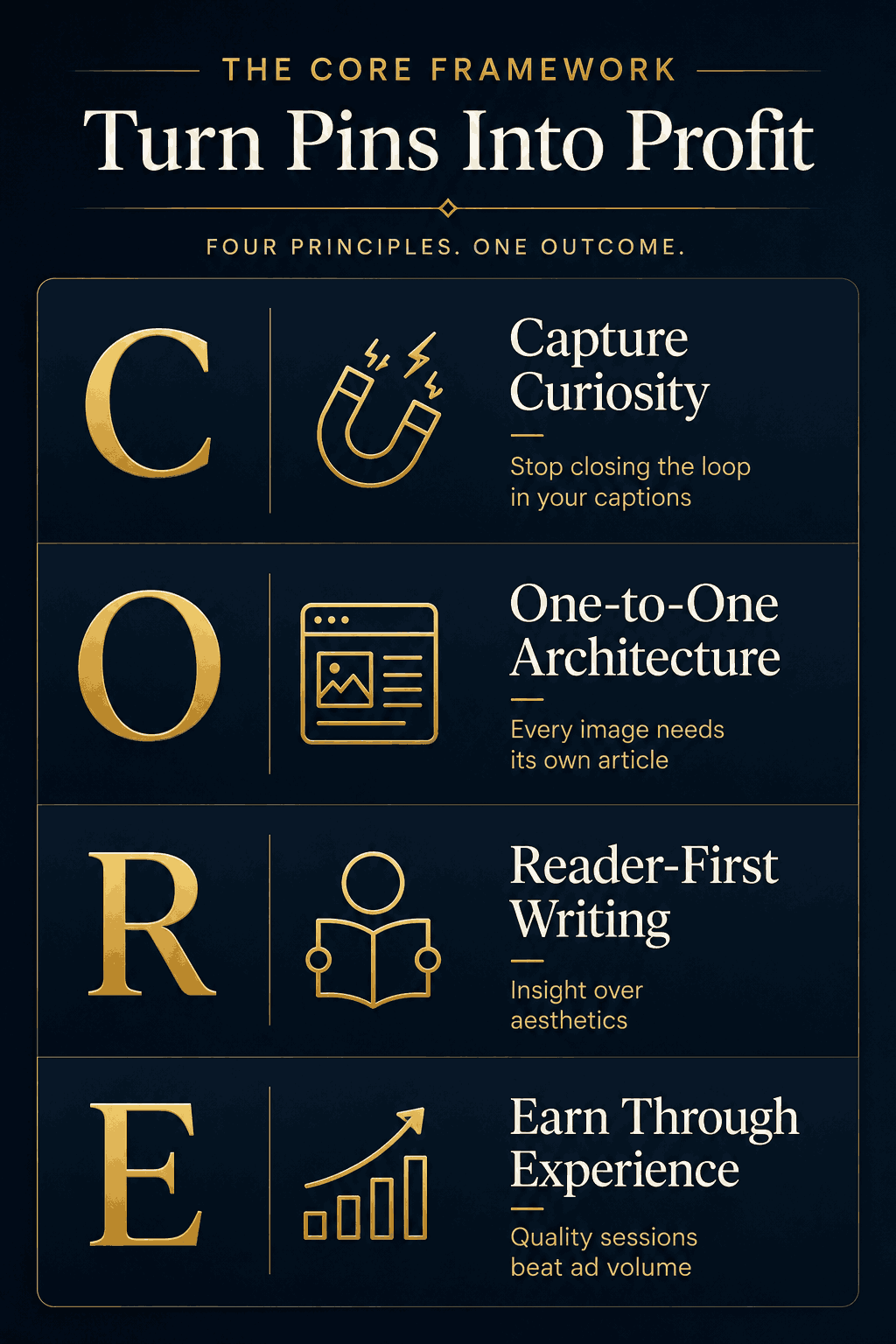
This is the four-part framework I developed after rebuilding my entire content workflow. Every part addresses one of the four failure layers above.
C — Capture Curiosity (Don’t Close the Loop) O — One-to-One Content Architecture R — Reader-First Writing E — Earn Through Experience, Not Volume
Let’s go through each one.
C — Capture Curiosity in Every Caption
Every caption you write should do three specific things:
1. Acknowledge the desire or pain point immediately “This room looks like it cost $60,000 to design…”
2. Hint at the non-obvious solution “…the entire material palette cost under $3,800 to source.”
3. Name the specific value waiting on the other side of the click “The three decisions that created this effect — and the one lighting choice that makes the biggest difference — are broken down fully on the blog. Link in bio.”
Notice what this formula never does: it never lies. It never overpromises. It never creates a gap it can’t fill.
That matters — both ethically and strategically. If your caption promises specific paint colors and your article doesn’t include them, you get high bounce rates, damaged trust signals, and a site reputation that takes months to repair.
Every gap you create must be honestly closed by your article. That is non-negotiable.
O — One-to-One Content Architecture
This is the structural rule that changes everything:
Write the article first. Create the visual second. Post the visual as the advertisement for the article.
The article is the product. The image is the marketing.
Most creators have this completely reversed. They post the image, maybe write something later, wonder why nothing converts. The workflow that actually works is:
- Identify a genuine question your audience has (use Google Search Console or AnswerThePublic — both free)
- Write a complete, 1,000–1,500 word article answering that question with real depth
- Create a visual that illustrates the article’s core concept
- Post the visual with an intent-capturing caption that links directly to the article
Every article should include:
- A minimum of 1,000 words of substantive, original writing
- Practical details the image alone cannot show (sources, costs, dimensions, reasoning)
- Internal links to two or three related articles on your site
- A clean, fast layout that respects the reader’s time and attention
For technical performance: enable lazy loading for images, use a CDN, and aim for a Largest Contentful Paint (LCP) under 2.5 seconds. Google’s Core Web Vitals are a real factor in both search rankings and AdSense ad quality scores. Run your pages through PageSpeed Insights quarterly — it’s free and gives specific, actionable recommendations.
R — Reader-First Writing
This is the section most creators skip — and the one that separates genuine publishers from content farms.
Here’s the difference between content that earns and content that doesn’t:
❌ “Oak shelf, linen cushion, ceramic vase — shop the look below.”
✅ “I chose an oak shelf specifically because lighter wood tones reflect natural light upward in low-ceiling rooms — visually expanding vertical space in a way darker woods physically absorb. Under warm bulbs, pine reads as yellow and closes a room. Oak stays neutral and opens it. That single material decision changed the entire perceived scale of this space.”
The second version has insight. It has reasoning. It has the kind of specificity that makes a reader think: this person actually understands what they’re doing.
That trust is what earns time-on-page. And time-on-page is what earns better AdSense performance.
Use Google Search Console to find the exact questions your existing audience asks. Use AnswerThePublic to discover what related questions they type into search. Build every article around a real, specific question. Answer it more thoroughly and honestly than anyone else has.
Write like you’re explaining something to a smart friend who knows nothing about your niche but genuinely wants to learn.
E — Earn Through Experience, Not Volume
Here is the most important thing I can tell you about AdSense revenue:
Your income is determined by the quality of your readers’ experience — not the quantity of your ads.
Google’s ad auction rewards engagement. Pages where readers stay longer, scroll further, and return more often command higher RPM rates. Pages where readers bounce in eight seconds — regardless of how many ad units are on them — earn almost nothing.
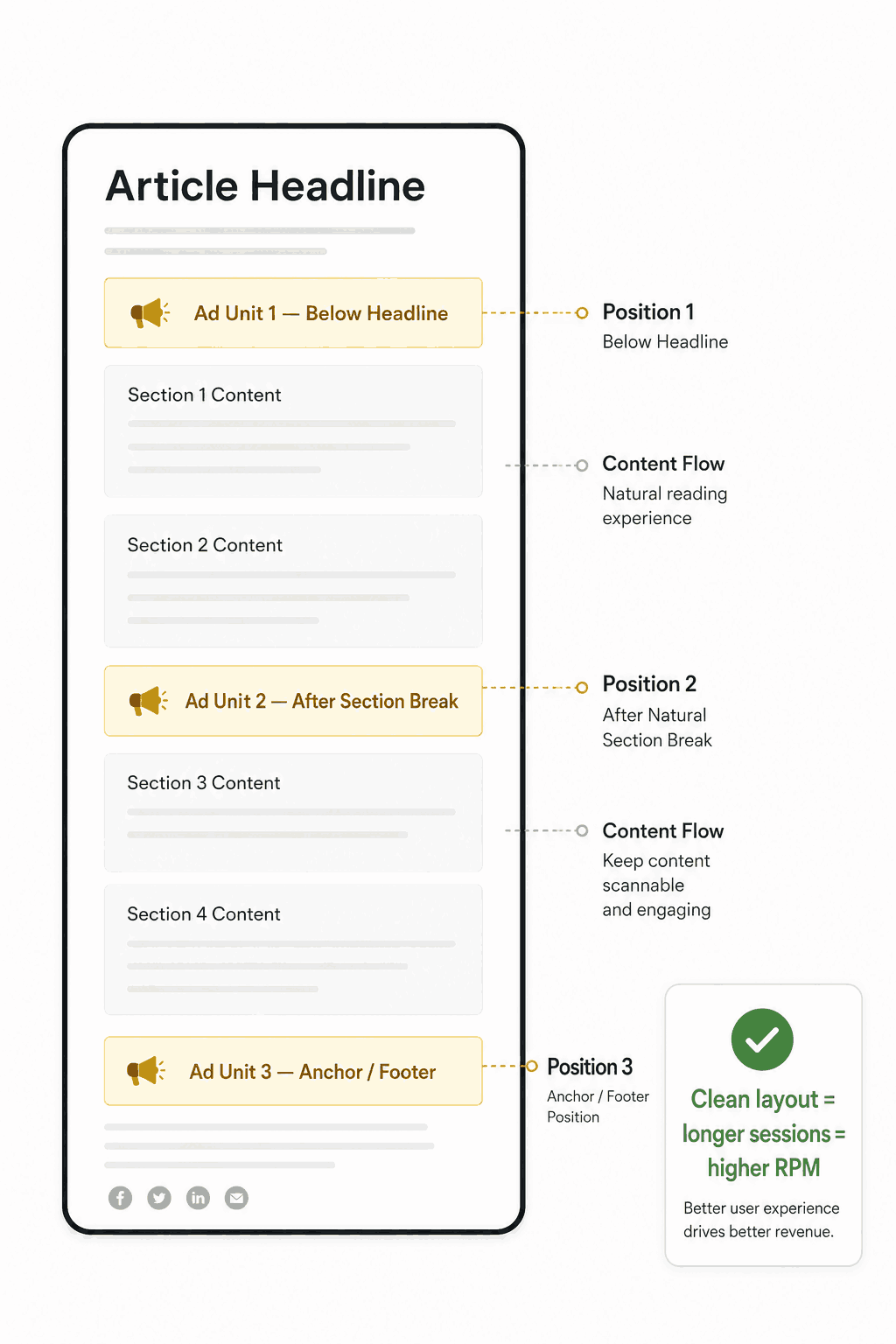
The cleanest, most consistently profitable ad layout I have tested is:
- One ad unit placed below the article headline
- One in-content unit placed after a natural section break — never mid-sentence, never mid-paragraph
- One anchor unit at the very bottom of the page
That’s three units. Clean. Respectful. Never obstructing the reading experience.
This layout consistently outperforms aggressive six-unit layouts — not despite having fewer ads, but because the reading experience it creates keeps people engaged long enough to see all three.
One critical, non-negotiable rule:
Never, under any circumstances, ask anyone to click your ads.
Not in a caption. Not in your article. Not in a newsletter or a story with a wink and “support the blog.” This is an immediate AdSense policy violation. Publishers have lost years-old accounts generating thousands of dollars monthly over a single post that said “click the ads to support us.”
Google’s fraud detection is sophisticated and has no tolerance for this. Don’t risk it. Ever.
The 20-Minute Content-Revenue Audit
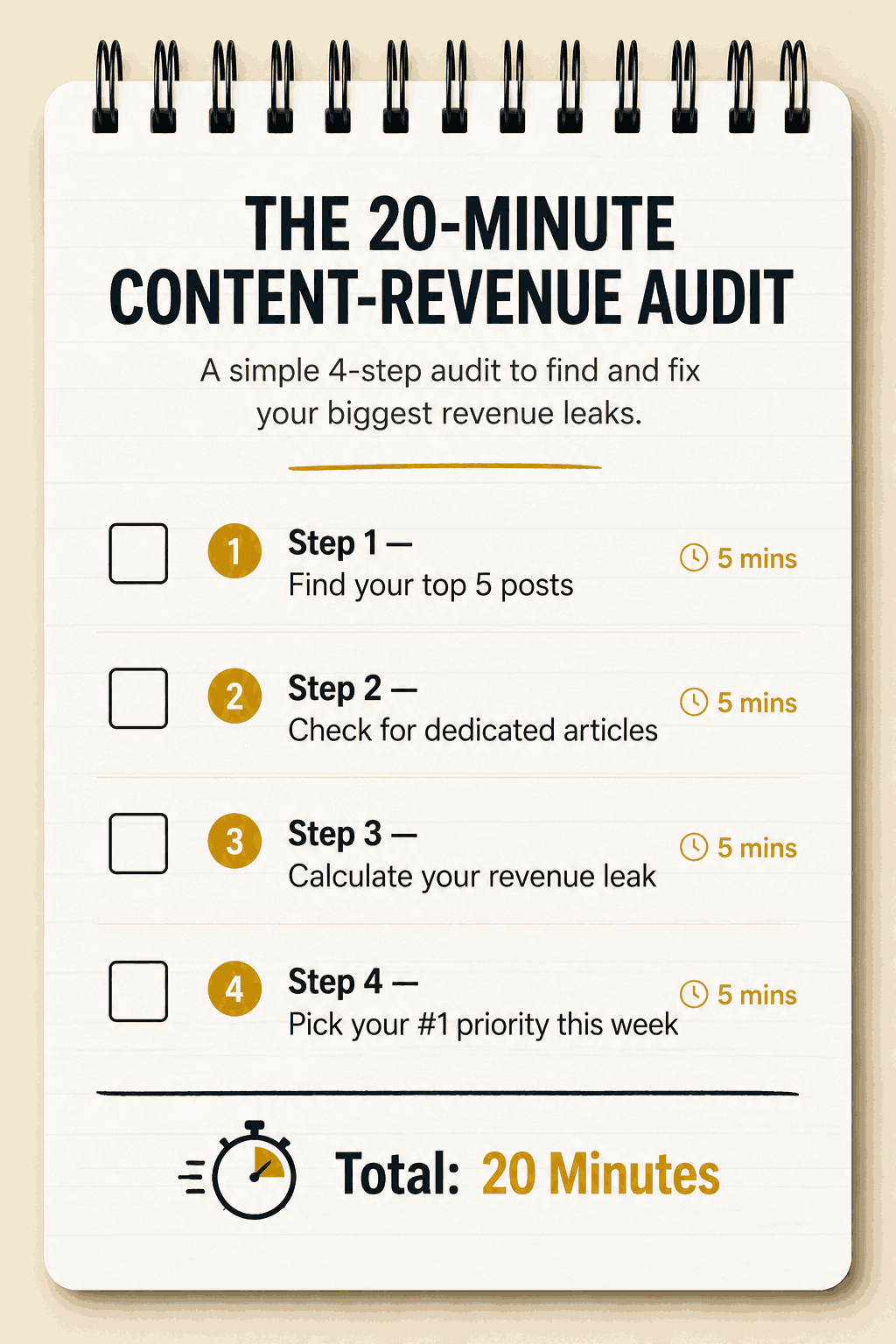
Run this exercise every Monday morning. It takes 20 minutes and will consistently surface your highest-value opportunities.
Step 1 — Open Pinterest/Instagram Analytics (5 minutes) Find your top 5 performing posts from the past 30 days by impressions. Write them down.
Step 2 — Check Your Site (5 minutes) For each of those 5 posts — does a dedicated, 1,000+ word article exist on your site that matches that exact topic? If yes, is the post linked directly to it? If no, that’s your revenue gap.
Step 3 — Calculate Your Leak (5 minutes) Apply the Monetization Gap Formula from earlier in this article. Use the impressions from your top 5 posts. Calculate what those sessions would be worth at your niche RPM. That number is your weekly opportunity cost.
Step 4 — Prioritize (5 minutes) Pick the single highest-impression post with no dedicated article. That is your task for the week. Write the article. Update the caption. Link it directly.
One post. One article. One week.
Run this audit every Monday. Within 60 days you will have a content library that converts at a fundamentally different rate than what you have today.
What This Looks Like at the 90-Day Mark
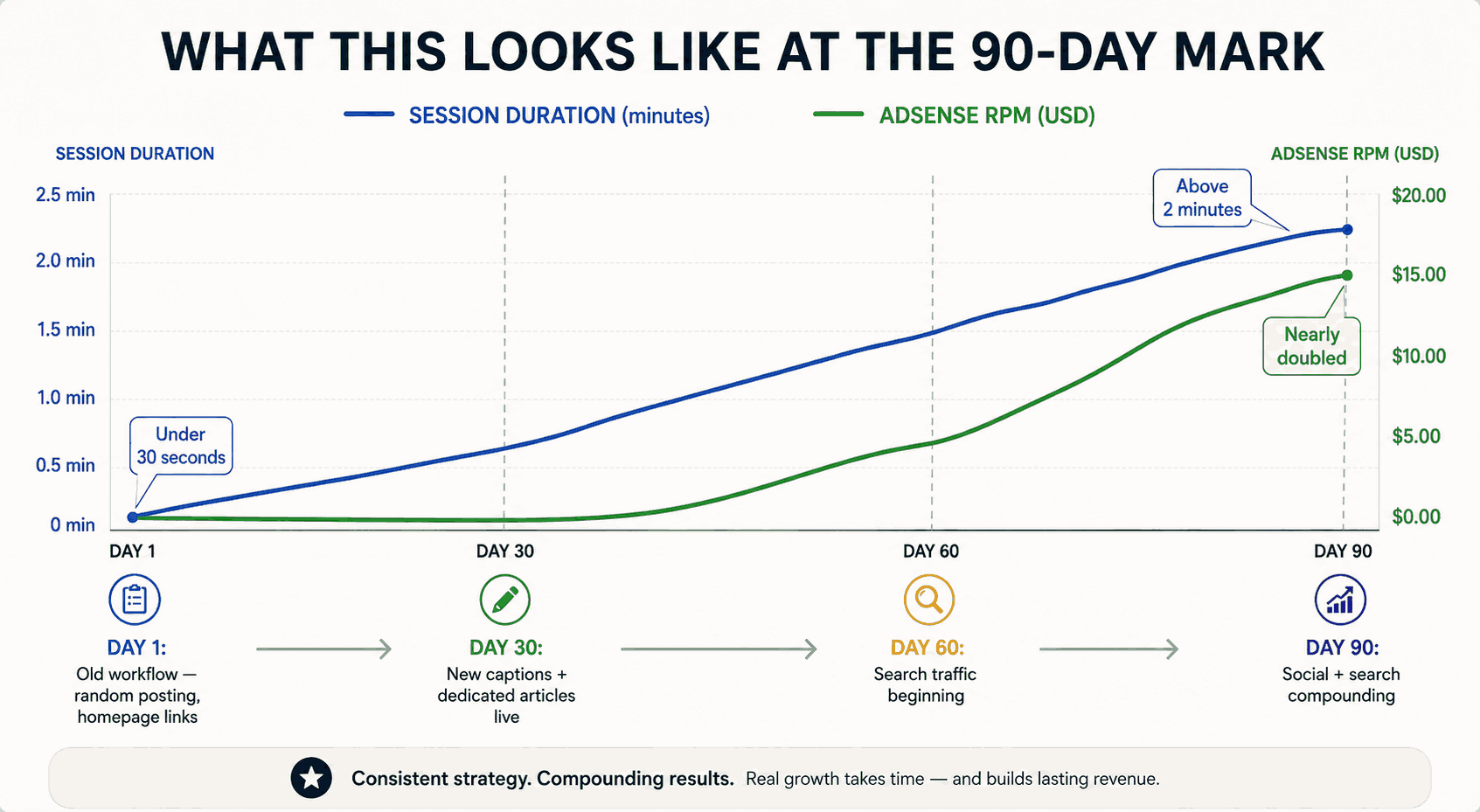
After rebuilding my entire content workflow around the C.O.R.E. method, something shifted around the three-month mark.
Pinterest traffic started converting into real sessions at 4–6%. Session durations climbed from under 30 seconds to over two minutes on average. AdSense RPMs nearly doubled — not because I added more ads, but because the traffic quality improved and Google responded with higher ad rates.
More importantly, articles I’d written for social audiences started ranking organically for search queries I’d never deliberately targeted. Because the content was genuinely comprehensive, Google surfaced it for related questions.
Social traffic and search traffic began feeding each other.
That’s what a real content ecosystem looks like.
It is not an overnight result. The honest timeline is 90–120 days before you see meaningful compounding. But the difference between a creator who builds this system and one who keeps chasing viral moments without infrastructure is the difference between a sustainable publishing business and an expensive, exhausting hobby.
Start This Week
Don’t try to fix everything at once.
Open your Pinterest or Instagram analytics right now. Find your highest-performing post from the last 30 days. Check whether a dedicated article exists for it on your site.
If it doesn’t — that is your assignment for this week.
Write 1,000 honest, specific, useful words around that topic. Update the caption with an intent-driven hook. Link it directly to the article.
Run the Monetization Gap Formula. See what that single post is currently costing you.
Then fix it.
You already have the creative talent that makes people stop scrolling.
Now you have the framework that makes them stay — and the formula that turns their attention into something real.
Drop your biggest question about converting social traffic in the comments below. I read and respond to every one.