
I remember staring at my screen late one Friday evening, completely exhausted.
I had fifteen different browser tabs open—a CRM, an email sequencing tool, a call-recording analyzer, a lead-scoring dashboard, and a calendar app that somehow refused to sync.
Instead of connecting with people and solving their actual problems, I was spending over half my day just managing the software that was supposed to “help” me.
If you are in B2B sales or business development, you probably know this deep, frustrating burnout intimately. We call it Software Bloat.
You pay thousands of dollars a month for a “frankensystem” of disconnected tools that refuse to talk to each other. Instead of feeling like a trusted advisor to your clients, you are left feeling like an overworked data-entry clerk.
Take a deep breath. There is a massive shift happening right now.
By replacing your bloated enterprise software stack with intelligent, consolidated AI agents, you can reclaim your time, save your company money, and—most importantly—bring the human element back to your business.
Phase 1: The Brutal Math of the “Frankensystem”
Before we fix the stack, we have to understand the damage it is currently causing. Recent 2026 data reveals a terrifying reality for modern revenue teams.
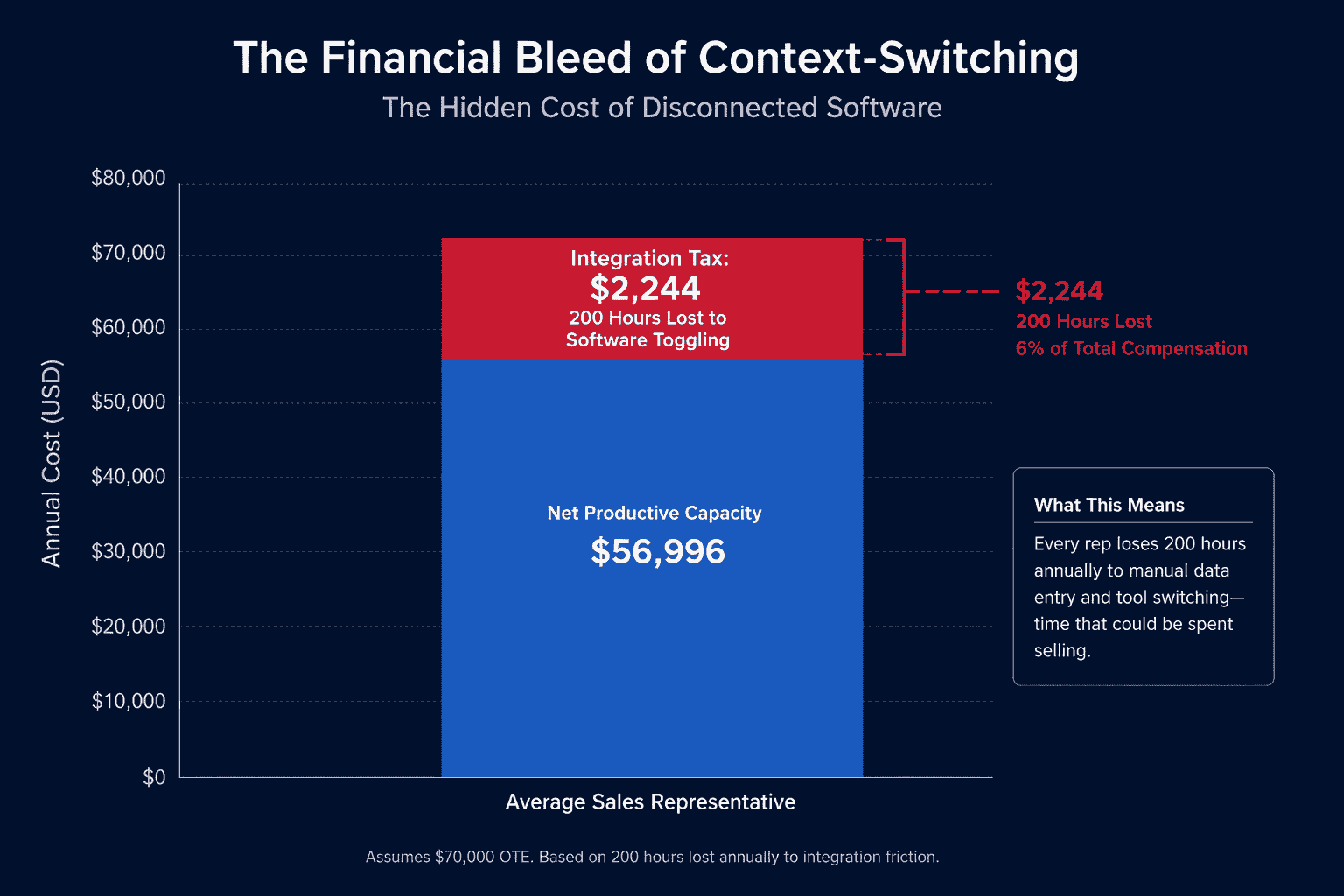
The average B2B sales representative is forced to navigate 8.3 different software tools just to execute a basic outbound workflow. Between the CRM, the dialing platform, the sequence manager, and the data enrichment tool, the average company is spending roughly $2,244 per rep, per year, just to maintain the stack.
But the subscription fees are not the real cost.
The real cost is the “Integration Tax”—the 150 to 250 hours a year your team loses to context-switching. Every time a rep toggles between a contact database and an email sequencer, they lose focus.
When you quantify the wasted time across your entire organization, the true financial bleed becomes obvious:
Integration Tax = Tools x Context Switch Time} x {Hourly Rate x Total Reps
If you want to understand exactly why your team feels so burned out at the end of the day, watch Georgetown University computer science professor Cal Newport break down the cognitive neuroscience of “Context Switching.” It proves exactly why having 8 different sales tools actively destroys human focus and productivity.
Phase 2: The Heart of the Matter: The Anxiety of AI Replacement
When I talk to sales teams, developers, and founders, there is a palpable underlying fear in the room. It is an emotional weight that we need to acknowledge before we talk about overhauling your operations.
People are genuinely worried about their livelihoods. Let’s address the elephant in the room: Is AI going to replace my job?
The honest answer is that AI is replacing tasks, not necessarily entire jobs.
If your entire role consists of copying data from a spreadsheet into a CRM, that specific role is vulnerable. However, AI cannot replace the deep empathy, the complex trust-building, and the nuanced negotiation required to close a high-stakes enterprise deal.
The fear that AI will entirely replace humans is a sci-fi trope. AI lacks human experience and genuine vulnerability—the very things that drive real human connection and commerce.
Phase 3: The 30% Rule: Your Blueprint for Balance
So, how do we use this incredible sales enablement automation without losing our humanity? This brings us to a concept sweeping the modern business world.
The 30% Rule is a strategic guideline: automate roughly 30% of your repetitive, operational tasks using AI, leaving the remaining 70% to human expertise.
When you look at your sales tech stack, your goal should never be automating the entire process so that bots are just talking to other bots. It is about letting AI handle the grueling 30%:
- Updating CRM fields automatically after a Zoom call.
- Scoring inbound leads based on website behavior.
- Drafting the initial structure of a personalized follow-up email.
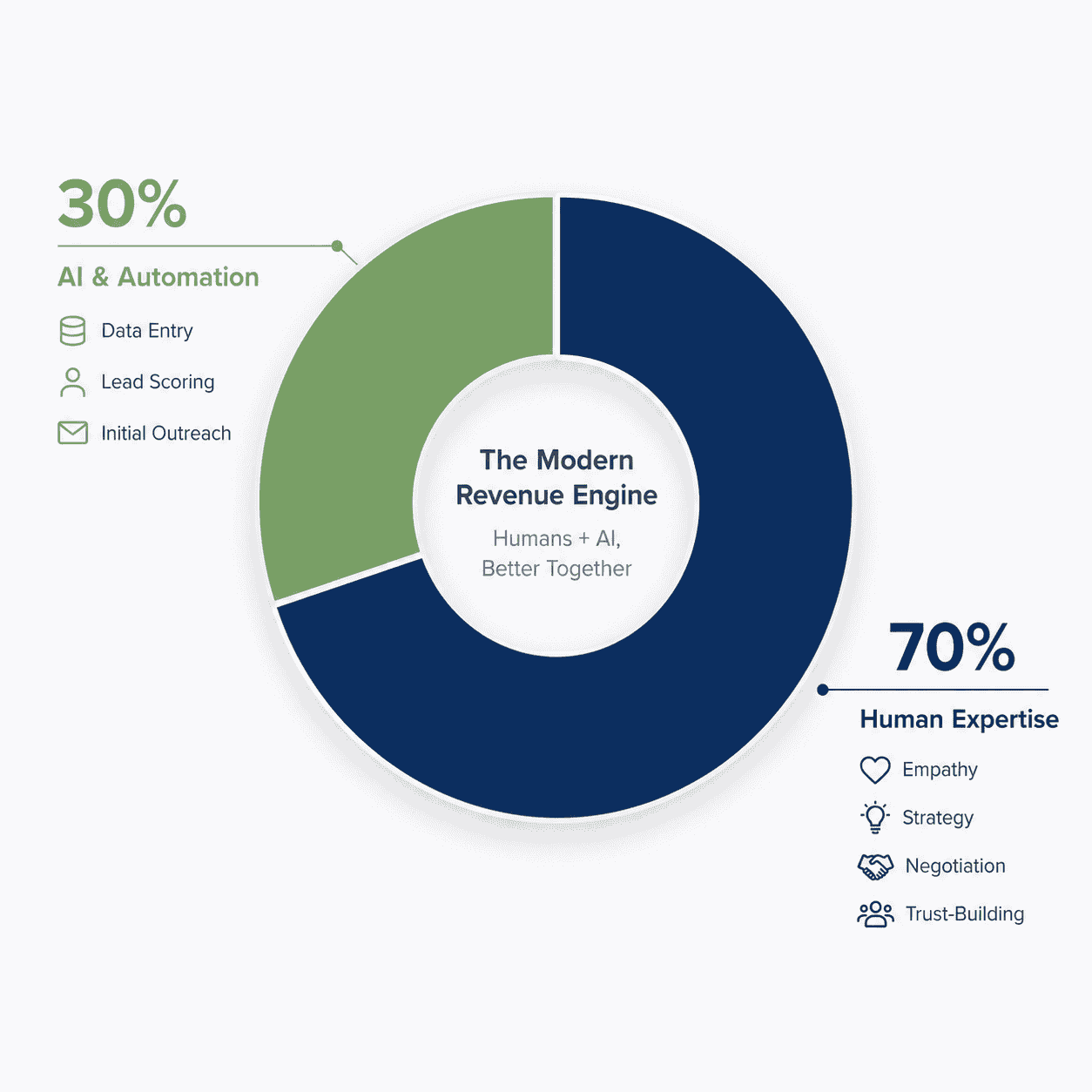
By giving the “busywork” to the machine, you preserve 70% of your energy for creative problem-solving, strategic thinking, and building deep relationships with your clients.
Phase 4: Redefining Your Workflow: AI as a Colleague
Once you strip away the fifteen bloated SaaS tools and consolidate into a unified AI architecture, your relationship with technology fundamentally changes.
You move from a fractured 8-layer stack down to a simple 4-layer reality: Intelligence, Sequencing, Dialing, and CRM.
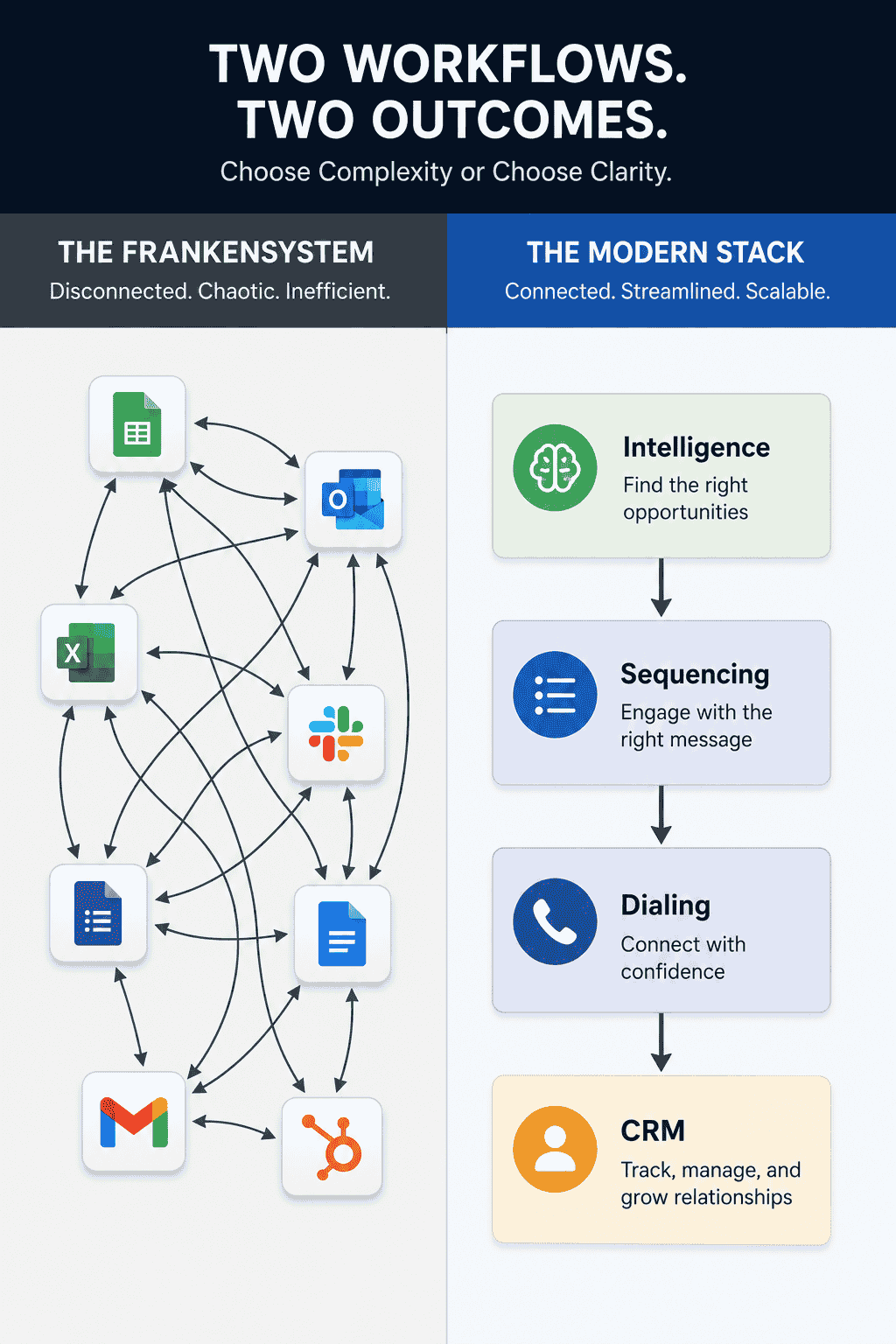
If you are already utilizing premium tier models—like a Google AI Pro plan—you have the processing horsepower to replace five disjointed tools with a single, centralized intelligence layer without relying on third-party API connections.
Instead of clicking through clunky interfaces and fighting with drop-down menus, you interact with your AI like a highly capable assistant.
You can simply prompt your system: “Summarize my call with Sarah from XYZ Corp and draft a proposal highlighting the ROI we discussed.”
This shifts your workflow from operating software to managing outcomes.
How AI Augments Your Team Performance
- Roleplay and Coaching: Use conversational AI to simulate difficult sales calls. Junior reps can practice overcoming intense price objections in a safe, zero-risk environment before they ever speak to a real prospect.
- Uncover Blind Spots: Modern AI call analyzers don’t just record; they actively coach. They tell your reps if they are talking too much, missing subtle buying signals, or failing to ask open-ended questions.
- Eliminate Friction: When your team doesn’t have to spend three hours a day doing administrative data entry, morale skyrockets and burnout plummets.
Phase 5: The 5 Advantages of Consolidating Your Tech Stack
When you finally stop paying the “bloat tax” and switch to a centralized, AI-driven system, the emotional relief is immediate.
Here are the core financial and operational benefits your business will experience:
| Benefit | Description |
| Radical Time Savings | Reclaim the 5+ hours a week previously wasted on data entry and context-switching. |
| Personalization at Scale | Instantly analyze a prospect’s recent company news and past interactions to craft hyper-personalized outreach. |
| Flawless Forecasting | AI analyzes historical data to give your management team an accurate pipeline reality check, removing “gut feeling” guesswork. |
| Massive Cost Reduction | Replacing multiple seat-based SaaS subscriptions with a single revenue operations platform saves thousands annually per employee. |
| Mental Clarity | Offloading the mental burden of administrative tasks allows you to be truly present and empathetic with your prospects. |
Exclusive Publisher Bonus: The Friday Stack Audit
Because I want to see your team succeed and your profit margins grow, I want you to run this specific exercise with your team this week.
Look at every single software subscription your sales team currently uses. Ask your team one simple, ruthless question:
“Does this tool help you talk to more people, or does it take time away from talking to people?”
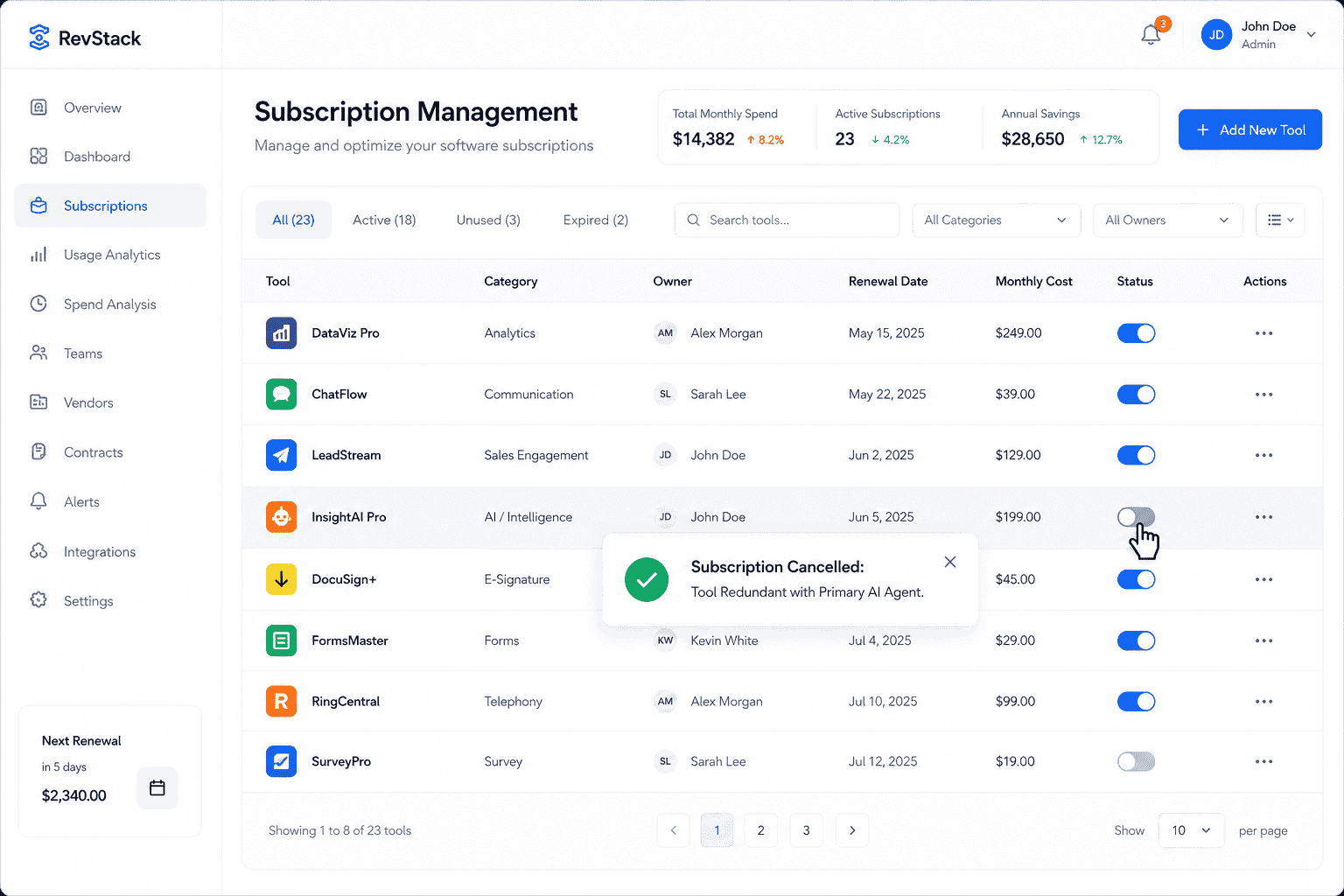
If a tool only exists to monitor metrics for upper management or force manual data entry, cancel it immediately. Look for a consolidated AI solution that seamlessly integrates into the background of your actual conversations.
Reclaim Your Humanity
Stripping away your bloated sales tech stack isn’t just a financial decision; it is an emotional and energetic one. It is about refusing to be a slave to screens and dashboards.
By embracing AI to handle the 30% of your work that drains you, you empower yourself to focus fiercely on the 70% that makes you uniquely human.
Technology should serve you, not the other way around. Let the machines do the calculating and the data entry, so you can get back to what you do best: connecting with people.