
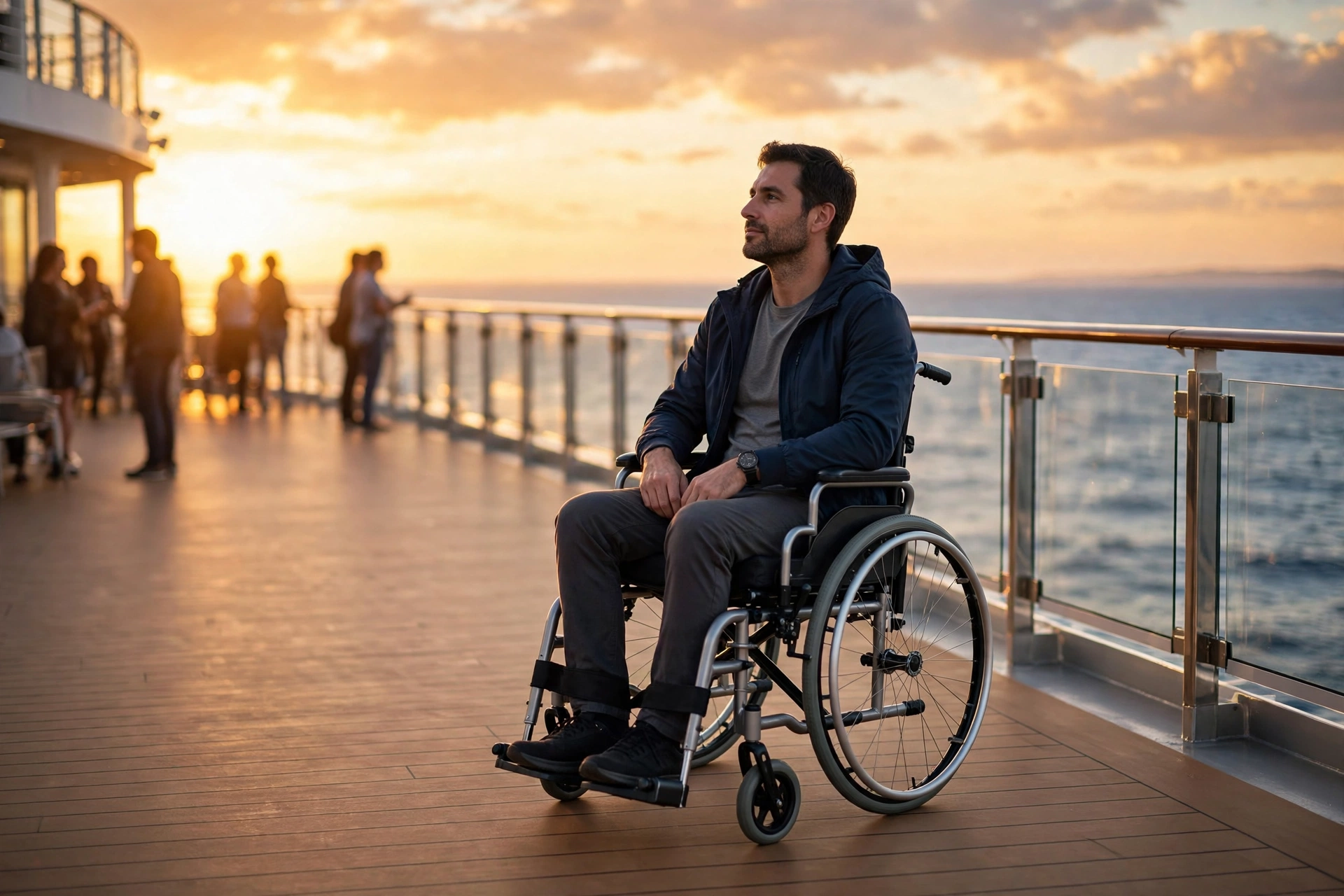
Cruises are one of the most accessible ways to travel: you unpack once, your hotel moves with you, and the ship itself is largely step-free. But not every ship, cabin, or port day is equally accessible — the difference between a relaxing week and a frustrating one comes down to what you check before you book.
Why cruises work well for accessibility
Modern cruise ships are essentially floating resorts designed for thousands of people to move around easily — wide corridors, banks of elevators, step-free decks, and crew whose job includes helping passengers. Newer ships are generally the most accessible, having been built with current standards in mind. And because the ship is your base, you skip the daily packing, transit, and hotel roulette of a land trip.
Choosing the right ship
- Newer is usually better. Ships launched in the last decade tend to have more accessible cabins, better elevator coverage, and pool lifts.
- Size is a trade-off. Mega-ships offer more accessible amenities and entertainment, but they’re long — expect significant wheeling distances. Mid-size ships can be easier to navigate.
- Contact the access department first. Every major cruise line has an accessibility or special-needs team. Call before booking: ask about the specific ship, not the fleet in general.
Booking the right cabin
Accessible cabins are limited — often fewer than 30 on a ship carrying thousands — so book as early as you can, ideally 6–12 months out.
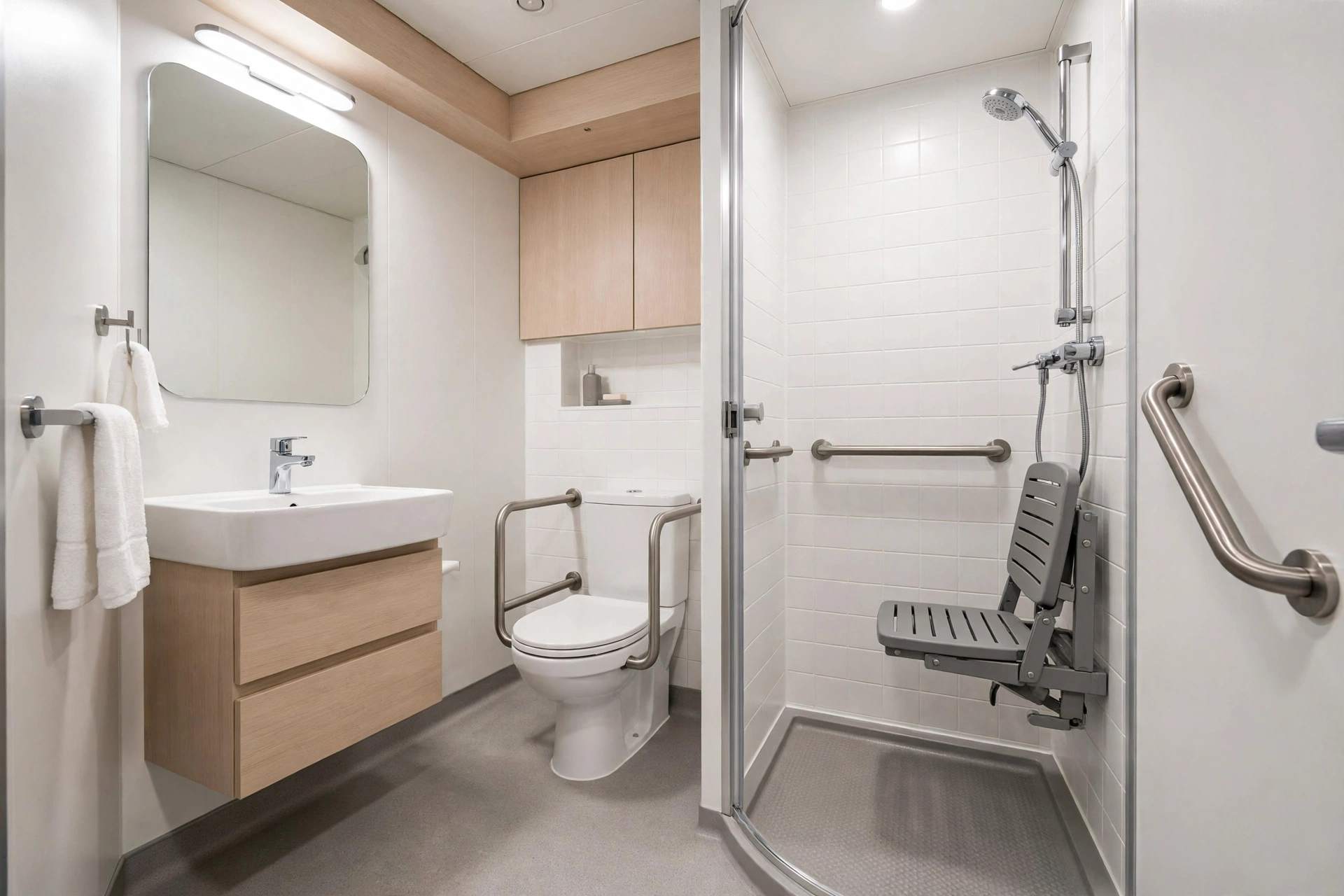
- Know the cabin types. Fully accessible cabins have roll-in showers, grab bars, wider doors, and turning space. “Accessible-friendly” or ambulatory cabins may only add grab bars — ask exactly what’s included.
- Location matters. Cabins near elevator banks and midship (less motion) save daily effort. Ask for a cabin on the same deck as the dining room you’ll use most.
- Ask specific questions: door width, bathroom layout, bed height, and whether the balcony has a step or lip at the threshold.
What to check before you pay
- Tender ports. Some ports can’t take large ships, so passengers transfer by small tender boats — and not all tenders can take wheelchairs. Ask which ports on your itinerary are tender-only and whether accessible tenders are available.
- Shore excursions. Cruise-line excursions marked “accessible” vary in quality. Ask what “accessible” means for each one: step-free bus? Paved route? Or just “slow-paced”? Independent accessible tour operators at ports are often better.
- Medical needs. If you travel with oxygen, dialysis, or other medical equipment, notify the cruise line well in advance — they have forms and deadlines for this. Bring a doctor’s letter and pack critical medication in your carry-on.
- Service animals. Major lines accept service dogs with advance paperwork and provide onboard relief areas, but rules and notice periods differ — confirm directly with the line.
- Pool and spa access. Ask which pools have lifts and whether the spa’s accessible features match your needs.
Embarkation day
Arrive at the port early and request boarding assistance when you check in — staff will help with luggage, wheelchairs, and getting through security. Muster (safety) drills have accommodations for passengers with mobility needs; tell the crew if stairs are a problem and they’ll assign you an appropriate muster station.
Shore days: plan like a local
Research every port before you sail: which ones are flat and step-free, which are hilly or cobbled, and what the accessible excursion options really involve. Have a plan B for ports that don’t work out — and remember that staying on the ship is a perfectly good choice. Some of the best onboard days happen when everyone else is ashore.
Frequently asked questions
Are cruise ships required to be ADA compliant?
Most large cruise ships are foreign-flagged, so the ADA doesn’t directly apply — but the major lines voluntarily follow similar accessibility standards. Treat each ship individually rather than assuming.
How early should I book an accessible cabin?
As early as possible. Fully accessible cabins are few and sell out months ahead, especially on popular itineraries.
Can I bring my power wheelchair or scooter?
Yes. Check the cabin door width and the ship’s size and weight limits first, and confirm where you can charge it.
What if a port isn’t accessible for me?
Stay onboard — the ship’s restaurants, pools, and entertainment all run normally on port days, often with fewer crowds.
Related guides
- The booking detail that decides if you can get off the ship
- How to research any city’s accessibility before you book
- Renting medical equipment for your trip
The bottom line
Pick a newer ship, book a fully accessible cabin early, verify the tender ports and excursions one by one, and tell the cruise line about your needs in advance. Do that homework and a cruise can be the easiest trip you ever take.
Medical note: this guide covers travel logistics only and is not medical advice. Talk to your clinician about your personal medical needs before you travel.

3 thoughts on “Accessible Cruising: How to Choose the Right Ship, Cabin, and Shore Excursions”