
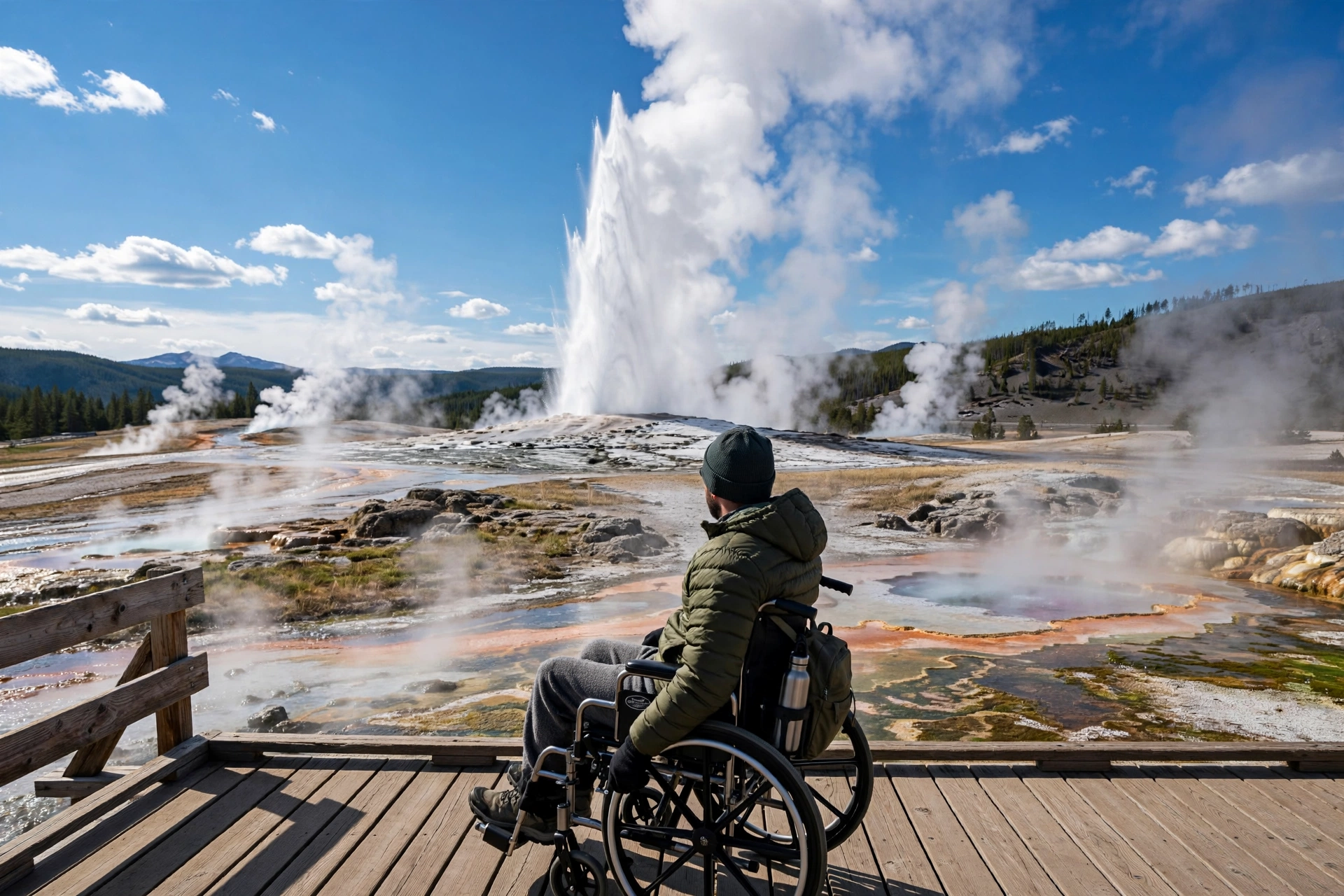
If Yellowstone is on your list — and for a great many travelers it is — here’s the good news: this is one of the most rewarding national parks you can visit in a wheelchair. Not because everything is easy (it isn’t), but because so much of what makes Yellowstone extraordinary happens within sight of a road, a boardwalk, or a paved overlook.
The park is enormous — more than two million acres, with five entrances and a grand loop road connecting its greatest hits. That scale is actually an advantage: geysers, canyons, waterfalls, and whole herds of bison are visible from step-free paths and pullouts. What you need is honest information about distances, grades, and parking — and this Yellowstone wheelchair access guide is exactly that.
The Honest Picture: What Accessibility Really Looks Like Here
Let’s be straight with you: Yellowstone was shaped by volcanoes, not by accessibility consultants. You’ll find stairs on some historic walkways, uneven ground on many trails, and a few places — the backcountry, the steepest canyon staircases — that simply won’t work from a wheelchair. And that’s okay.
Because the other side of the story is genuinely remarkable. The flagship thermal areas sit on long, flat boardwalk systems. The Grand Canyon of the Yellowstone has paved overlooks with sturdy guardrails. Lamar Valley — the park’s wildlife heartland — can be experienced almost entirely from your car.
Old Faithful and Upper Geyser Basin: The Best Boardwalk Experience
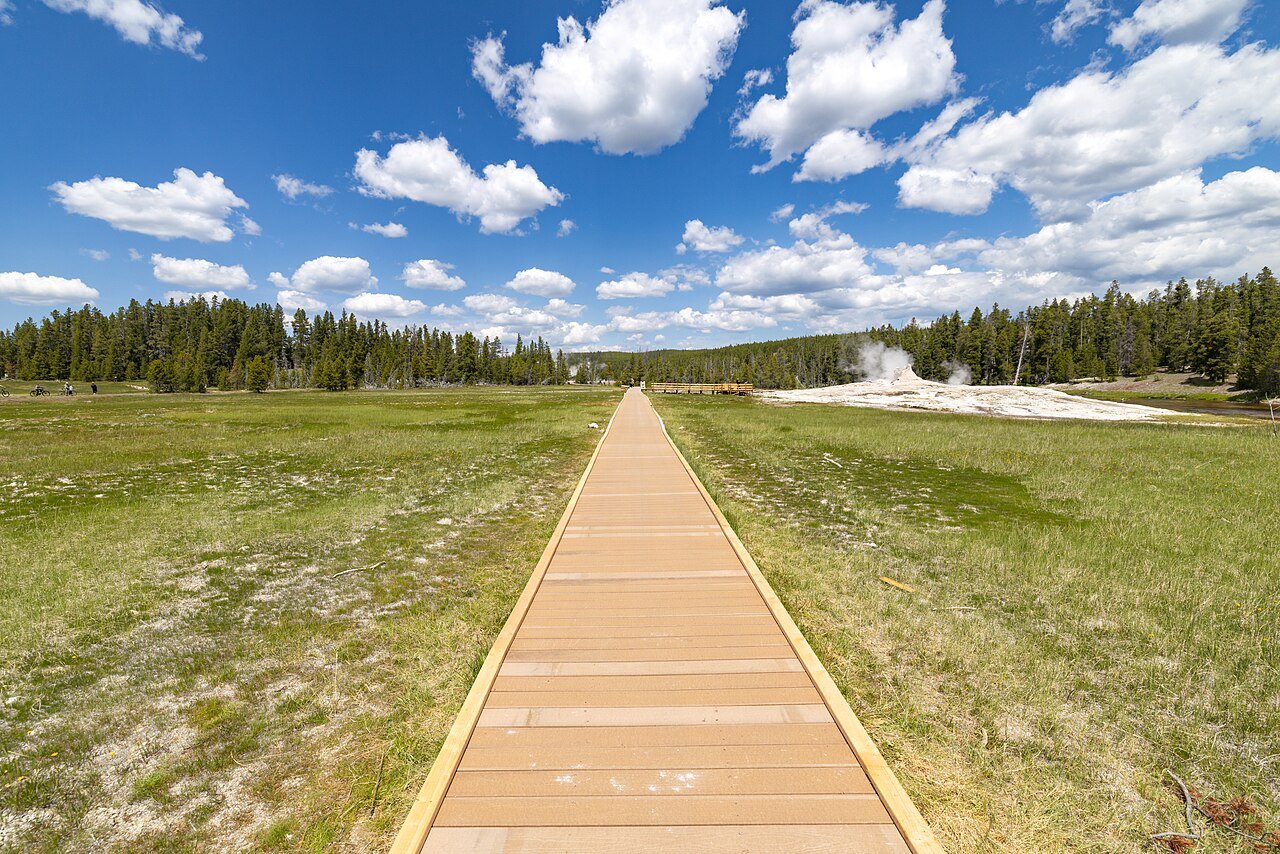
If you do one thing in Yellowstone, make it this. The Upper Geyser Basin holds the densest concentration of geysers on the planet, and the boardwalk system around Old Faithful is the park’s single best accessible experience — flat, wide, and wreathed in steam.
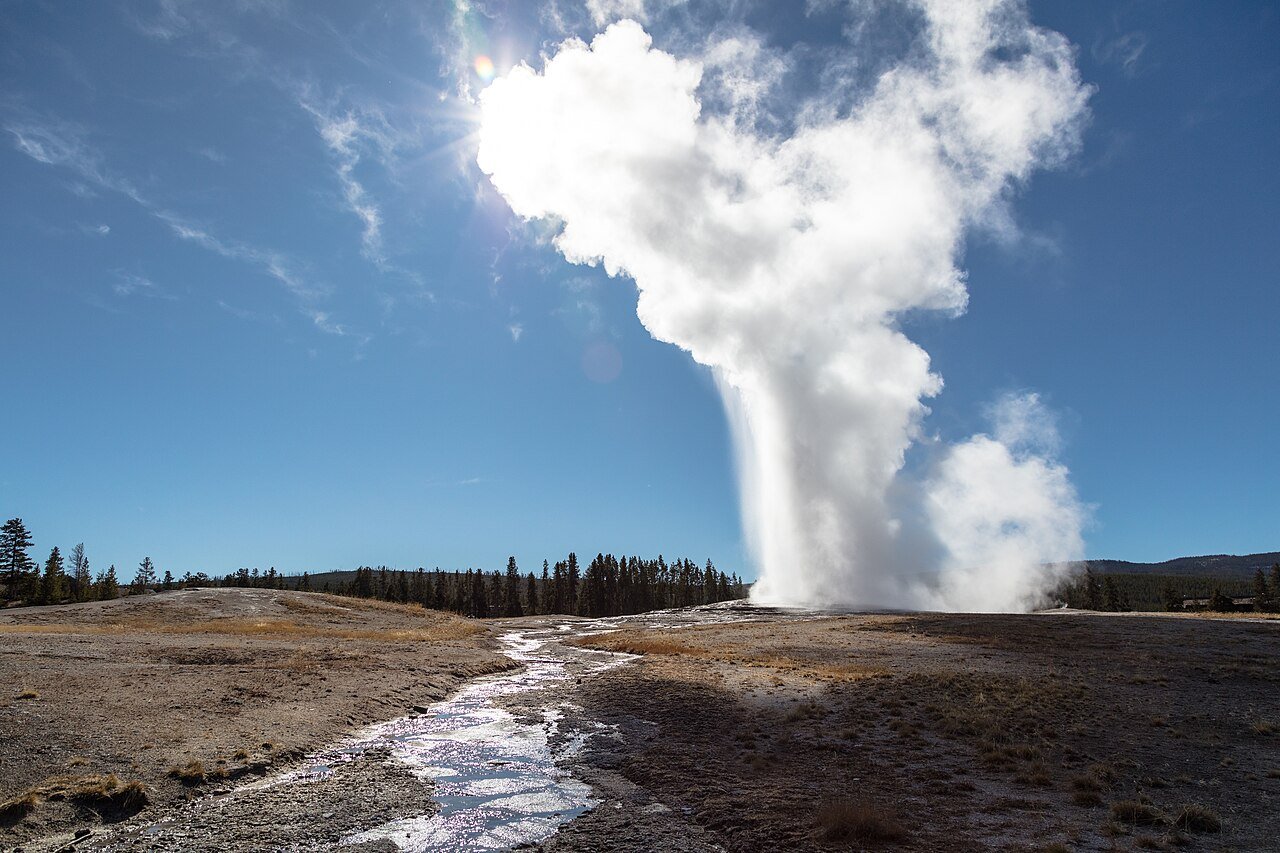
Old Faithful erupts roughly every 60 to 110 minutes, sending thousands of gallons of boiling water well over a hundred feet into the air. Check the predicted eruption times at the step-free Old Faithful Visitor Education Center, and arrive twenty to thirty minutes early — the viewing benches fill fast.
Distances, Grades, and Boardwalk Tips That Actually Matter
- The path from the visitor center to the Old Faithful viewing area is short, flat, and fully step-free — a few hundred yards at most.
- The round trip to Morning Glory Pool is about three miles on mostly level boardwalk — comfortable for power chairs; manual chair users can turn around anywhere.
- Grades are gentle, but boardwalks can be slippery when wet — steam condenses on the surface, so traction matters more than slope.
Viewpoints You Can Reach Without Leaving the Paved Path
Yellowstone’s scenic drives were built for exactly this kind of visit. A handful of paved, step-free overlooks deliver the park’s most dramatic scenery with very little effort.
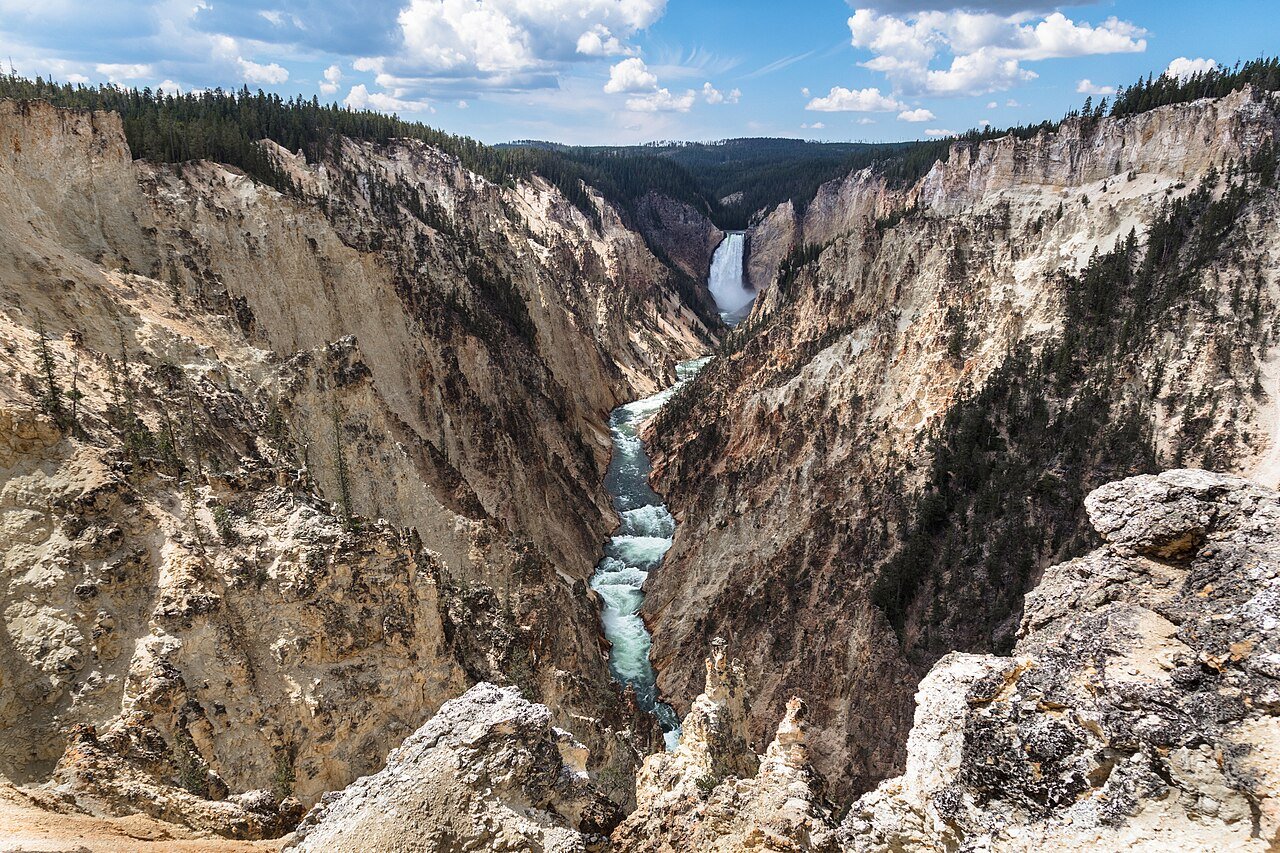
- Artist Point: the park’s most famous viewpoint — the Grand Canyon of the Yellowstone and its 308-foot Lower Falls. Accessible parking, a short paved path, and guardrails.
- Lamar Valley pullouts: a whole valley of signed pullouts. Park, stay in the car or roll to the edge, and scan the hillsides with binoculars. Several have accessible vault toilets.
- Hayden Valley: prime grizzly and bison country south of Canyon, with roadside pullouts made for wildlife watchers.
Where to Stay: Wheelchair-Accessible Lodges and Campgrounds
Sleeping inside the park changes the whole trip — no long drives in and out each day, and sunrise and sunset wildlife watching practically on your doorstep. But accessible rooms are limited and book out astonishingly early.
- Old Faithful Inn, Lodge, and Snow Lodge: the most convenient base for the geyser basins, with designated accessible rooms. Historic buildings, so call ahead to confirm roll-in showers and door widths.
- Canyon Lodge and Cabins: a great central base near the canyon and Hayden Valley, with modern accessible room options. Book far ahead.
- Mammoth Hot Springs Hotel: sits at a lower altitude and is open year-round — many travelers find it the gentlest place to land on night one.
Prefer camping? Several front-country campgrounds have designated accessible sites with paved pads and nearby accessible restrooms — Canyon and Madison are popular choices. Reserve through Recreation.gov; the accessible sites go first.
Outside the park, West Yellowstone and Gardiner offer more accessible hotels and rentals at generally lower prices. The trade-off is the daily drive to the gates.
Parking, Entrances, and Getting Around the Park
Every major developed area has designated accessible parking — Old Faithful, Canyon Village, Mammoth Hot Springs — and in summer these fill fast. Arrive early, especially at Old Faithful and Grand Prismatic, where the lots are small for the crowds.
Getting around means driving — Yellowstone has no park-wide shuttle. Fly into Bozeman or Jackson, and arrange hand controls or an adapted rental car with a few days’ notice.
The NPS Access Pass: Free Entry and Real Savings
Every US traveler with a disability should know about the America the Beautiful Access Pass — a free lifetime pass for US citizens or permanent residents with a permanent disability, waiving the vehicle entrance fee at Yellowstone and every other federal recreation site.
- Get it at any park entrance station with disability documentation and a photo ID — or order online for a small processing fee.
- It covers the pass holder and everyone in their personal vehicle.
- It also gives 50 percent off some amenity fees, including camping at many federal campgrounds.
Visiting from abroad? The standard vehicle entrance pass applies — but it’s valid for seven days, which comfortably covers most Yellowstone trips.
Altitude, Weather, and Pacing: Planning for the High Country
Yellowstone sits at serious altitude — most of the park is between 7,000 and 8,000 feet. One thing that helps a lot of people: treat day one as an adjustment day, drink plenty of water, and if you have a heart or lung condition, talk to your doctor first.
A rhythm that works well: early mornings for wildlife and popular spots, a rest at midday when the parking lots are chaos, and evenings back out for the golden hour. Pack for every season — snow can fall in any month, so bring layers even in July.
Wildlife Viewing From the Car
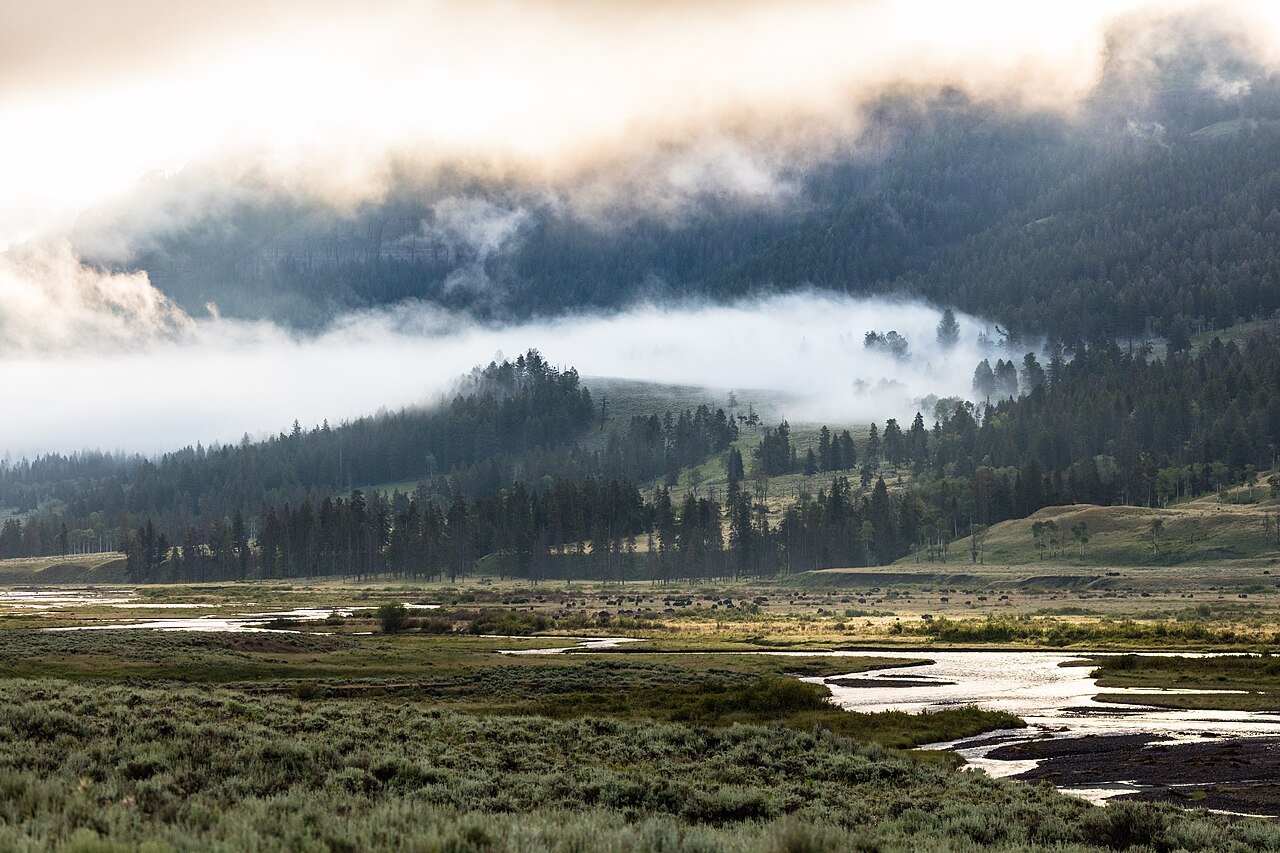
Here’s a truth worth celebrating: some of the best wildlife viewing in Yellowstone requires no walking at all. Lamar Valley at dawn is the park’s Serengeti — bison herds, pronghorn, bears, and, if you’re lucky, wolves — all visible from the road.
- Bring binoculars or a spotting scope. Wildlife is often a few hundred yards out, and good optics make all the difference.
- Pull fully off the road at signed pullouts — never stop in the travel lane, even for a moment.
- Stay in or beside your vehicle around bison and bears — park rules require 100 yards from bears and wolves, 25 yards from other wildlife.
- Dawn and dusk are prime time. Midday, the animals bed down and the light goes flat.
A Practical Multi-Day Plan That Doesn’t Exhaust You
Yellowstone rewards a hub-and-spoke approach: base yourself in one or two places and explore one region per day. Here is a rhythm that works well:
- Day 1 — Arrive and acclimatize: settle in, explore the lower terraces at Mammoth Hot Springs, and take it easy.
- Day 2 — Geysers: Old Faithful, the Upper Geyser Basin boardwalks, and the Grand Prismatic overlook.
- Day 3 — Canyon and wildlife: Artist Point, the canyon overlooks, then an evening drive through Hayden Valley.
- Day 4 — Lamar Valley at dawn, Tower Fall from the roadside, and a slow drive out.
Frequently Asked Questions
Is Yellowstone wheelchair accessible?
Much of it, yes — more than most people expect. The main geyser basins have miles of flat boardwalks, the headline viewpoints are paved and step-free, and the wildlife valleys are best experienced from the car. The backcountry and steep canyon staircases aren’t accessible — plan around the highlights.
How far are the boardwalks at Old Faithful, and can I do them in a wheelchair?
The Upper Geyser Basin boardwalk network stretches for several miles, all mostly flat. The stroll from the visitor center to the Old Faithful viewing area is short and easy. The three-mile round trip to Morning Glory Pool suits power chair users — but even forty-five minutes among the geysers is unforgettable.
What is the NPS Access Pass, and how do I get one?
The America the Beautiful Access Pass is a free lifetime pass for US citizens or permanent residents with a permanent disability. It waives the vehicle entrance fee at Yellowstone and every other federal recreation site. Get one at any entrance station with disability documentation and a photo ID.
When is the best time of year to visit Yellowstone in a wheelchair?
Late June through early September: every road and facility is open, the boardwalks are clear of snow, and accessible lodging is bookable. September brings thinner crowds and active wildlife. Winter visits are magical but far more limited — most roads close.
Related Guides
Planning the wider trip? These Clearway Travel guides go deeper on the logistics:
