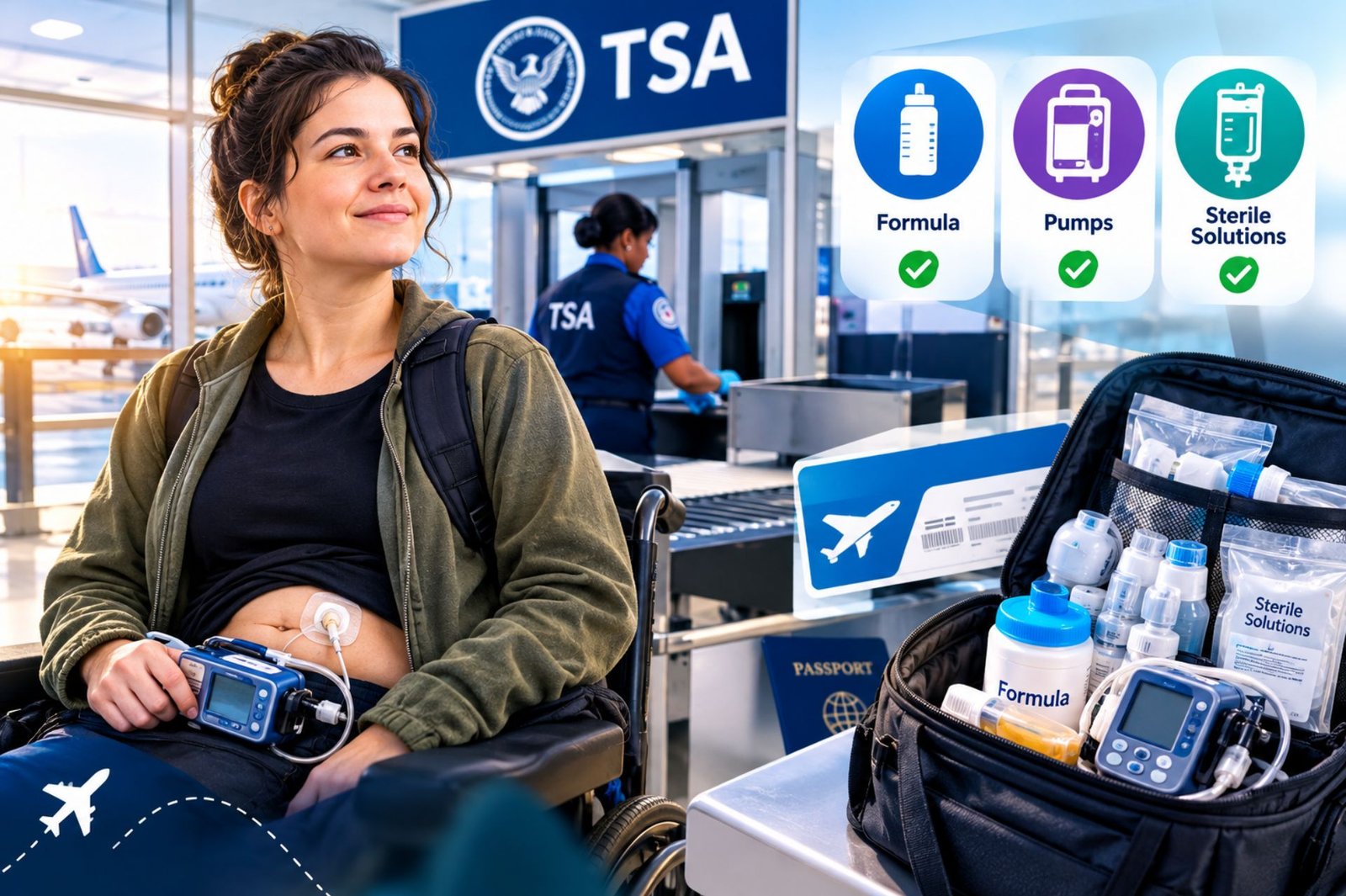
Flying With a Feeding Tube: The TSA Rules on Formula, Pumps, and Sterile Solutions
Your nutrition isn’t optional, and the rules already recognize that. Here’s exactly what you’re entitled to bring, declare, and decline.
There’s a specific worry that comes with packing your nutrition instead of just your clothes.
Formula, pump, supplies, sterile flush water — none of it is optional, and all of it looks unfamiliar to a security officer who screens thousands of ordinary bags a day.
The good news, and it’s real: the rules already account for exactly this situation. You just need to know them well enough to use them with confidence, instead of hoping the officer already does.
Enteral formula and sterile flush water are exempt from the 3.4oz liquid limit — declare them separately. You can decline to have a sterile solution opened. Feeding pumps are best kept out of the X-ray, since imaging can occasionally disable them — request a visual check instead.
01The Formula Rule Most People Don’t Know
Enteral formula, liquid medications, and sterile water for flushing are all classified as medically necessary liquids under TSA rules. That means they’re exempt from the standard 3.4-ounce carry-on limit entirely.
You don’t need to fit them into the quart-sized bag everyone else uses for liquids, and the quantity isn’t capped the way ordinary toiletries are. What is required: separating them from the rest of your carry-on and declaring them to an officer before screening.
Declare first, before the belt, not after
Pulling formula and supplies out and telling an officer proactively — before items go through the X-ray — consistently leads to a smoother, faster screening than waiting to be asked.
02The Right Most Travelers Don’t Know They Have
If an officer asks to open a sterile solution to test it, you have to comply.
You can tell the officer the solution is sterile and decline to have it opened. TSA does not require testing of sterile liquids — an alternative method, like swabbing the outside of the container, can be used instead.
Your feeding pump has to go through the X-ray like everything else.
X-ray imaging has been reported to occasionally leave feeding pumps inoperable. Requesting a visual inspection or pat-down alternative instead is the safer, and permitted, choice.
03Packing Strategy That Prevents a Bad Day
- Carry-on, always, for at least 1–2 days of formula and supplies — checked bags can be delayed, lost, or exposed to damaging temperatures.
- Pack extra beyond what you expect to need, since travel delays happen more than planned.
- Keep everything in clear, separated bags so it’s easy to pull out at the checkpoint without digging through the entire carry-on.
- Get a physician’s letter explaining medical necessity — genuinely useful for speeding up screening and for any unfamiliar situation abroad.
- If staying somewhere with a kitchen matters (for blending meals), confirm freezer or refrigerator access directly, or consider an Airbnb-style rental over a standard hotel room.
04Your Pre-Flight Checklist
Before You Fly
05What To Say At Security
“I have medically necessary enteral formula and feeding tube supplies to declare — they’re sterile, so I’d prefer they not be opened.”
“My feeding pump shouldn’t go through the X-ray — could I get a visual inspection instead?”
06What Real Travelers Are Saying
Families and individuals who travel regularly with tube feeding tend to converge on the same hard-earned practices.
Themes From the Tube Feeding Travel Community
Common patterns reported across enteral nutrition advocacy resources and traveler accounts — shared experience, not individual endorsements.
Travelers consistently describe pulling formula and supplies out proactively as the single habit that most reliably speeds up screening.
Avoiding layovers is repeatedly mentioned as reducing the number of chances for delays or complications with feeding schedules.
Families who blend meals describe prioritizing accommodations with a real kitchen or at least a freezer over conventional hotel amenities.
07Frequently Asked Questions
Yes. Enteral formula, liquid medications, and sterile water for flushing are classified as medically necessary liquids and exempt from the standard 3.4-ounce limit, though they must be declared and screened separately.
No. Travelers can inform an officer a solution is sterile and decline to have it opened. TSA doesn’t require testing of sterile liquids, and alternative screening like exterior swabbing can be used instead.
It’s generally recommended to avoid X-ray screening for feeding pumps, since imaging has occasionally rendered pumps inoperable. Requesting a visual inspection or pat-down alternative is the safer option.
Yes. Contacting TSA Cares about 72 hours before your flight to explain your equipment can help security move more smoothly and set expectations in advance.
A note on accuracy: this guide covers general airport logistics, not medical advice. Formula choices, feeding schedules, and travel readiness vary by individual — talk to your dietitian or medical team about anything specific to your care plan before traveling.

3 thoughts on “Flying With a Feeding Tube”