Does TSA PreCheck Reduce Pat-Downs for Medical Devices? What Trusted Traveler Programs Actually Change
Everyone talks about PreCheck saving time. Almost nobody explains what it actually means if you’re carrying an insulin pump, an ostomy pouch, or a device that can’t go through a body scanner.
Most articles about TSA PreCheck are written for a laptop bag and a pair of sneakers. Keep your shoes on, skip the liquids bag, breeze through in ten minutes.
Almost none of them address the actual question a lot of our readers have: does this help if I’m the person who still has to declare a device, ask for a hand pat-down, or explain a pouch attached to my body, regardless of which line I’m standing in?
The honest answer is nuanced. PreCheck changes a real amount. It doesn’t change everything. Here’s exactly where that line falls.
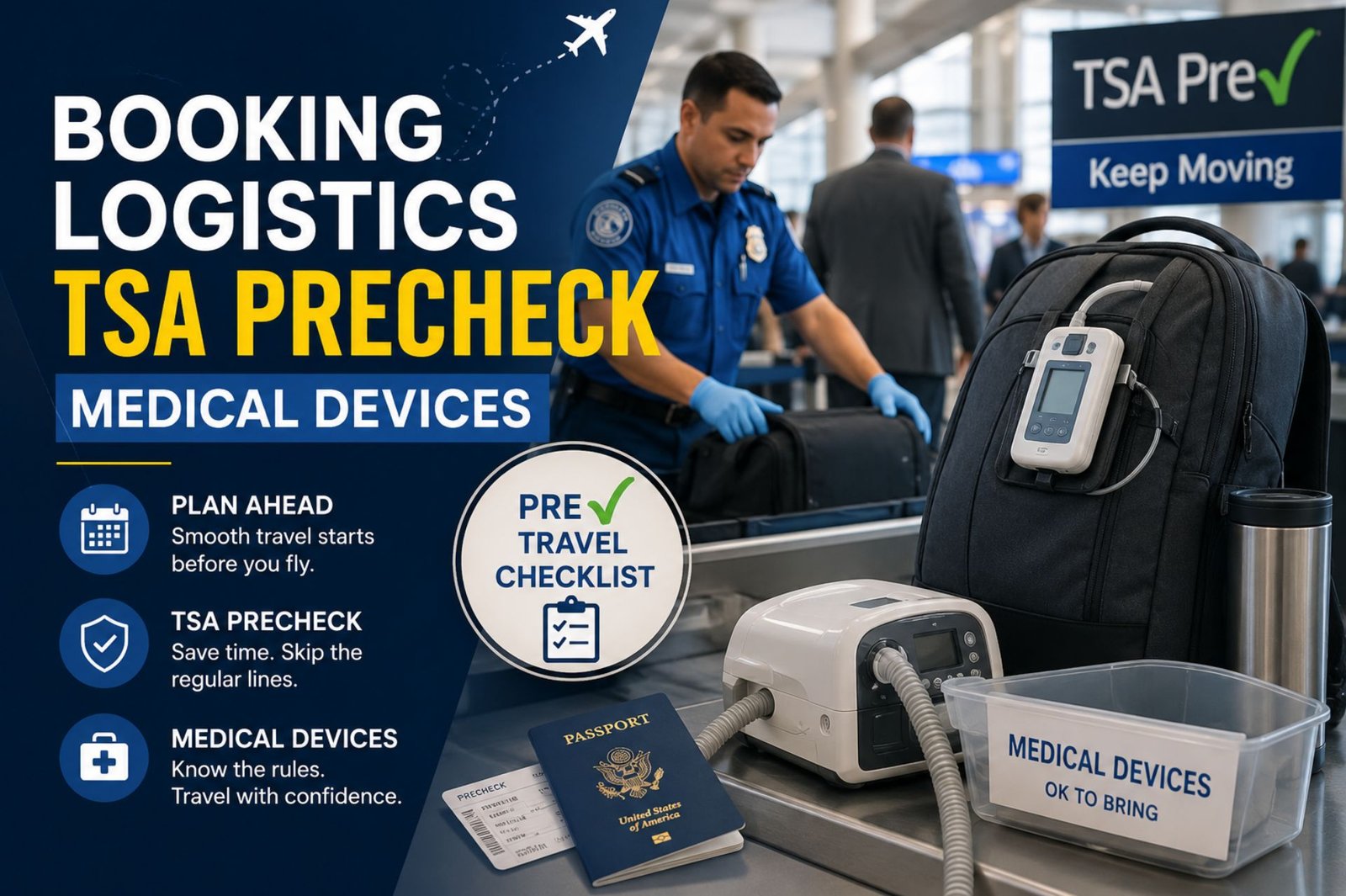
PreCheck lanes typically use metal detectors instead of full-body scanners — relevant if your device manufacturer advises against imaging tech. It does not remove the need to declare a medical device or pouch. What it reliably delivers: shorter, calmer lines and no shoe/belt/laptop removal, which matters more than people expect for mobility and sensory needs.
01What Actually Changes, and What Doesn’t
It helps to separate this cleanly, because most coverage blurs the two together.
PreCheck lanes generally use standard metal detectors, not full-body imaging scanners — relevant if a manufacturer advises against scanner exposure for a pump or CGM.
You still need to declare an insulin pump, ostomy pouch, or other medical device to a TSA officer. PreCheck doesn’t remove that step.
No removing shoes, belts, laptops, or light jackets — genuinely useful if any of those are physically difficult or time-consuming for you.
If additional screening is needed — a pat-down, a hand swab — that still happens. PreCheck reduces the odds and the surrounding hassle, not the possibility.
The real value is the environment, not a loophole
Think of PreCheck less as “skips extra screening” and more as “removes the surrounding chaos” — a shorter line, no juggling shoes and bins, less crowding. For sensory sensitivity, mobility fatigue, or device management, that environment change is often the bigger win.
02PreCheck vs. Global Entry vs. Neither
Tap each one to see the honest fit.
Which Program Fits Your Travel
Based on published TSA and CBP program details as of 2026.
TSA PreCheck — Best for Domestic-Only Flyers
Costs roughly $78–$85 for five years. Covers domestic security screening only. The right call if every flight starts and ends in the U.S.
Global Entry — Best If You Fly Internationally at All
Costs around $120 for five years and includes every TSA PreCheck benefit, plus expedited customs re-entry to the U.S. Worth it even for occasional international trips, since it covers both directions of the trip.
Neither — Still Worth Preparing
If enrollment isn’t accessible right now (cost, appointment availability, timing), a TSA notification card and calling TSA Cares ahead of a flight still meaningfully improve the standard-lane experience.
03What To Say at a PreCheck Checkpoint
“I have [a medical device / an ostomy pouch] that I need to declare. I have TSA PreCheck — can you confirm what additional screening, if any, applies here?”
“My device manufacturer advises against full-body scanners — could I have a pat-down instead?”
04What Real Travelers Are Saying
People managing medical devices who’ve enrolled in these programs tend to describe a similar, measured takeaway.
Themes From the Accessible Travel Community
Common patterns reported across accessible-travel forums and frequent flyer communities — shared experience, not individual endorsements.
Travelers consistently describe PreCheck as genuinely helpful without being a full fix, since declaration and additional screening steps still apply when relevant.
Frequent flyers repeatedly note that a shorter, less chaotic line reduces the overall stress of screening, even when the device-related steps stay the same.
Even travelers who fly internationally rarely describe Global Entry’s small cost premium as worthwhile once they factor in the return-customs benefit.
05Frequently Asked Questions
PreCheck lanes generally use standard walk-through metal detectors rather than full-body imaging scanners, which is relevant for travelers whose device manufacturers advise against imaging technology.
No. Travelers with devices like insulin pumps, ostomy pouches, or implants still need to declare them to a TSA officer regardless of PreCheck status. The process around it changes, not the requirement to disclose.
For many, yes. A shorter, less crowded line reduces the physical and sensory demands of screening, avoids removing items that can be difficult to manage, and means less waiting in a high-stimulation environment.
Global Entry includes all PreCheck benefits and adds expedited customs processing when returning to the U.S., meaningfully reducing a second high-stress screening point for international travelers.
A note on accuracy: screening procedures, program pricing, and equipment used at specific checkpoints can vary and change. Confirm current details with TSA directly, and check your device manufacturer’s specific guidance on scanner exposure before you fly.
Medical note: this guide covers travel and screening logistics only and is not medical advice. Talk to your clinician or device provider about your personal medical needs.

4 thoughts on “TSA PreCheck With Medical Devices: Your Screening Rights”