
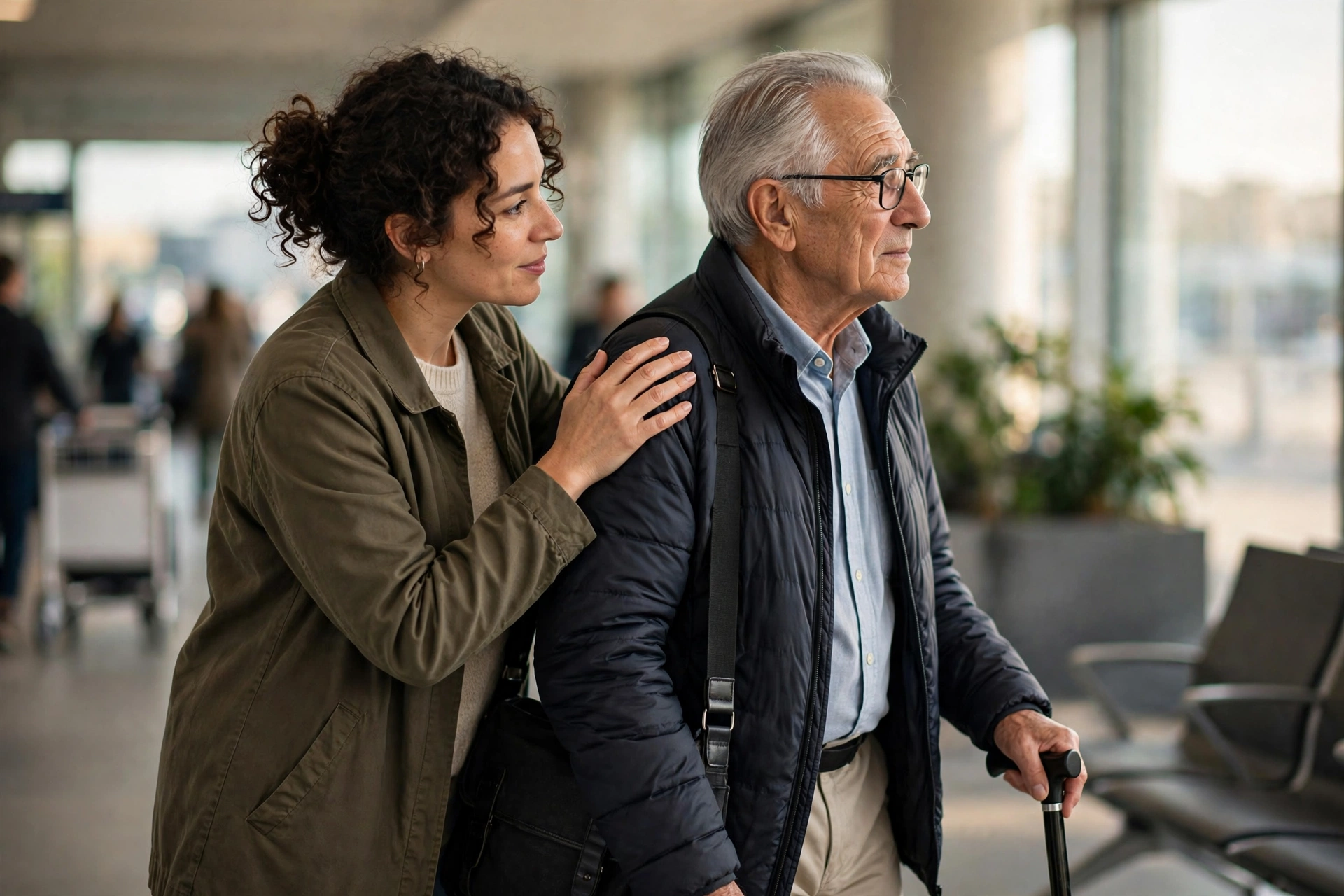
When someone you love is living with dementia, the thought of a trip together can stir two feelings at once: hope for new, gentle memories, and a quiet fear of what might go wrong far from home. If you are carrying both, you are in good company. Many caregivers ask the same question: can we still travel, and can we do it safely?
The honest answer is that traveling with dementia can go well for many families. It takes more planning, a slower pace, and a willingness to design the whole trip around comfort rather than sightseeing. This guide shows you how, from choosing the right destination to calm airports, safe hotel rooms, and handling the hard moments with grace.
Start with an honest conversation — and their doctor
Before you book anything, have two conversations. The first is with your loved one’s doctor: ask directly whether travel is advisable now, and talk through the stage of their dementia, any wandering or agitation, how they cope with broken sleep, and — if you plan to fly — whether cabin pressure, dehydration, and exhaustion could cause problems.
The second conversation is with yourself, and it needs the same honesty. Ask whether the trip is for them as they are today, or for the memory of who they were. A trip built around their present comfort — short days, familiar rhythms, no pressure — will always go better than one built around nostalgia.
A quick but important note: this guide shares general information drawn from widely recommended travel practices. It is not medical advice, and it cannot replace your loved one’s own doctor. When in doubt, ask the doctor first.
Choose familiar over exciting
New places ask a lot of a brain that is already working hard. Unfamiliar streets, strange hotel rooms, and packed itineraries can raise anxiety and confusion, while familiar settings tend to soothe. If your loved one has somewhere they have visited happily before — a beach town, a relative’s city, a favourite inn — that is usually a kinder choice than somewhere brand new.
Keep the journey short and simple. A direct flight beats a cheaper one with a connection. A two-hour drive beats a six-hour one. One home base beats hopping between three hotels. Every transfer is a fresh round of disorientation, so fewer transfers mean fewer chances for distress.

Guard their routines like treasure
For someone with dementia, routine is a lifeline. Meals, medication, naps, and bedtime happen at the same times at home for a reason, and they should happen at the same times on the road. Plan your days around those anchors rather than attractions. If your loved one is brightest in the morning, make that your one outing and keep afternoons quiet.
Give jet lag special respect: crossing time zones can worsen confusion for days. If you must change time zones, build in a full rest day on arrival with nothing scheduled. And carry the small rituals that signal safety — the same morning tea, the same playlist, the same blanket. Familiar rhythms tell a confused mind that all is well.
Airports and flying: make the hardest part easier
Airports are the most disorienting part of most trips. A little preparation takes the edge off:
- Request wheelchair assistance when you book, even if your loved one walks well. It brings a dedicated helper, shorter waits, and someone who keeps you together through the terminal.
- Use support programmes designed for this. In the US, TSA Cares arranges a passenger support specialist to guide you through screening. Many airports also recognise the Hidden Disabilities Sunflower lanyard, which quietly signals staff that the wearer may need extra time or patience.
- Ask the airline about an escort gate pass, so you can stay with your loved one all the way to the departure gate — and meet them at the gate on arrival.
- Book an aisle seat near the front for easier boarding and toilet access, and choose nonstop flights whenever you can.
- Protect the day’s rhythm: eat at the normal time, bring familiar snacks and water, and pack a small comfort kit — photos, music with earphones, something familiar to hold.

Set up the hotel room for safety first
When you arrive, do a safety sweep before you unpack: lock or block balcony doors, check windows open only a crack, and plug a nightlight into the bathroom. Some caregivers also cover large mirrors, which can confuse or startle someone with dementia at night.
Choose the room deliberately: ground floor or near the lift, away from ice machines and stairwells. Tuck the hotel’s card — with your room number and mobile number — into their pocket, consider a medical ID bracelet, and tell the front desk, discreetly, that your companion has dementia and may wander.

What to pack: the dementia travel kit
Pack for reassurance as much as practicality:
- All medications in original labelled bottles, plus extra days’ supply — and a printed list of every medication, dose, and prescribing doctor.
- A brief doctor’s letter summarising the diagnosis, plus insurance cards and emergency contact numbers.
- Photo ID for your loved one, and a recent printed photograph of them — invaluable if you ever need help from staff or authorities.
- Comfort anchors: a familiar blanket, family photos, a beloved playlist, favourite snacks, and a spill-proof water bottle.
- A tracking device in their bag or coat, and a medical ID bracelet engraved with your phone number.
- Incontinence supplies if relevant, a change of clothes in your day bag, and plug-in nightlights. Small things that prevent big problems.
Handling sundowning and confusion away from home
Sundowning — the late-afternoon rise in confusion, restlessness, or agitation many people with dementia experience — does not take a holiday. Travel can make it more pronounced. Keep late afternoons deliberately calm, avoid evening events, and have a quiet wind-down routine ready.
If your loved one becomes confused while traveling with dementia, do not argue with it. Validate the feeling underneath and redirect gently: “You want to go home — tell me about home. What do you miss most?” Keep your voice low and slow, reduce noise, and offer something familiar: a song, a snack, a hand to hold.
Always have an exit plan. Sit near the door, keep outings short enough to end on a good note, and never feel you must stay somewhere causing distress. Leaving early is good caregiving, not failure.
When the kindest choice is not to travel
There comes a point for many families when travel stops being a gift and starts being a burden — for them, and honestly for you too. Advanced dementia, frequent wandering, serious agitation, or a doctor’s clear advice are valid reasons to stay home. Deciding against traveling with dementia is not giving up; it is choosing their comfort.
Staying home does not mean standing still. Invite family to visit instead. Take a gentle ten-minute drive somewhere pretty. Cook a meal from a favourite destination, play its music, and look through old photographs together. Joy does not require a boarding pass.
Related guides
Keep planning with these related guides: renting medical equipment for your trip, your accessible hotel room rights, and booking an accessible airport transfer.
Traveling with dementia: frequently asked questions
Is it safe to fly with someone who has dementia?
For many people in the early and middle stages, yes — with their doctor’s approval and careful planning. Choose nonstop flights, keep their normal schedule, and use airport assistance. With advanced dementia, or frequent agitation and wandering, a calmer trip closer to home is usually kinder.
How do I make airport security less stressful?
Notify support services before you fly — TSA Cares in the US or your airport’s assisted-travel team — and consider a Sunflower lanyard so staff understand at a glance. Explain each screening step simply beforehand, and request a private screening if a standard one would cause distress.
Should I tell the airline and hotel about the diagnosis?
Yes — discreetly and in advance. Airlines can arrange assistance, escort passes, and suitable seating; hotels can choose an appropriate room and note that your companion may wander. Staff handle this regularly and are almost always kind.
What should I do if they become agitated or want to ‘go home’ mid-trip?
Stay calm, keep your voice low and slow, and do not argue with the confusion. Validate the feeling — “You miss home; tell me about it” — then redirect gently toward something comforting. If distress continues, leave gracefully.
What documents should I carry when traveling with dementia?
Carry photo ID, a recent printed photograph of your loved one, a medication list with doses, a brief doctor’s letter, insurance cards, and emergency contacts. Keep copies in your day bag and leave a set with someone at home.
