It is 3:00 AM on a Saturday. Your phone vibrates on the nightstand. It’s your lead developer, and they sound completely breathless.
“The cloud servers are locked. All of them. There is a text file demanding $250,000 in Bitcoin, or they delete our entire customer database.”
In that split second, your stomach drops. The blood drains from your face. You aren’t just thinking about the ransom money; you are thinking about the years of deep trust you built with your clients vanishing overnight. You are thinking about the crushing legal fees and the potential end of your business.
If you are hosting automated WordPress content pipelines or scaling a SaaS infrastructure on AWS, Azure, or Google Cloud, you might be wondering if your enterprise cloud is actually safe.
The harsh reality is that the “cloud” is simply someone else’s computer. Automated hackers are probing it for weaknesses every single minute.
But I want you to take a deep breath. Imagine if, at 2:59 AM, a silent digital guardian had noticed the very first file being maliciously encrypted, and instantly cut the connection. What if it sacrificed one single server to save your entire network, completely without human intervention?
In 2026, you don’t have to be a sitting duck.
Here is a heart-to-heart look at the “AI Kill Switch”—how artificial intelligence acts as an autonomous immune system, and exactly how to protect your digital livelihood from a founder’s ultimate nightmare.
Phase 1: The Machine-Speed Threat
When most people imagine a cloud data breach, they picture a hacker in a dark hoodie furiously guessing passwords. That is not how it works anymore.
Today, cloud exploitation is highly sophisticated, silent, and entirely automated.
According to recent 2026 cybersecurity data, ransomware is now present in a staggering 44% of all data breaches. The average recovery cost (excluding the ransom itself) sits at $1.53 million.
Ransomware Downtime Impact Calculator
Calculate the true financial hemorrhage of an automated cloud breach. Enter your business metrics below to reveal the hidden costs of a ransomware lockdown.
Lost Revenue
Lost Productivity (Payroll)
Total Financial Impact
Hackers do not break in; they log in.
They use stolen credentials or exploit hidden vulnerabilities in third-party software you already trust. Worse, they are now deploying Polymorphic Malware generated by AI.
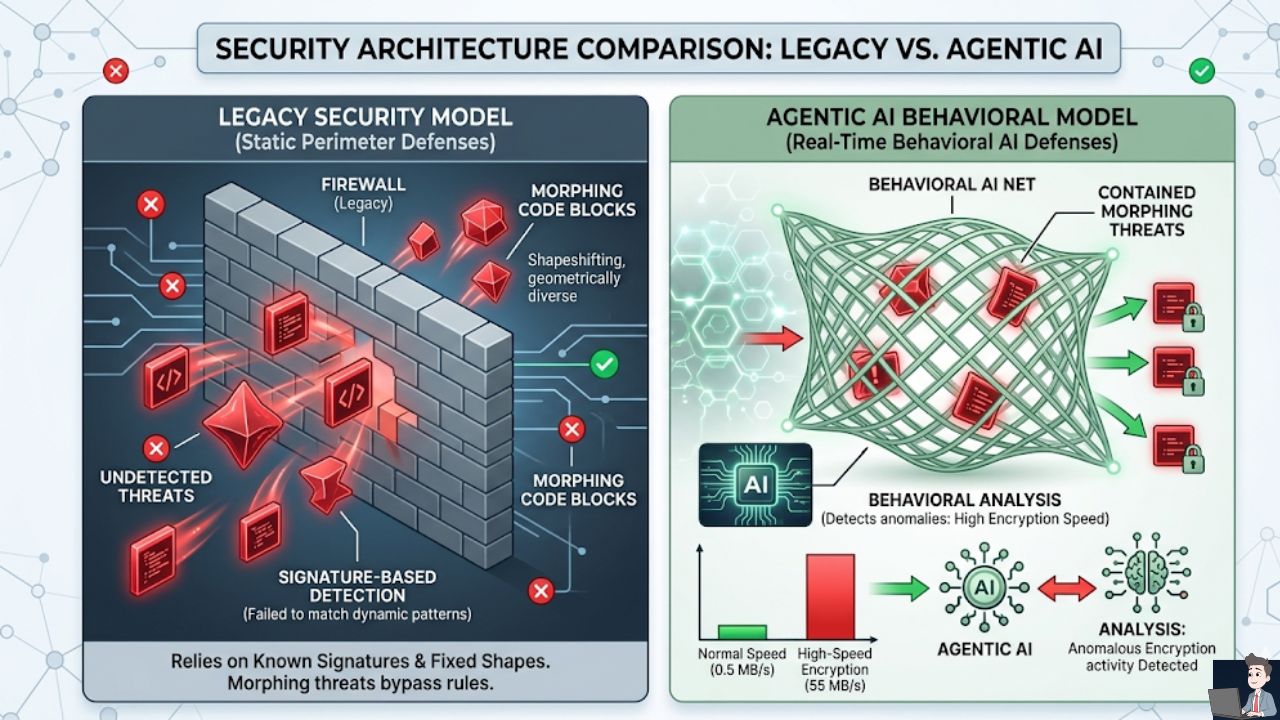
This malware automatically alters its own structure and encryption keys every time it executes. Traditional security tools that look for known “signatures” or bad code patterns are completely blind to it.
The attacker’s methodology is brutal: infiltrate quietly, spread to other servers laterally, and encrypt absolutely everything at machine speed.
Phase 2: The AI Immune System
You simply cannot fight automated, AI-driven ransomware with a human IT team. By the time a human gets the alert, wipes the sleep from their eyes, and logs in to diagnose the problem, your database is already gone.
To survive modern cloud computing attacks, you must fight machines with machines.
You need Agentic AI—systems that can perform investigative and response tasks autonomously, acting as an active immune system rather than a static wall.
Here is exactly how an AI Kill Switch protects your business in real-time:
1. Establishing the Baseline
The AI learns what “normal” looks like for your specific company. It knows your server usually reads 100 files a minute and sends data to a recognized, safe IP address during normal business hours.
2. Detecting the Anomaly
A compromised account suddenly starts encrypting 10,000 files a second and attempts to send massive packets of data to an unrecognized server overseas. Because the AI is looking at behavior rather than specific code signatures, it immediately recognizes the hallmark signs of an attack.
3. Executing the Kill Switch
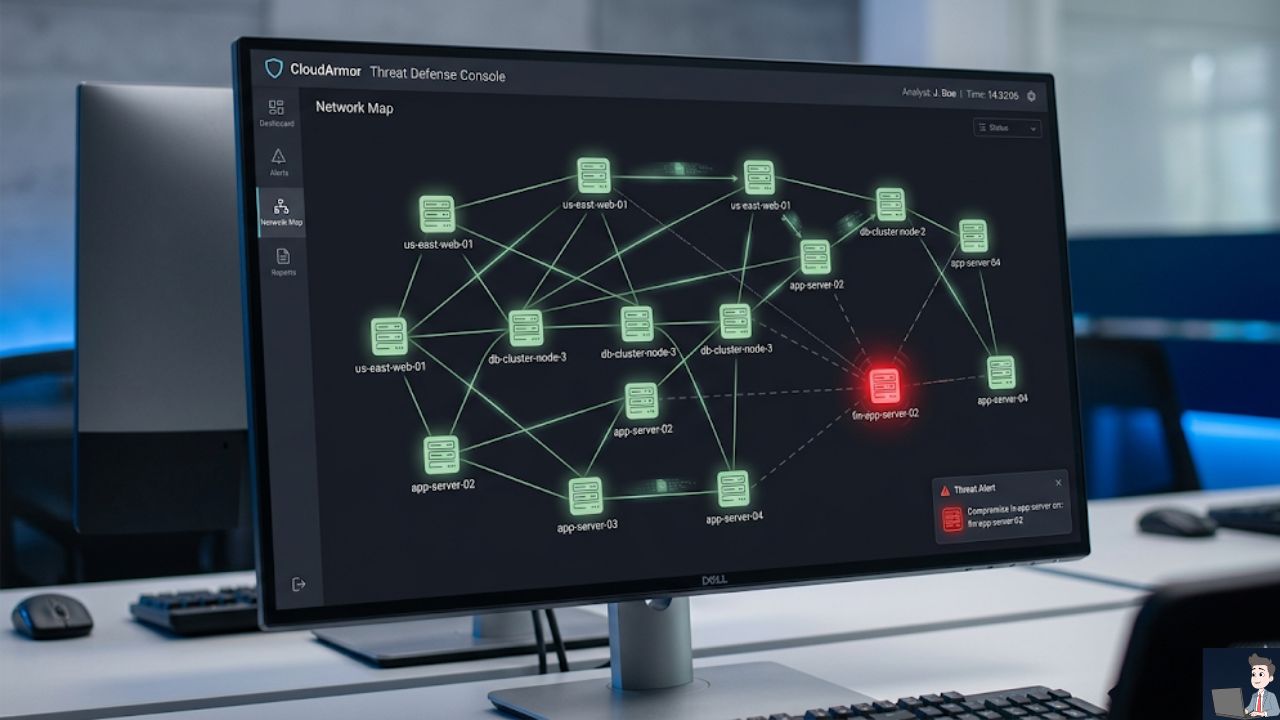
In milliseconds, the AI network protocol engages. It triggers a pre-programmed micro-segmentation lockdown. It instantly severs the compromised server’s connection to the internet and blocks vulnerable protocols (like Remote Desktop Protocol) from spreading to the rest of your cloud environment.
It isolates the infection immediately, stopping the attack dead in its tracks. It sacrifices the arm to save the body.
If you want to see exactly how this autonomous micro-segmentation works in a real enterprise environment, watch this technical breakdown of the Zscaler Ransomware Kill Switch architecture.
Phase 3: 4 Foundational Ways to Secure Your Cloud Today
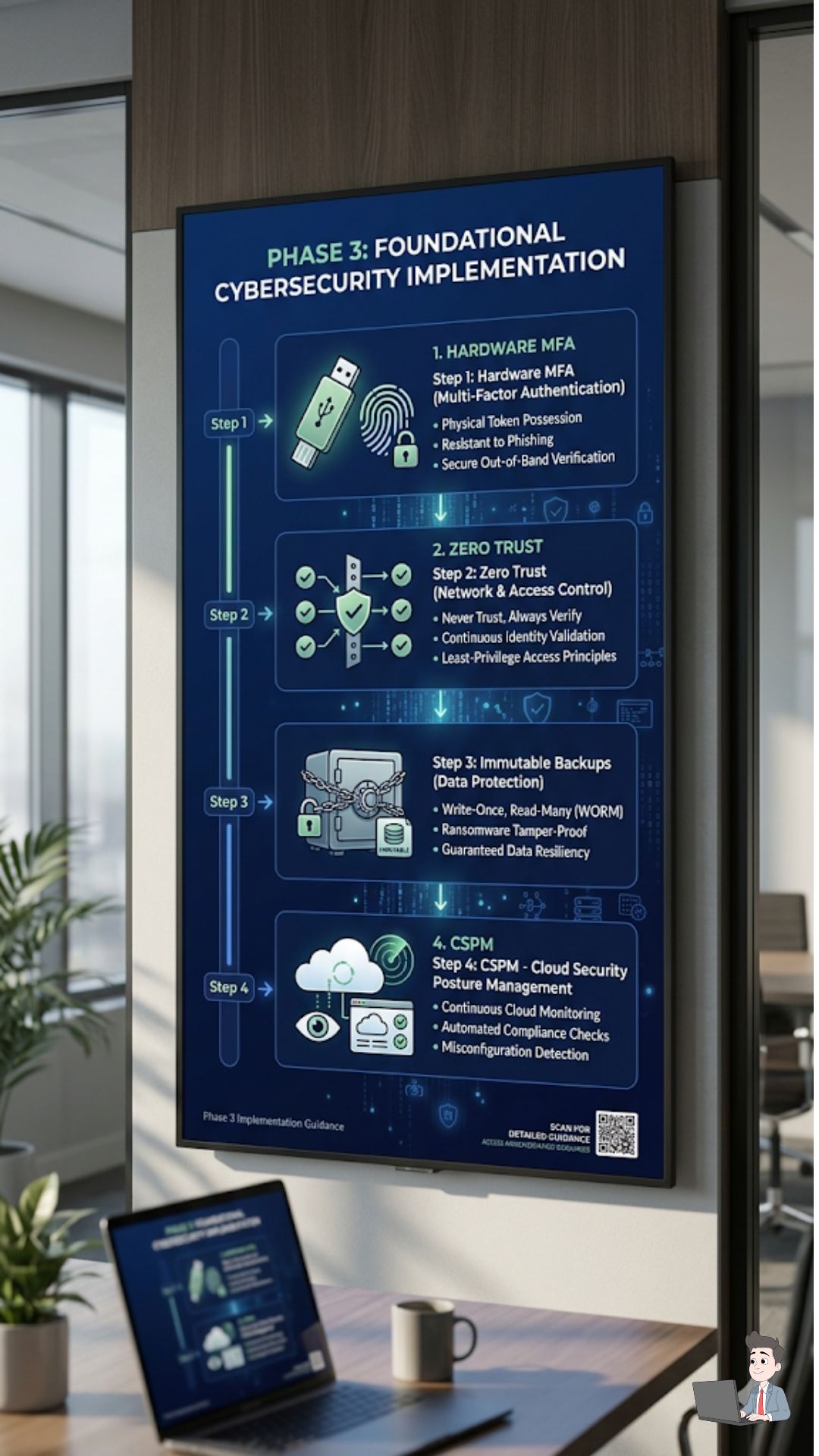
You do not need a massive enterprise budget to start protecting your business right now. Here are four ways to secure your cloud environment before you go to sleep tonight:
- Enforce Phishing-Resistant MFA: SMS text messages are easily intercepted. Force your team to use hardware keys (like a YubiKey) or secure authenticator apps.
- Implement Zero Trust Architecture: A marketing intern’s account should physically not have the permissions required to access or delete your core customer database. Restrict access strictly to what is needed for the role.
- Automate Immutable Backups: “Immutable” means the backup cannot be deleted or altered by anyone—not even a hacker who steals your master admin password. If ransomware hits, you simply wipe the server and restore the immutable backup.
- Deploy Cloud Security Posture Management (CSPM): Over 31% of cloud breaches occur due to simple misconfigurations. Use automated tools to constantly scan your environments for human errors, like a developer accidentally leaving an S3 storage bucket set to “Public.”
Phase 4: Advanced Tactics (The Decoy Strategy)
Because I want your business to be as fortified as possible, here is an advanced, highly effective strategy you can implement to actively outsmart hackers who manage to slip past the perimeter.
This is known as the “Honey Token” approach.
- Generate Fake Credentials: Create a set of fake AWS IAM access keys that have absolutely zero permissions attached to them.
- Plant the Decoy: Leave these fake keys sitting in a seemingly important internal document or a pinned Slack channel that a hacker would find if they breached your perimeter.
- Set the Silent Alarm: Configure your cloud monitoring tool (like AWS CloudTrail) to instantly trigger a high-priority alert if anyone attempts to use those specific keys.
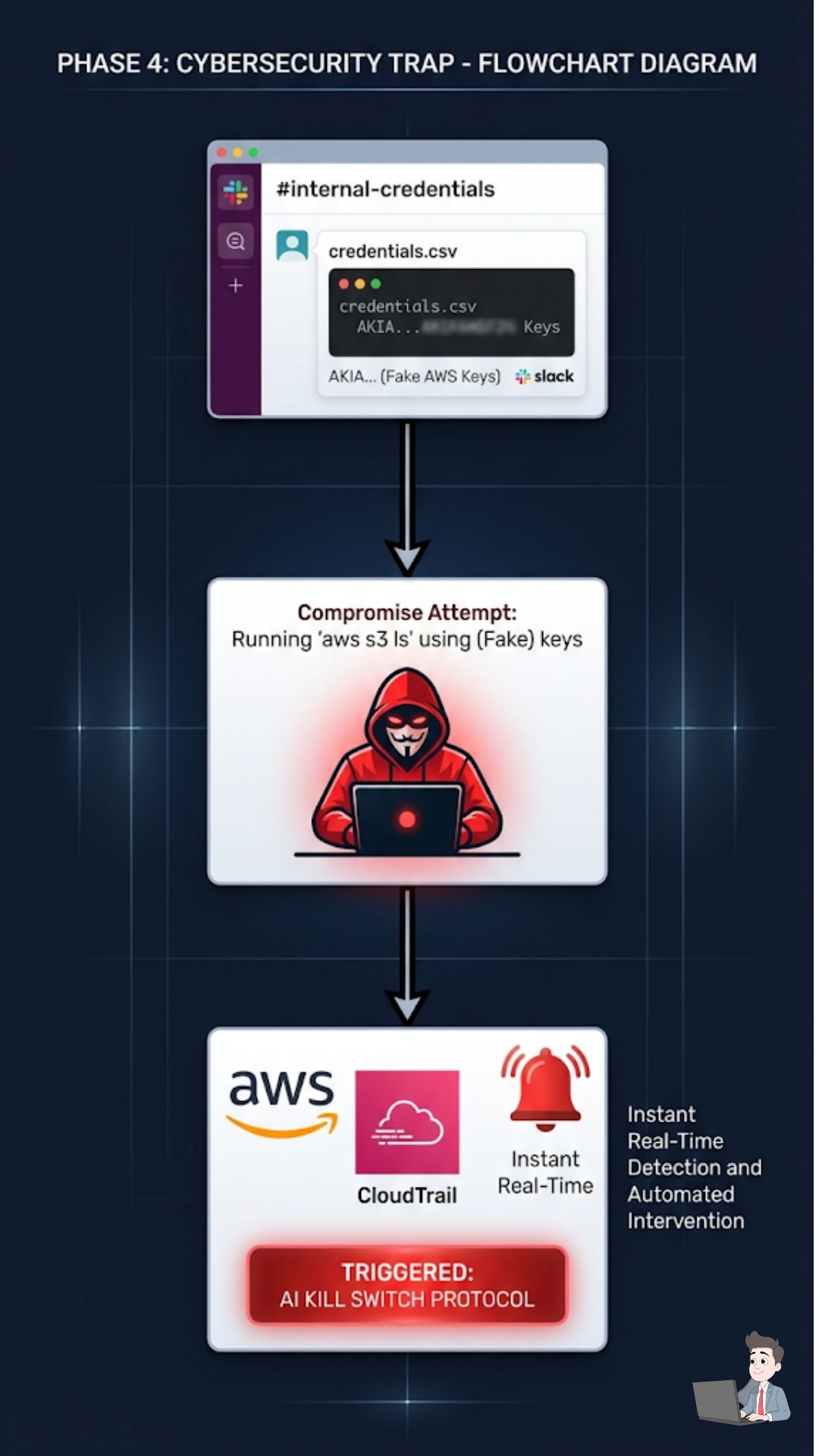
The moment they are used, your AI locks down the network before the hacker even realizes they took the bait.
Reclaiming Your Peace of Mind
There is no feeling quite like the sheer terror of losing control of your life’s work to a faceless extortionist.
Ransomware is a lucrative, highly organized criminal enterprise. But you do not have to be a victim.
By understanding the threats, embracing AI as your 24/7 autonomous guard dog, and implementing the “Kill Switch” mentality, you completely shift the balance of power back into your hands.
You deserve to go to sleep at night knowing that if a threat breaches your perimeter at 3:00 AM, the machine will handle it.