What counts as a service animal on a flight
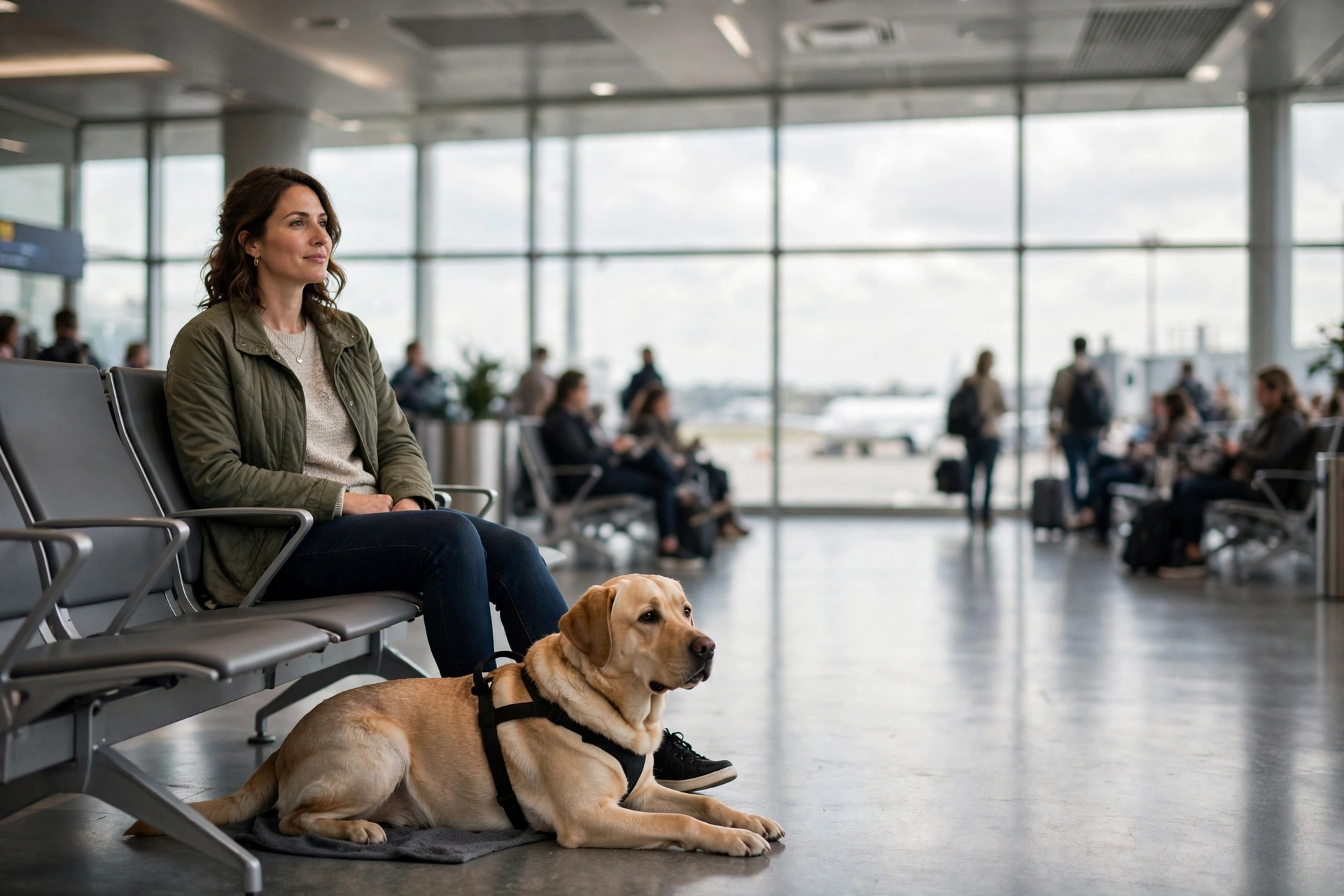
Since March 2021, the U.S. Department of Transportation defines a service animal on flights as a dog that is individually trained to do work or perform tasks for a person with a disability. That’s it — only dogs. Cats, rabbits, birds, and other species no longer qualify as service animals on U.S. flights, no matter how well behaved.
Psychiatric service animals — dogs trained to perform tasks related to a mental health disability, such as interrupting a panic attack — do count as service animals with the same rights. Emotional support animals (ESAs), which provide comfort but aren’t trained for specific tasks, do not. Airlines are no longer required to accommodate ESAs, and most now treat them as regular pets.
Rules differ outside the U.S. The EU and UK generally follow assistance-dog frameworks that can be stricter about documentation, so always check your specific airline’s policy for international itineraries.
The paperwork you need
For flights within, to, or from the United States, airlines may require up to two DOT forms, submitted before you fly:
- DOT Service Animal Air Transportation Form — you attest that the dog is trained, healthy, and well-behaved. Airlines can require this up to 48 hours before departure.
- DOT Service Animal Relief Attestation — required for flights of 8 hours or more, confirming the dog can either avoid relieving itself or can do so in a sanitary way.
Submit these through the airline’s website or special-assistance portal as early as possible. Keep copies on your phone as backup.
What airline staff can and cannot ask
Airline staff may ask you only two questions to verify a service animal:
- Is this a service animal required because of a disability?
- What work or task has the dog been trained to perform?
They may NOT ask about the nature of your disability, require medical documentation, demand a special vest, harness, or ID card, or require the dog to demonstrate its task. Any of those demands is a red flag — note the staff member’s name and report it to the airline.
At the airport: what to expect
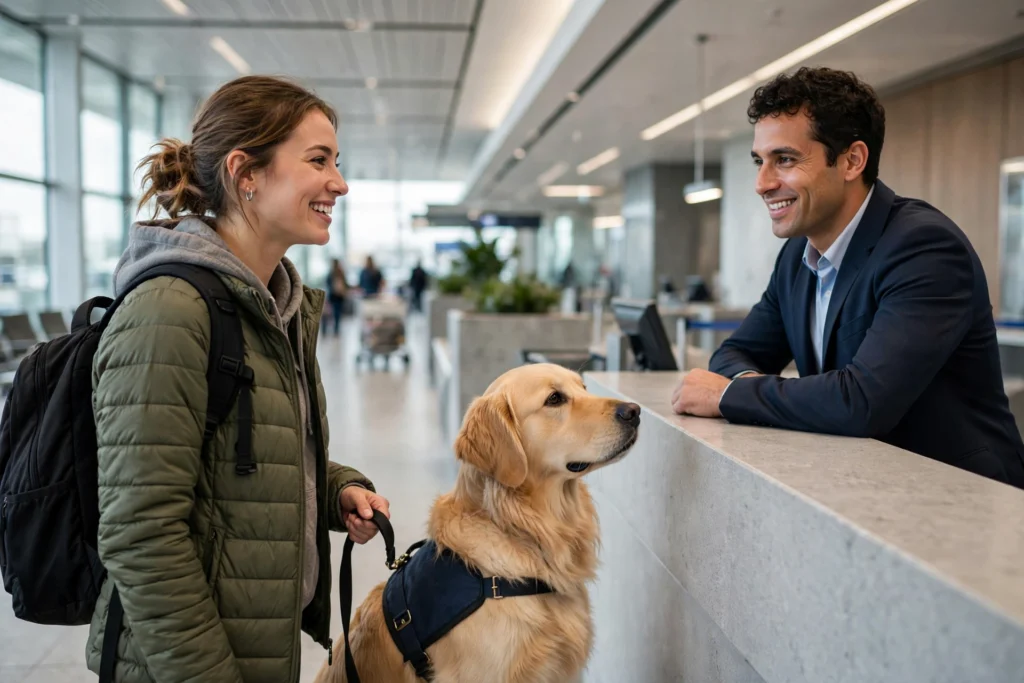
Check in early. Go to the full-service check-in desk rather than a kiosk so staff can verify your forms. Arrive with the same extra time you’d allow for any special assistance.
Security screening. You and your dog go through the checkpoint together. You’ll walk through the metal detector with the dog on leash while its gear (harness, leash) goes through the X-ray — or request a pat-down alternative if needed.
Boarding. Service animal teams generally pre-board with passengers needing extra time. Your dog must fit in your foot space without blocking the aisle. For larger dogs, ask about a bulkhead seat — airlines will generally accommodate this if available.
Relief areas. U.S. airports are required to provide service animal relief areas inside the secure area of every terminal. Find yours on the airport map before a long layover.
If something goes wrong
If an airline refuses your service animal or demands documentation beyond the DOT forms, stay calm and escalate: gate agent, then the airline’s Complaint Resolution Official (every U.S. airline must have one available). Document names, times, and exactly what was said — you can file a disability complaint with the DOT afterward.
Practical tips
- Train for the cabin. Practice settling your dog in tight foot spaces before the trip.
- Pack smart. Bring a collapsible water bowl, waste bags, a familiar mat, and enough food for delays.
- Plan relief breaks. Map relief areas for every airport on your itinerary, including connections.
- Know the return rules. Some countries have strict animal import rules (the UK and Australia, for example) — the outbound flight is only half the planning.
Frequently asked questions
Can I buy a seat for my service dog?
You can buy an extra seat if you want more space, but airlines cannot require it — and your service dog flies free.
Does my dog need a vest that says “service dog”?
No. Vests and ID cards are not legally required on U.S. flights, though many handlers use them to reduce friction.
What about my emotional support animal?
ESAs no longer have special cabin rights on U.S. flights. Most airlines now require them to travel as pets, usually in the cabin for a fee if they fit under the seat, or as cargo.
Can the airline deny my service dog for behavior?
Yes — if the dog is out of control, not housebroken, or poses a direct threat, the airline can refuse transport. A well-trained dog that behaves appropriately cannot be denied.
The bottom line
The rules are clearer than most travelers think: a trained dog, two DOT forms submitted on time, and knowledge of the two questions staff may ask. Get the paperwork in early, check in at the desk, and board with confidence.
Related guides
- Airport wheelchair assistance: how to request it and what to expect
- Your accessible hotel room rights
- TSA PreCheck with medical devices: your screening rights

2 thoughts on “Flying With a Service Animal: Rules, Paperwork, and What Airlines Can Actually Ask”