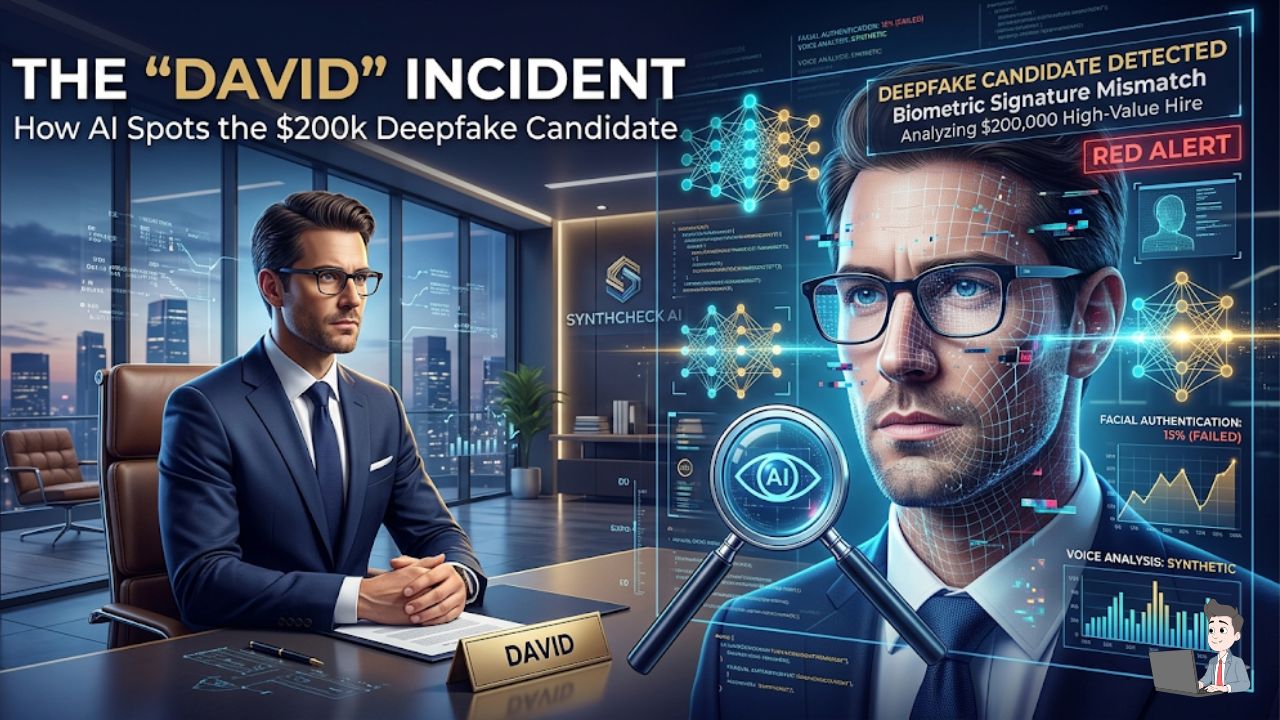
I was chatting with a CTO friend a few months ago, and he told me a story that still gives me chills.
He’d just finished a high-stakes hiring round for a Lead DevOps role—a $200,000-a-year position. The candidate, “David,” was stellar. On the Zoom call, David was sharp, his coding logic was flawless, and he had that perfect mix of “senior-level confidence” and “team-player humility.”
Two weeks into the job, the red flags started popping up. David never turned his camera on for stand-ups. His GitHub commits looked like they were copy-pasted from a 2022 library. When the security team finally ran a forensic audit on his login packets, they realized the “David” they hired didn’t exist.
They hadn’t hired a person; they’d hired a high-resolution, real-time AI mask operated by a “job farm” halfway across the world. By the time they cut his access, the “Deepfake Candidate” had already mapped their internal network and was exfiltrating their customer database.
This is the era of Synthetic Identity Fraud. If you’re still relying on standard interview questions, you are leaving the front door wide open. Here is my hands-on guide to spotting the glitch before the offer letter is signed.
Phase 1: The Mechanics of the “Laptop Farm”
To beat the deepfake, you have to understand the infrastructure behind it. This isn’t just one guy in a basement; it’s a “Mule” system designed to bypass every standard HR filter.
- The Domestic Proxy: The organization pays a “facilitator” (a Mule) in the U.S. or U.K. to host a laptop in their home. When the candidate logs into your VPN, the IP address looks perfectly domestic.
- The Face-Swap: The operator sits in a low-cost region and uses software like DeepFaceLive to overlay a stolen or AI-generated face onto their feed in real-time.
- The Objective: While the salary is a bonus, the real money is in Insider Access. Once they have an active employee badge, they can deploy ransomware from the inside—which is worth millions.
Phase 2: How AI “Sees” the Glitch
Even the best 2026 deepfakes have “digital tells.” While humans are wired to believe what they see, forensic detection looks at the raw pixel data and packet timing.
1. The “Neck and Collar” Boundary
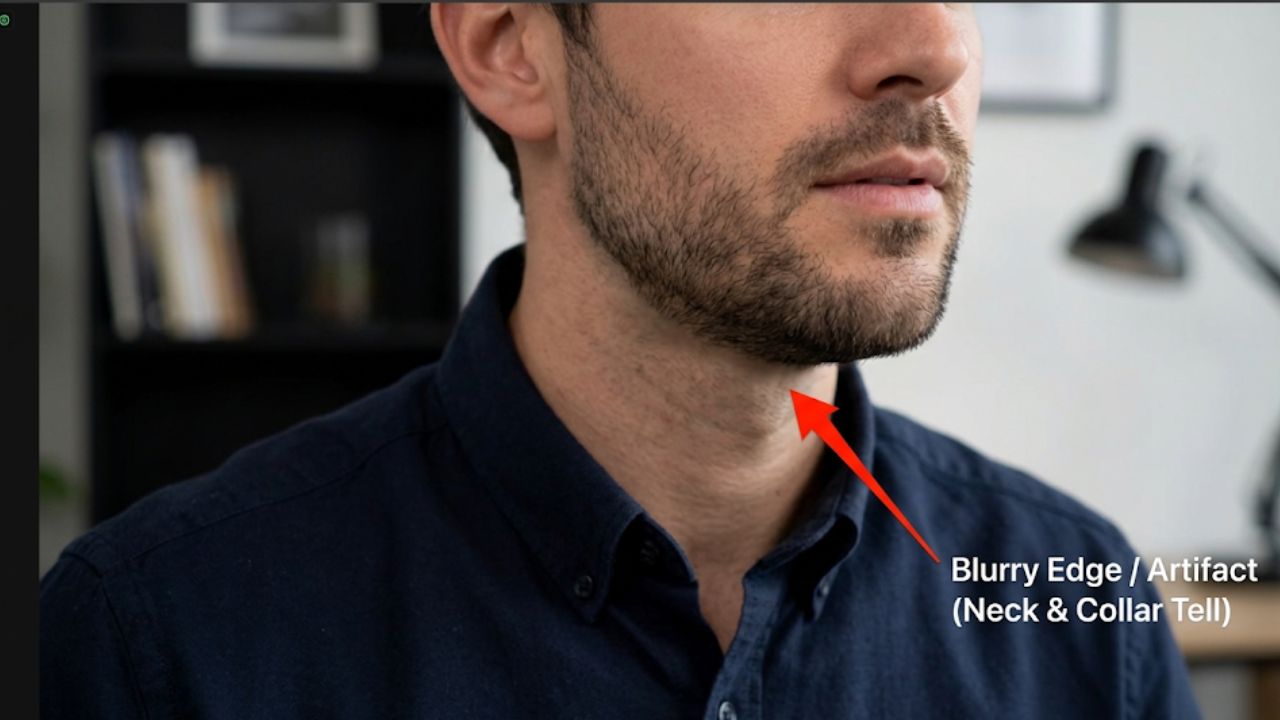
Deepfake algorithms excel at eyes and mouths but struggle with boundaries. The AI “mask” usually terminates along the jawline.
- The Tell: Look for “edge blurring.” If the candidate moves their head quickly and the collar of their shirt seems to “melt” into their skin for a micro-second, you’re looking at a synthetic overlay.
2. Lip-Sync Latency
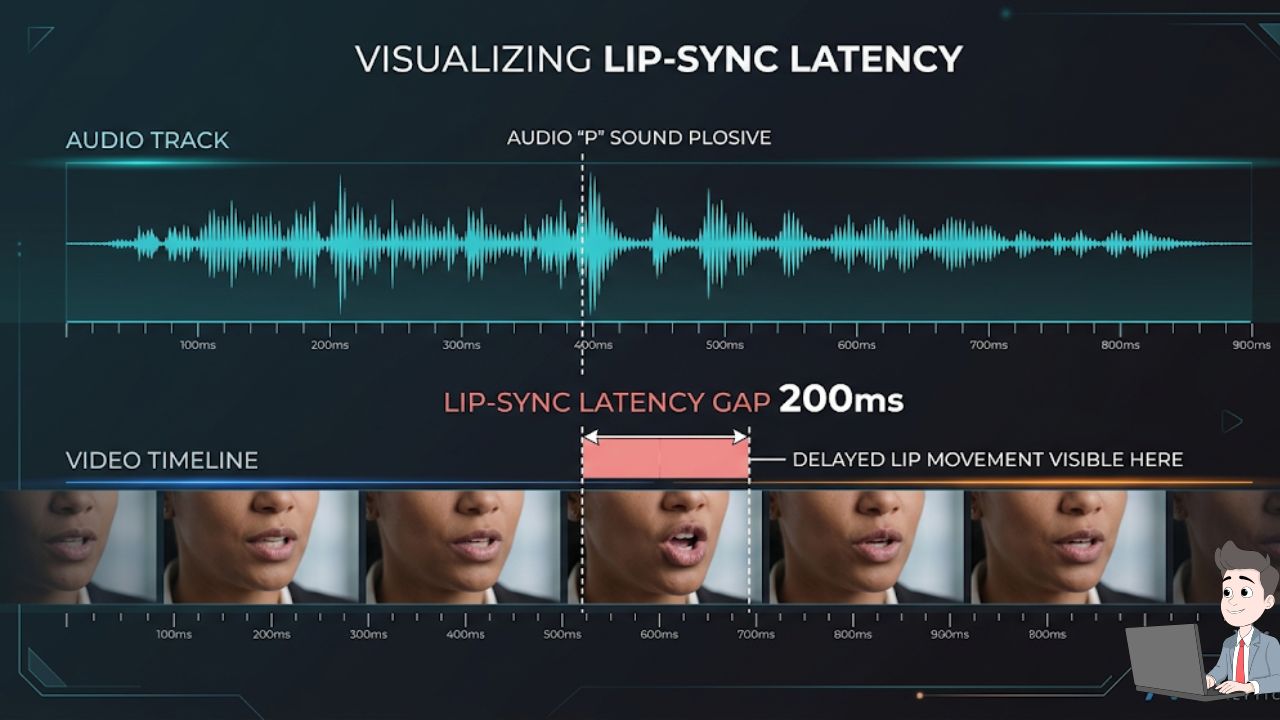
Rendering a deepfake in real-time requires massive GPU processing. This creates a tiny, mathematically consistent lag.
- The 200ms Rule: In a natural call, network lag is random. In a deepfake, the latency between a “plosive” sound (like ‘P’ or ‘B’) and the lip movement is fixed. If the sound consistently emerges 200 milliseconds after the lips move, it’s an AI processor working overtime.
3. Micro-Expression “Dead Zones”
Real humans have involuntary movements: pupil dilation, eyelid flutters, and “micro-twitches” around the eyes.
- The Flaw: Deepfakes often have “Dead Eyes.” The mouth might be smiling, but the orbicularis oculi muscles (the ones that cause crow’s feet) stay perfectly still.
Watch this fascinating breakdown by digital forensics expert Dr. Hany Farid on why AI struggles to replicate the physics of the real world, and how structural acoustic and visual anomalies give away a deepfake.
Phase 3: The “Human Turing Tests” (Recruiter Playbook)
You don’t need a million-dollar security suite to catch a fake. You can break most real-time algorithms with these simple, slightly awkward requests.
Test 1: The 90-Degree Profile Check
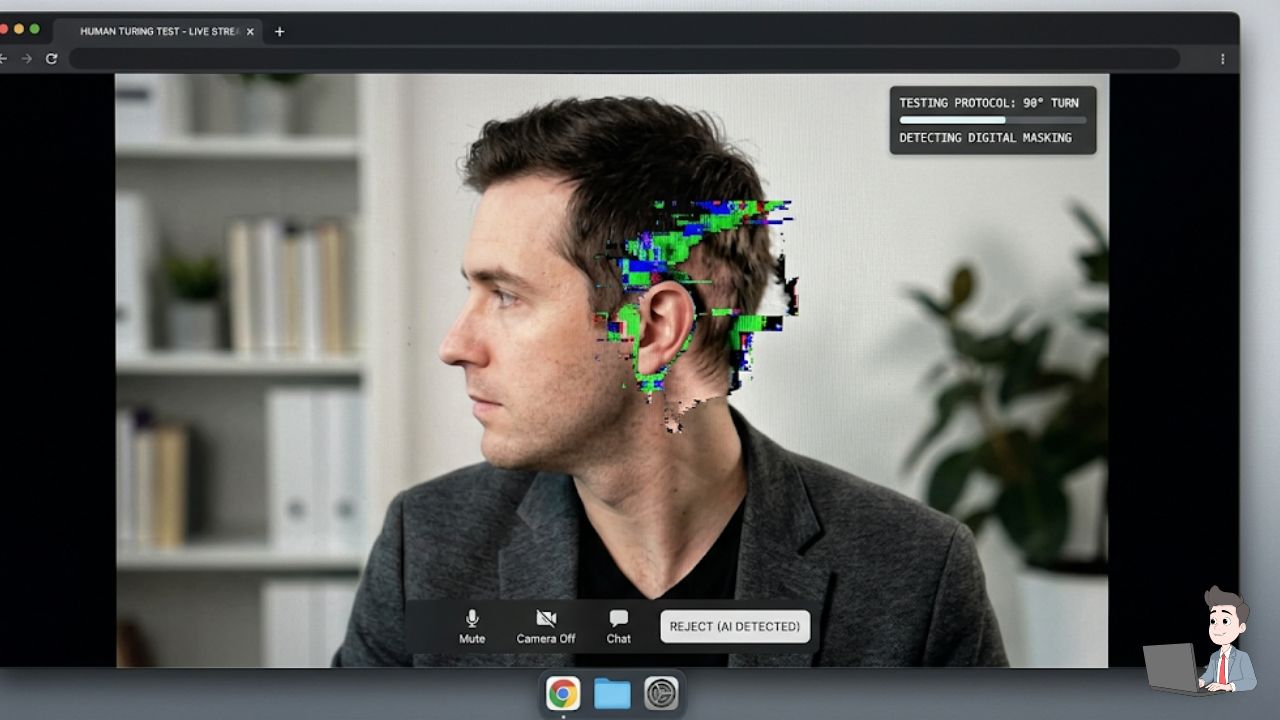
- The Ask: “I’m checking your audio setup. Can you turn your head 90 degrees to the left and look at the wall for five seconds?”
- The Result: Most deepfake models are trained on front-facing data. A “mask” will often snap, flicker, or disappear when the operator turns to a sharp profile view.
Test 2: The Hand-Face Occlusion Test
- The Ask: “Could you wave your hand in front of your face for a second? I think your video is lagging and I want to see the motion blur.”
- The Result: Deepfakes struggle with objects crossing in front of the face. If the hand passes “behind” the digital skin, or the face “tears” as the fingers move across the eyes, you’ve caught them.
Phase 4: Unique Value – The Network Forensics Layer
Most articles stop at “video tells.” But sophisticated farms use “Clean” video. To solve the problem at the root, you must look at the Network Packets.
TTL (Time to Live) Analysis
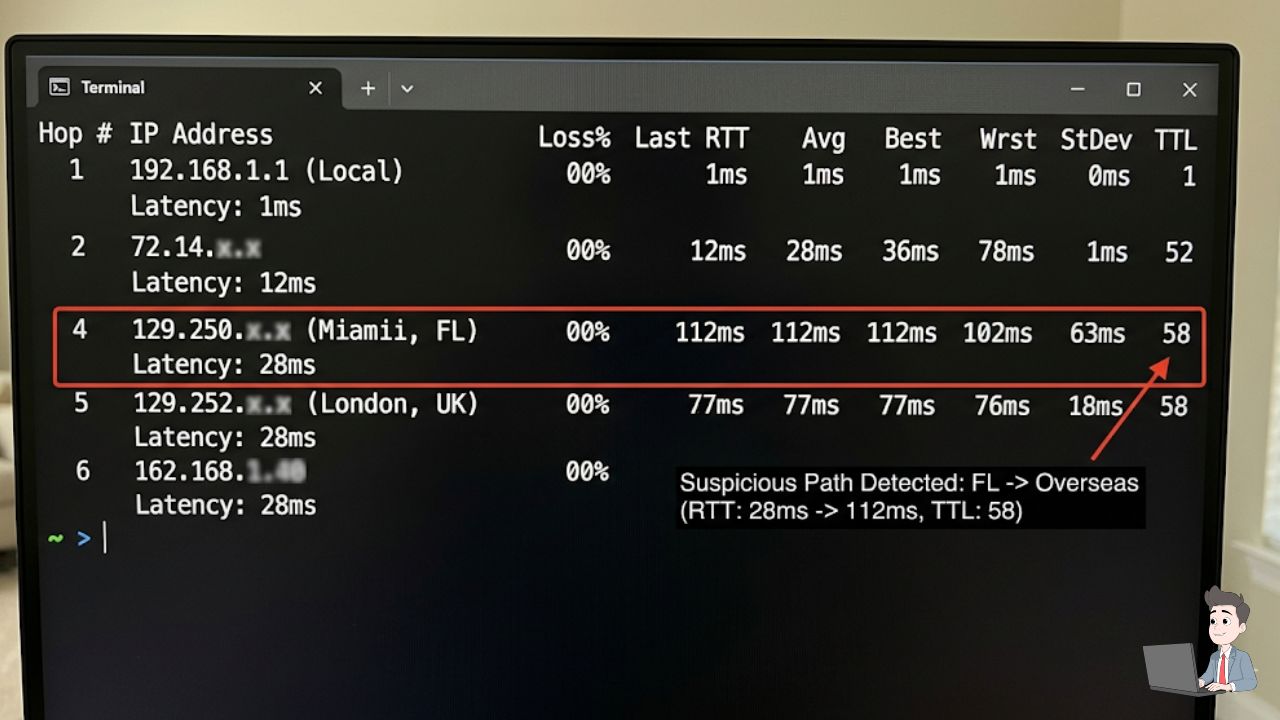
Every data packet has a “Time to Live” (TTL) value that decreases as it passes through different routers.
- The Discovery: If a candidate claims to be in Florida, their packets should only hop through a few domestic routers. If the TTL value suggests the packet has traveled halfway across the globe before hitting the “Domestic Proxy” laptop in Florida, the candidate is a ghost.
The “Environmental Noise” Check
A real home office has a specific acoustic signature.
- The Tell: AI voice changers often strip out all background frequencies. If a candidate is in a “perfectly silent” void where even their own breathing or the sound of their keyboard is digitally smoothed, they are likely using a voice-conversion filter.
Phase 5: Solving the “Ghost Resume” Problem
I’ve learned to be extremely skeptical of “Flawless” resumes from people with zero digital footprint. Use these Social Graph checks:
- Mutual Connections: If they spent five years at Amazon but have zero mutual connections with actual Amazon employees in your network, it’s a red flag.
- The Metadata Audit: If they send a “Portfolio PDF,” check the properties. If the “Author” of the document isn’t the candidate, but a known freelancer from an overseas job board, the identity is stolen.
- Active Liveness Platforms: Move beyond Zoom. Use platforms like Veriff or HireVue that require candidates to follow a moving dot on the screen with their eyes. A face-swap cannot react fast enough to these randomized challenges.
Final Thoughts: Weird vs. Hacked
We are entering a period where a “face” and a “voice” are no longer proof of identity. The goal isn’t to be paranoid; it’s to be professional.
Legal & Accessibility Note: When performing “Turing Tests,” ensure you apply them consistently to all candidates to avoid bias. Be mindful of candidates with disabilities who may have different motor or speech patterns.
Don’t be afraid to ask someone to turn their head. A real candidate will think you’re a bit weird; a fake candidate will be terrified. I’ll take “weird” over “hacked” any day of the week.
Security Disclaimer: This article is for educational purposes. Synthetic identity fraud and deepfake technology are evolving rapidly. Always consult with a cybersecurity professional and your legal/HR department to ensure your hiring practices remain compliant with local labor laws and privacy regulations.
About the Author: Olivia is a digital entrepreneur and the founder of Profit Shield AI. She specializes in AI-driven business automation and cybersecurity workflows, helping companies protect their revenue and their infrastructure from modern digital threats.