
I remember the exact moment I realized my intake pipeline was fundamentally broken.
It was last summer, and we had just launched a beautifully optimized ad campaign at Profit Shield AI. The numbers looked fantastic. I was sitting at my desk, sipping a fresh cup of coffee, when a notification pinged on my screen: “New Inbound Enterprise Lead: Budget $25,000.”
I felt an immediate rush of dopamine. But instead of picking up the phone right then, I decided to finish my coffee, reply to two internal Slack messages, and double-check an automation script I was running. Exactly 14 minutes later, I dialed the lead’s number.
It went straight to voicemail.
I followed up with a carefully crafted, manual email 10 minutes after that. No reply. I tried again the next morning. Nothing. Total, absolute radio silence.
A week later, I discovered the truth: that exact lead had signed a contract with a smaller competitor before I had even finished my morning coffee. The competitor hadn’t won because their product was better, or because their price was lower. They won because their response time was 90 seconds, and mine was 14 minutes.
In the modern inbound environment, delaying your response by even 10 minutes is the fastest way to turn hot revenue into a ghost town.
Phase 1: The Brutal Math of Modern Attention
We like to think that B2B buyers are patient. We assume that if someone takes the time to fill out a detailed inquiry form, they are willing to wait a few hours for a thoughtful response.
That is an absolute death sentence today.
Data across thousands of inbound interactions reveals a terrifying drop-off known as the 5-Minute Cliff. If you attempt to contact a lead within 5 minutes of submission versus waiting just 10 minutes, your chances of successfully qualifying that prospect drop by a staggering 400%.
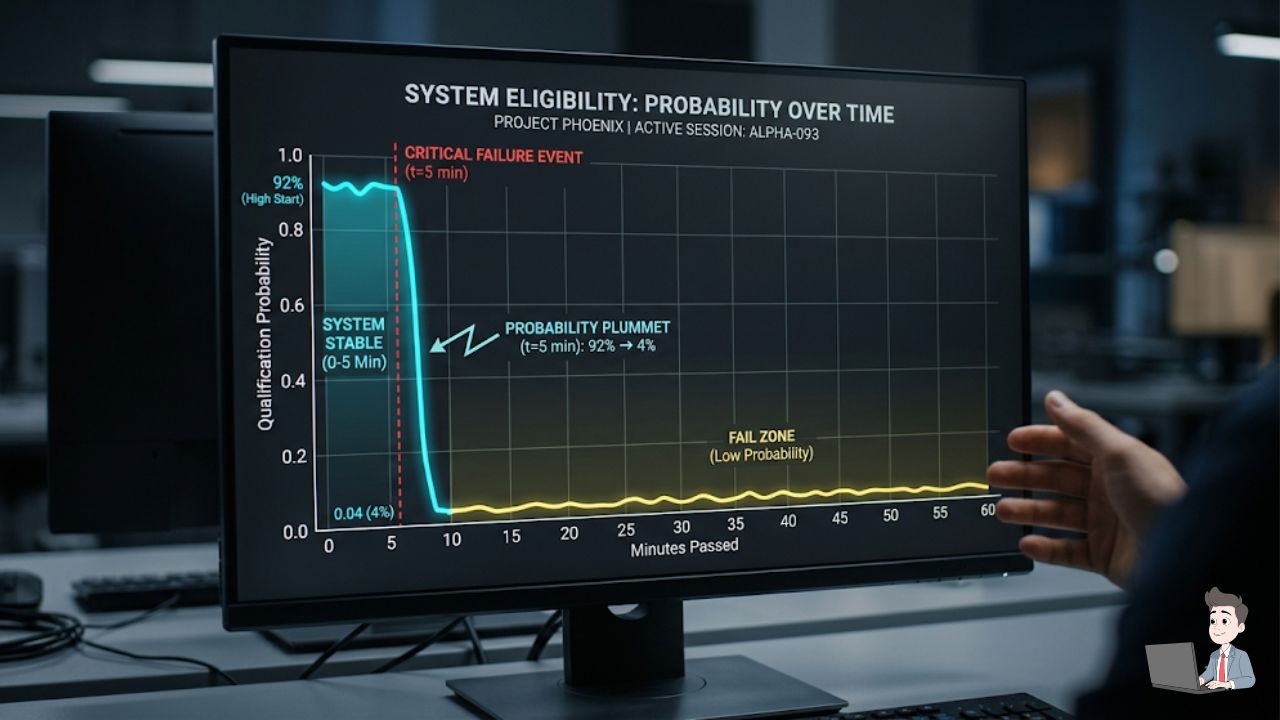
Think about the psychology of a buyer. They have five tabs open. They are feeling the pain of their problem right now. They fill out your form, and while they are waiting, they click the next tab and fill out your competitor’s form too.
The vendor that responds first doesn’t just get a head start; they effectively close the door on everyone else. Wait 20 minutes, and you’ve transitioned from a helpful savior to an annoying cold call.
Phase 2: Decoding the Funnel Ratios
To diagnose a dry spell, you have to look at your pipeline mathematically. Let’s look at the baseline benchmark for a healthy automated funnel: the 10-3-1 Ratio.
- 10 Inbound Leads hit your ecosystem.
- 3 Conversations are generated (Qualified Prospects).
- 1 Closed Deal is secured (Paying Customer).
If you are generating 50 leads a month and only closing 1 or 2 deals, you don’t necessarily have a “closing” problem. You have a baseline velocity issue. The leads are cooling off in the gap between the form submission and the first touchpoint, causing your conversion rate from “Lead” to “Conversation” to crater.
To see exactly how much revenue this delay is costing you, use this interactive calculator to map out the financial impact of your current response time.
Phase 3: Building a “Speed-to-Lead” Architecture
You cannot solve a machine-speed problem with human reflexes. If you rely on an intake manager to manually monitor an inbox and dial a number, you will miss the 5-minute window every single time.
To consistently hit a sub-2-minute response time 24/7, you must build an automated workflow that bridges your web forms to your communications infrastructure.
Step 1: The Instant Contextual Text (Minute 1)
The second a webhook fires from your landing page (via HubSpot, Typeform, etc.), an automated, highly personalized SMS should trigger via an API platform like Twilio or OpenPhone.
- The Trap: Do not send a generic auto-response like: “A representative will review your request within 24 hours.” That explicitly tells the buyer to keep shopping.
- The Winning Script: “Hey [First Name], saw you just checked out our automation framework. I’m pulling up your site details now—do you have two minutes for a quick introductory call right now?”
Step 2: The Parallel Email Resource (Minute 2)
Simultaneously, feed the lead data into your email sequencing engine (like Instantly.ai). Send a short, single-link email providing immediate value related to the exact problem they selected on your form. Include a clean link to a tracking page so you can monitor if they click it in real-time.
Step 3: The “Text-to-Call” Telephony Routing (Minute 3)
If the prospect replies “Yes” to your automated SMS, use an automation layer like Zapier or Make.com to trigger an internal phone route.
The software dials your sales rep’s phone first. When the rep picks up, a text-to-speech voice whispers: “Inbound lead from John Smith. Press 1 to connect instantly.” The moment the rep hits 1, the system patches the call through to the prospect. To the buyer, it feels like white-glove service; in reality, it is cleanly orchestrated code.
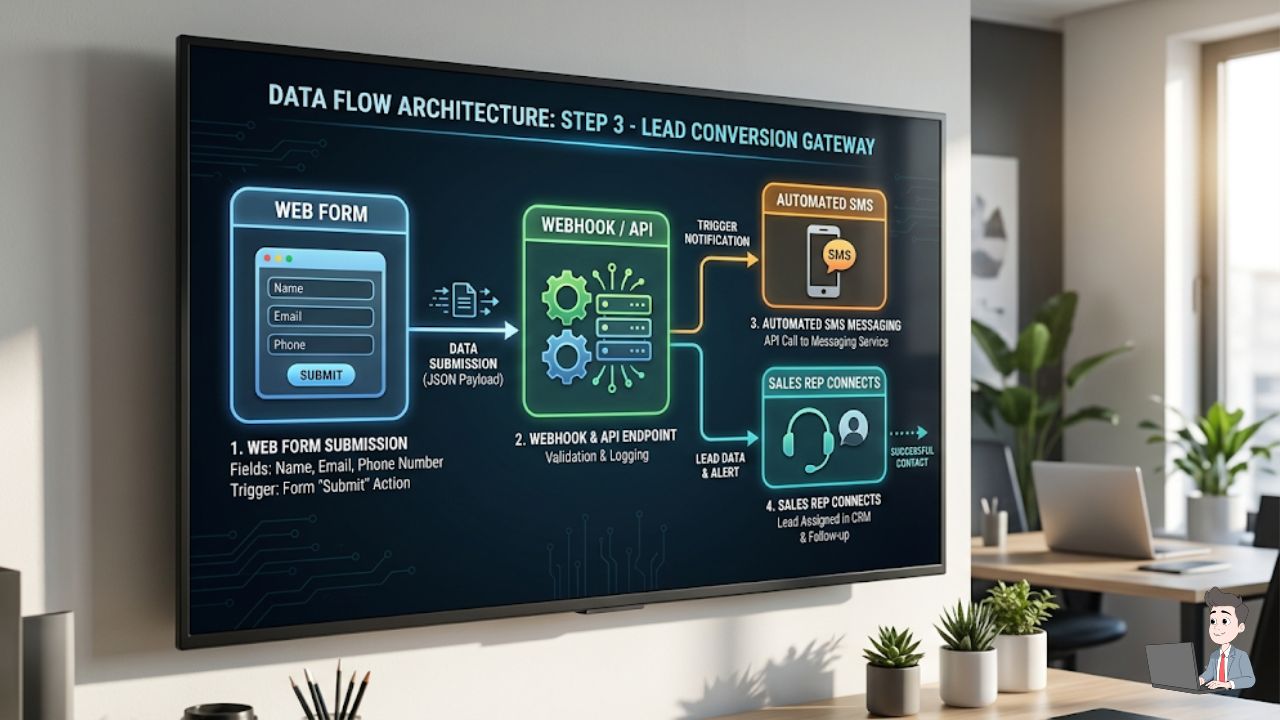
If you want to see exactly how this routing is built, watch this 12-minute technical walkthrough. It shows you how to use Zapier to connect an inbound web form directly to a voice API, allowing you to hit that critical sub-2-minute response window completely on autopilot.
Phase 4: The 3-3-3 Persistence Strategy
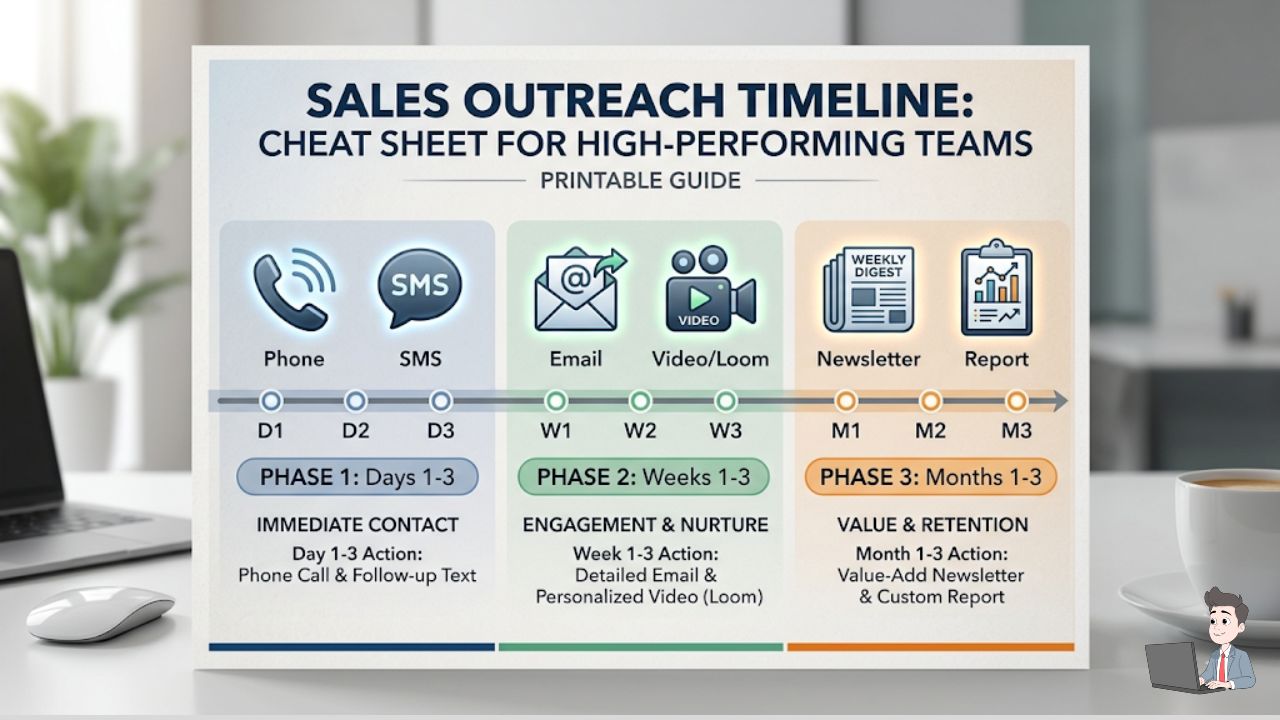
What happens if you hit them within two minutes, but they still don’t answer? Most reps try once, leave a voicemail, and mark the lead as “Unresponsive.” That is an absolute waste of ad spend.
Instead, deploy a systematic 3-3-3 Rule to manage the follow-up without turning into a high-pressure stalker.
| Timeline | Action Required | The Objective |
| First 3 Days | 1 Phone Call + 1 SMS Daily | Immediate Engagement: Catch them while the pain point is still acute. Keep messages casual (e.g., “Tried giving you a quick ring, let me know a better window to sync!”). |
| Next 3 Weeks | 1 Value-First Email Weekly | Authority Building: Drop the calls. Send industry reports, updates, or short Loom videos highlighting something helpful for their domain. |
| Next 3 Months | 1 High-Level Touchpoint Monthly | Top-of-Mind Maintenance: You aren’t asking for a meeting; you are simply waiting for their internal timing to align so you are the obvious choice. |
Common Velocity Killers to Eradicate
- The Manual Notification Bottleneck: If your intake relies on an
info@yourdomain.cominbox that a manager checks three times a day, you are bleeding cash. Every form needs a direct webhook connection to internal SMS alerts. - Forgetting Timezone Normalization: If a lead from London hits your site while your New York team is asleep, an automated text saying “Let’s call right now” looks robotic. Your automation stack must include conditional logic to check IP locations and route off-hours traffic to a calendar booking link instead.
- The 70/30 Listening Failure: When speed gets you on the phone, do not feature-dump. The prospect should hold the floor 70% of the time describing their blockers. Your team should spend 30% of the time asking sharp, diagnostic questions.
The Bottom Line
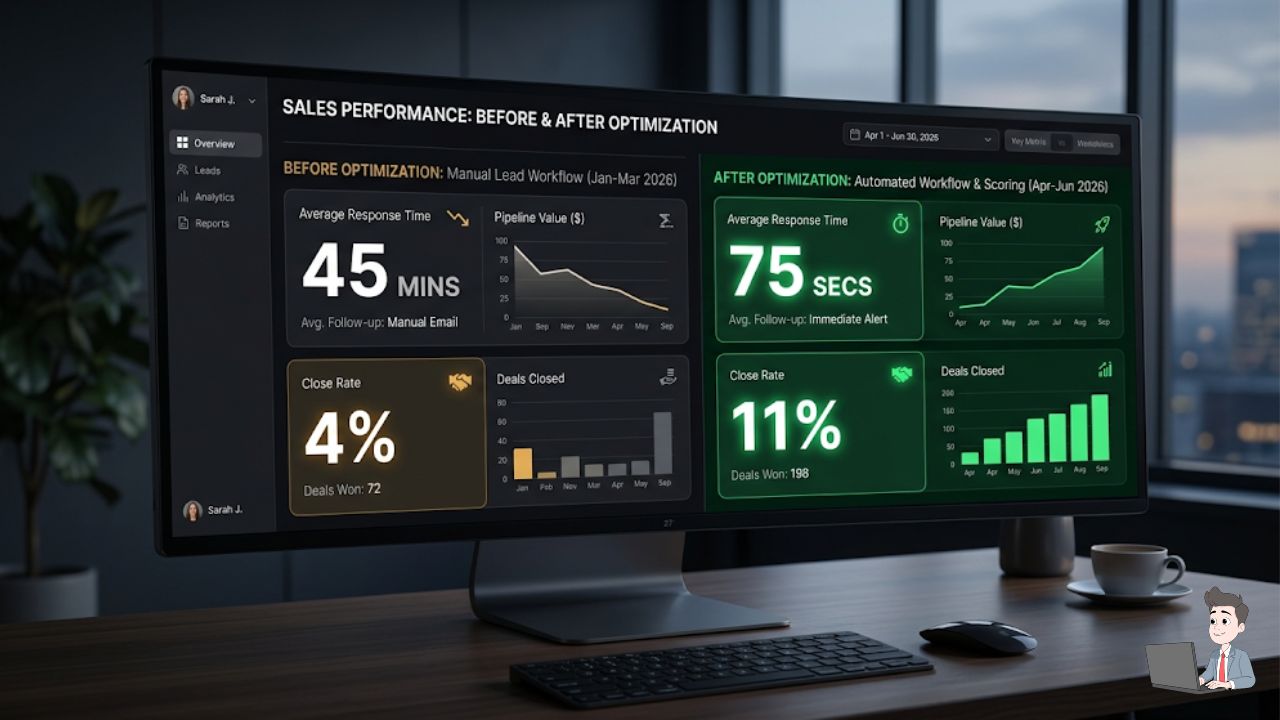
Two months ago, we implemented this exact text-to-call routing architecture for a high-ticket B2B provider. Within 30 days of dropping their average response time down to 75 seconds, their booking rate doubled, and their overall close rate climbed to 11%. They didn’t spend an extra dime on traffic.
Stop looking for complex market excuses when your sales numbers drop. Before you redesign your website, look at your response logs. Set up your webhooks, lock in your automation logic, and beat your competition to the phone.
Operational Disclaimer: This article is for educational purposes. When configuring automated SMS marketing, ensure your workflows comply with local telecommunications regulations, such as A2P 10DLC registration in the United States, to prevent carrier blocking.
About the Author:
Olivia is an enterprise automation specialist and the founder of Profit Shield AI. She designs secure operational workflows and AI-driven sales protocols, helping businesses eliminate backend friction and scale revenue predictably.