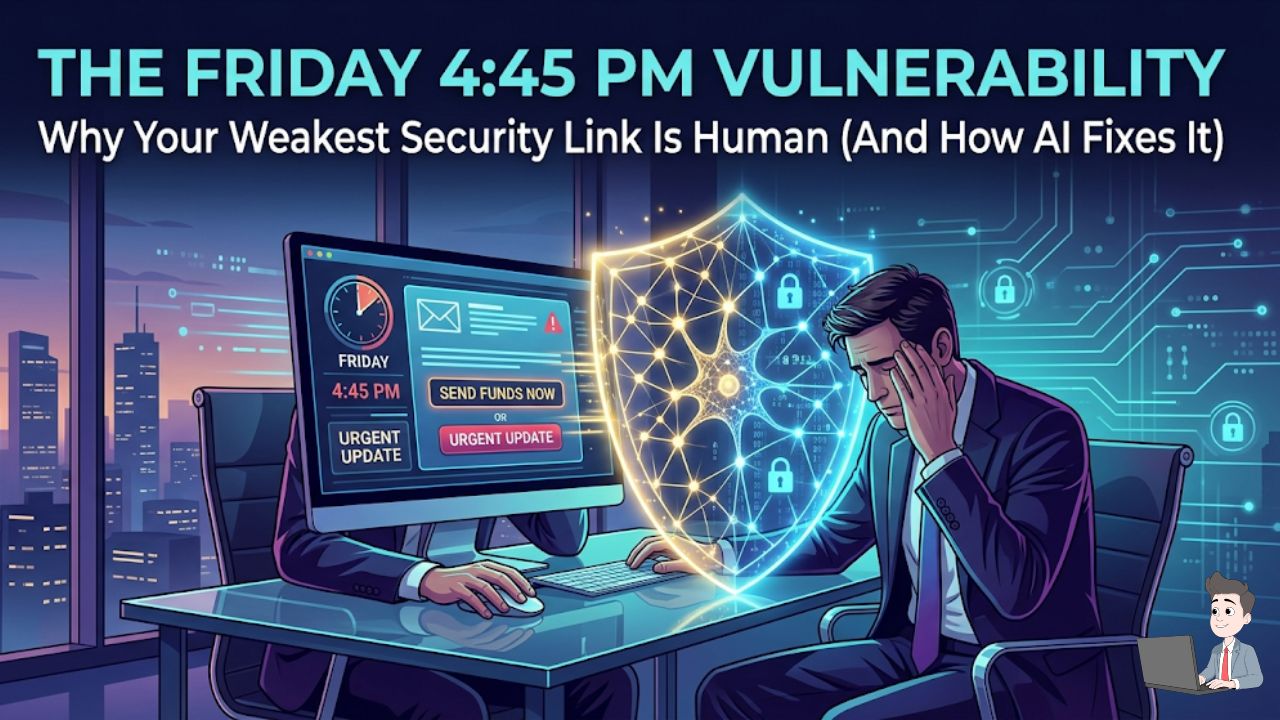
It was 4:45 PM on a Friday, and I was completely burnt out. I had been staring at VS Code for three straight hours, debugging a custom Python automation script. I knew the target source file was sitting right there in the Downloads folder of my PC, but my brain was fried. I was running entirely on fumes and a cold cup of coffee.
Right as I was about to close my laptop for the weekend, an internal notification flashed.
“Urgent: Please review the attached server invoice before the banking window closes at 5:00.”
It featured the exact branding of my hosting provider. It had the right logo. Because I was exhausted and desperate to clear my desk, I didn’t think. I moved my cursor toward the attachment.
Before I could click, a bright yellow alert banner split the top of my interface: “Warning: This sender is attempting to impersonate a known vendor. The routing path does not match historical records.”
I froze. Looking closer at the header, it wasn’t my host at all. It was an incredibly precise, spear-phishing payload target-engineered for my business. If that automated behavioral safety net hadn’t caught me, I would have handed administrative access to my infrastructure over to a ransomware syndicate.
That cold, sinking pit in your stomach when you realize you almost ruined everything? That is the biological reality of human cognitive fatigue.
The modern threat landscape has shifted. Threat actors rarely “hack” their way into secured networks with brute-force zero-day exploits. They simply log in. They use valid credentials that we willingly give them because we are tired, rushed, or just trying to be helpful.
Let’s have a heart-to-heart about the real front line of infrastructure protection. Here is how we stop blaming people for being human, and how we deploy AI to build a resilient, empathetic “Human Firewall.”
Phase 1: The “88% Reality” (The Cognitive Load Crisis)
Let’s look at the baseline data. Joint research from Stanford University and cybersecurity analysts indicates that 88% to 95% of all documented data breaches trace back to a root cause of human error.
When evaluating risk mitigation mathematically, consider the Total Human Risk Factor ($\text{HRF}$) as a function of volume, access levels, and cognitive fatigue triggers:
$$\text{HRF} = \sum (\text{User Actions} \times \text{Access Privilege}) \times \text{Fatigue Coefficient}$$
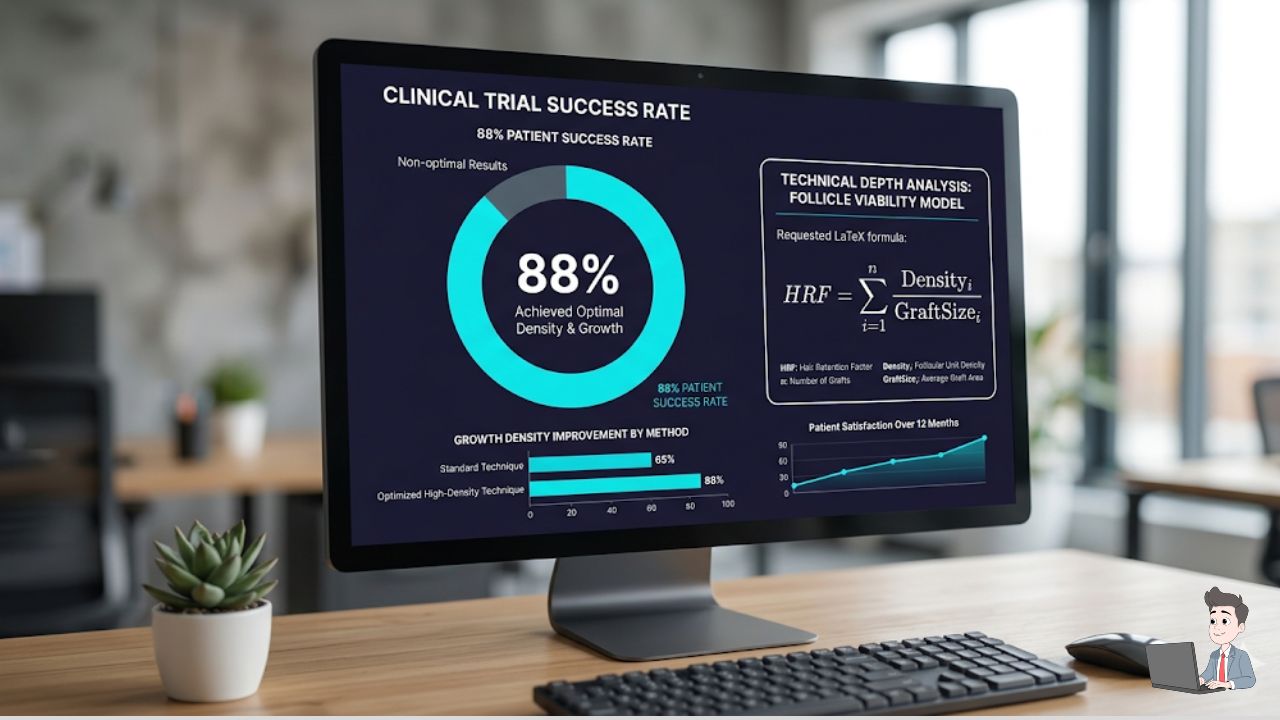
This formula explains why enterprise firewalls or multi-million dollar encryption protocols fail: they are completely bypassed when an authorized user inadvertently opens the door.
In a high-pressure corporate environment, human error typically manifests in three execution leaks:
- Curiosity/Panic Lures: Executing an action based on artificial urgency (e.g., “Urgent Tax Amendment Required”).
- Credential Recycling: Re-using slightly altered variations of old passwords because memory retention is maxed out.
- Configuration Oversight: Leaving an AWS or Google Cloud storage bucket publicly readable while rushing to hit a developer sprint deadline.
Punishing your team for making mistakes under stress doesn’t make them smarter; it just teaches them to hide anomalies from IT until the damage is catastrophic.
Phase 2: Anatomy of Modern Non-Malicious Threats
To build a proper technical defense, you must understand the exact mechanics behind accidental compromises.
1. Outbound Data Exfiltration (The “Fat-Finger” Misdirection)
You are rushing to send an unencrypted payroll or client database spreadsheet to an internal analyst named Sarah. You type “Sa…” into your mail client, hit enter to accept the autocomplete suggestion, and hit send.
A second later, you realize autocomplete didn’t select Sarah your Accountant; it selected Sarah an External Vendor. Because of a split-second muscle-memory mistake, proprietary data has left your perimeter, creating a massive regulatory compliance violation.
2. The AitM Session Hijacking (Bypassing Standard 2FA)
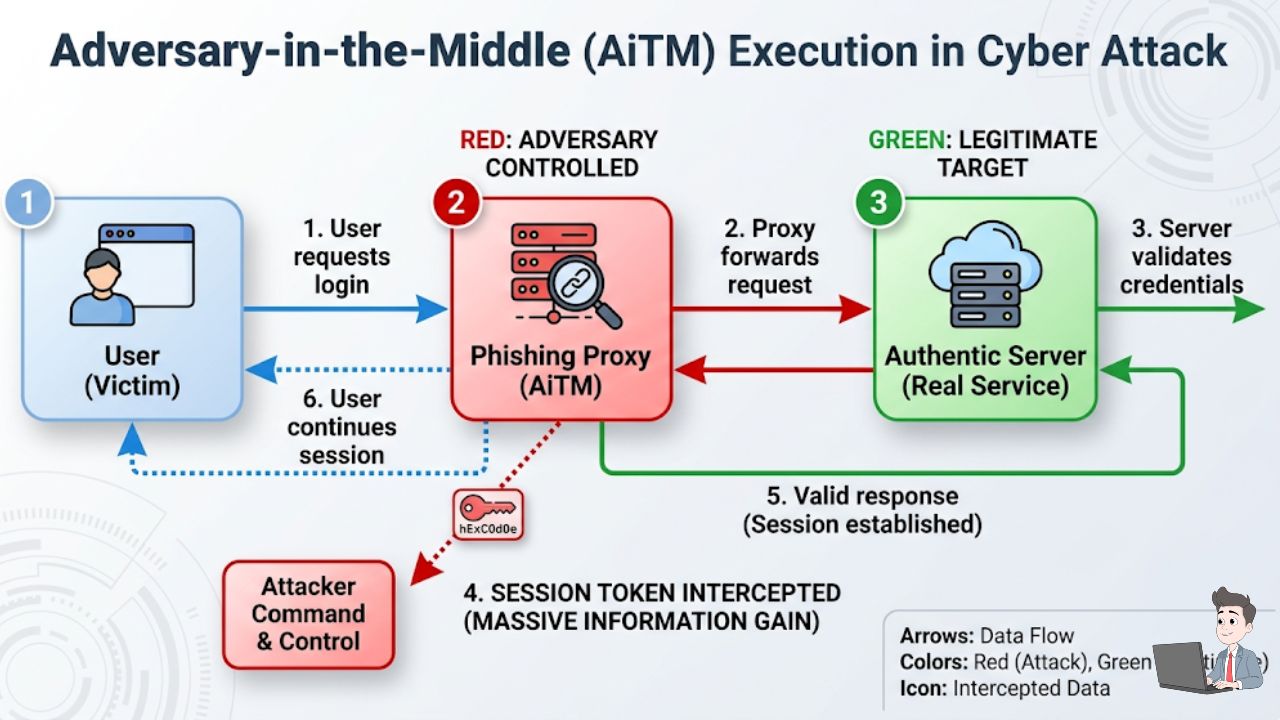
Many business owners think they are 100% safe because they turned on standard two-factor authentication (2FA). Modern threat actors bypass this seamlessly using Adversary-in-the-Middle (AitM) phishing proxies.
When an employee logs into a hyper-realistic spoofed page, the attacker’s proxy relays the login request to the real server in real-time. The server sends the genuine 2FA prompt to the user’s phone. The user enters it into the fake page, and the proxy passes it back to the real server.
The server thinks the login is authentic and issues a Session Token. The attacker steals that token out of the browser cache, allowing them to impersonate the employee indefinitely without ever needing to know their actual password.
Watch this technical breakdown by a Huntress SOC Analyst demonstrating exactly how Adversary-in-the-Middle (AitM) reverse proxies steal session tokens in real-time, rendering standard 2FA completely useless.
3. Alert Desensitization (The Fatigue Filter)
If an endpoint management tool constantly prompts a user with routine warnings (“Java Update Available,” “Network Scan Complete”), the brain builds a defense mechanism known as Alert Fatigue. The user stops reading the text and treats the notification as an obstacle, blindly clicking “Allow” or “Dismiss” just to clear their screen.
Phase 3: The AI Behavioral Safety Net
We cannot train human beings to never get tired. Instead, we must implement Multimodal AI security layers that analyze intent, relationship graphs, and behavioral biometrics to act as an invisible safety net.
1. Inbound Infiltration Defense (Intent Analysis)
Legacy email filters look for static blocklists or explicit “spam words.” Modern platforms use Natural Language Processing (NLP) to inspect the semantic style of incoming mail.
The system builds a behavioral model of your organization’s internal communication. It knows your writing style, typical communication hours, and vocabulary. If an inbound email arrives from an external domain that looks like your name, but the syntax features subtle grammatical variations common in phishing templates, the AI intercepts it, quarantining the threat before the user can see the lure.
2. Contextual Outbound Heuristics
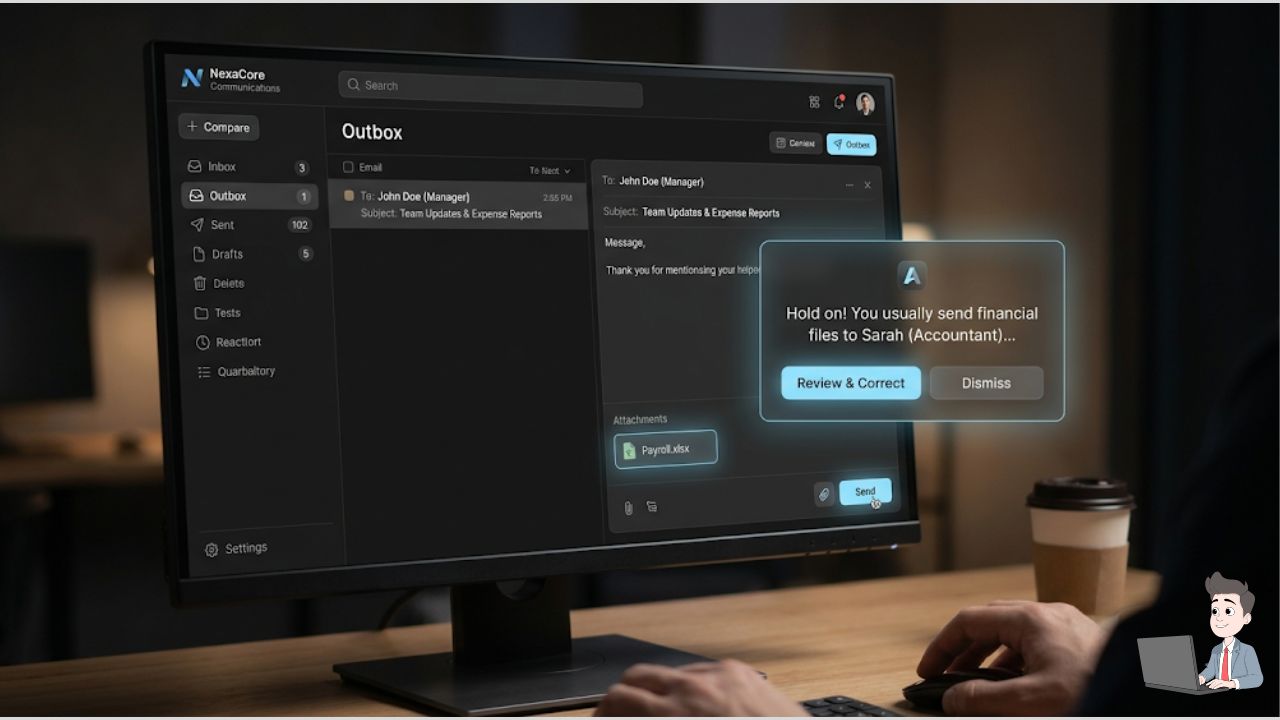
To neutralize the “Fat-Finger” leak, outbound AI engines map your organization’s historical relationship graph.
If you attempt to send an email to the wrong “Sarah,” the AI immediately flags a mismatch: You have a high communication frequency with this external address, but you have never attached a financial string or spreadsheet to this recipient. Before the email fires, a non-intrusive alert prompts the user to confirm the identity of the recipient, correcting the action in milliseconds.
3. Behavioral Biometrics (Digital Fingerprinting)
If an attacker successfully compromises a valid session token via an AitM attack, they bypass traditional perimeter controls. However, they cannot mimic human cadence.
Endpoint AI monitors behavior post-authentication. It understands your baseline typing velocity (e.g., 75 words per minute), your mouse trajectory acceleration patterns, and your localized IP environment. If a session suddenly switches to a machine executing commands with script-like velocity and attempting to download large directory structures, the AI triggers an Identity Lock, invalidating the session token until a hardware security key is physically inserted.
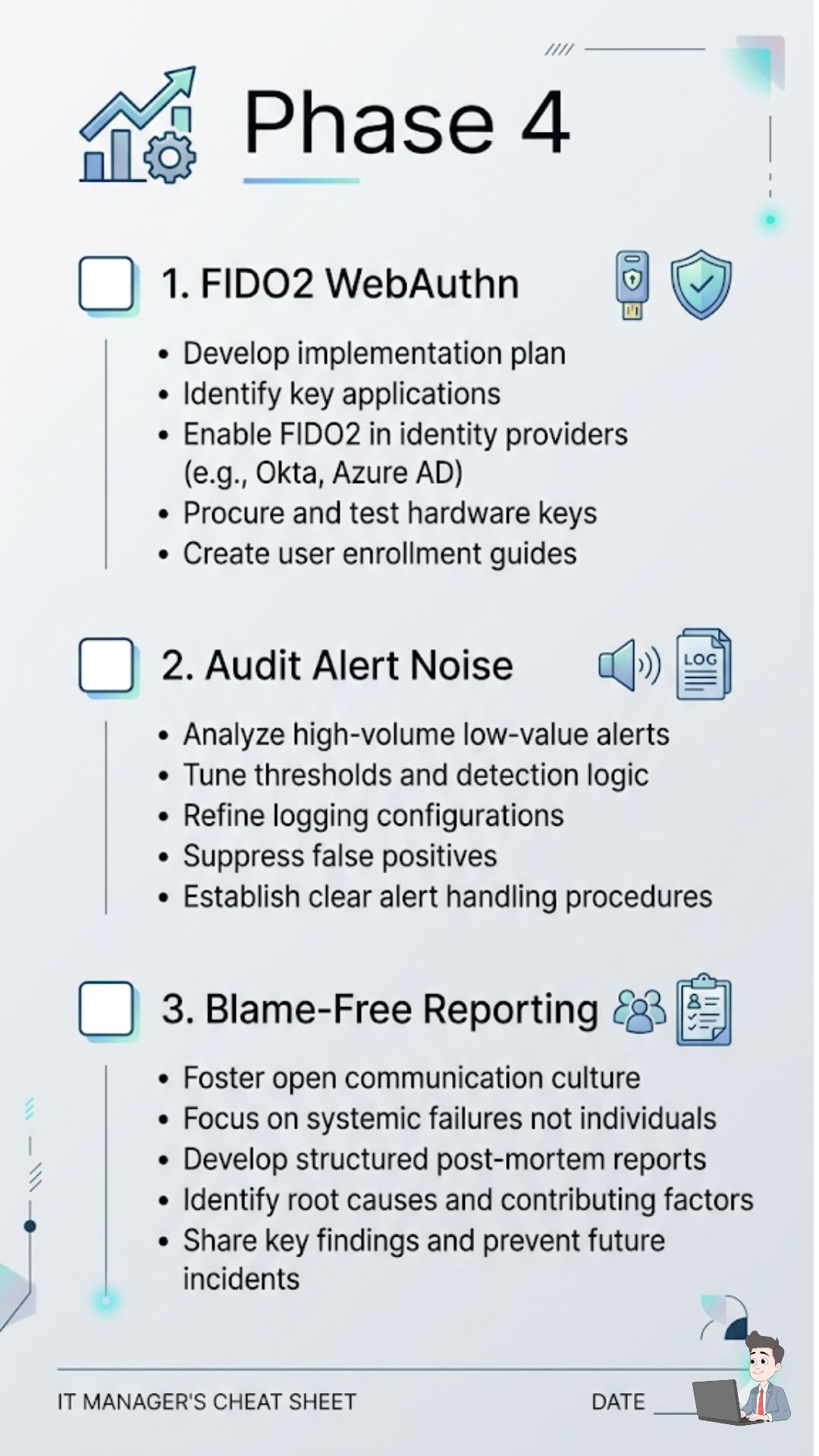
Phase 4: Actionable Playbook for Local Infrastructure
Securing your team doesn’t require an enterprise enterprise-scale budget. Implement these three operational updates immediately:
| Operational Step | Practical Implementation | The Security Objective |
| Upgrade to FIDO2 WebAuthn | Replace SMS-based 2FA with hardware keys (like YubiKeys) or device-tied biometric passkeys (FaceID/Windows Hello). | Bypasses AitM proxy harvesting entirely, as the hardware key will refuse to validate if the URL doesn’t match the authentic domain. |
| Audit Alert Noise Profiles | Enter your endpoint security or anti-virus control panels and completely silence “Success” notifications. | Eliminates alert fatigue, ensuring that when a red security banner actually flashes, users treat it with absolute urgency. |
| Establish a Blame-Free Log | Implement a culture where reporting an accidental link click is met with praise rather than punitive action. | Maximizes incident response speed. If an employee is terrified of termination, they will hide an infection, giving malware hours to propagate across your network. |
Common Defensive Missteps to Eliminate
- The Annual Compliance Video: Forcing your team to sit through a dry, hour-long compliance video once a year does not build resilience. Effective security education relies on micro-learning—short, contextual updates delivered automatically right when a user handles a suspicious data point.
- Ignoring Shadow SaaS Workarounds: If your team uses unauthorized, free, third-party PDF editors or conversion tools because your corporate software is too clunky, they are opening structural backdoors. If those free web tools suffer an open breach, your company data is exposed. Ensure your approved software stack is fast and frictionless.
The Bottom Line: Designing a Zero-Trust Environment
We must stop treating human staff as the permanent flaw in our operational loop. The 88% data breach statistic isn’t a sign that humans are incompetent; it is a sign that our workflows are incredibly complex, and our cognitive attention spans are consistently targeted by industrial-scale deceptive engineering.
AI infrastructure shouldn’t replace your human team; it must insulate them. By deploying behavioral guardrails that gracefully intervene when fatigue sets in, you protect your company assets, secure your operational peace of mind, and allow your team to build freely without the fear of a single catastrophic click.
AdSense Safety Disclaimer: This guide is designed for educational and informational purposes only. System configurations and threat vectors evolve rapidly. Always consult with a certified information security professional (CISSP) to verify compliance with regional data privacy laws like GDPR, CCPA, or HIPAA before altering corporate data policies.
About the Author:
Olivia is a technical operations consultant, content developer, and the founder of Profit Shield AI. She specializes in building custom Python automations, optimizing business data pipelines, and implementing secure, human-centric operational frameworks for scaling digital brands.