
The difference between a great trip and an exhausting one often comes down to homework. A city can look perfectly accessible in marketing photos and still defeat you with one unmarked staircase. Here’s a research routine that works for any destination.
Start with official sources
Begin with the city’s tourism board — many now publish dedicated accessibility guides listing step-free attractions, accessible transport, and beach or trail access. Then check the official public-transit website for its accessibility map, which shows exactly which stations have working elevators. Official sources can be optimistic, so treat them as a starting point, not the final word.
Verify attractions one by one
Don’t trust a generic “accessible” badge. Open each must-see attraction’s own website and look for specifics: step-free entrance, elevator to all floors, accessible restrooms, seating, and whether historic sections are excluded. Then cross-check with recent visitor reviews that mention wheelchairs or access — real experiences beat marketing copy.
- Look for photos of entrances, not just interiors.
- Note the gap between “partially accessible” and your actual needs.
Map it like a local
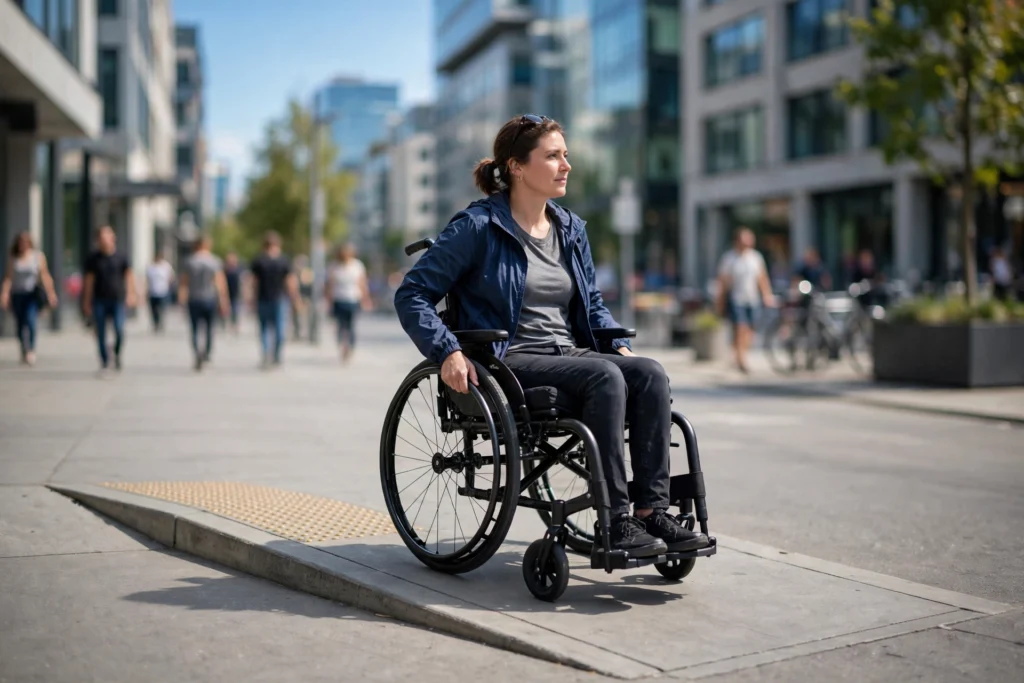
Open Google Maps and switch on the Accessible Places feature, which flags businesses with step-free entrances. Then drop into Street View and virtually walk your key routes: are there curb ramps? Cobblestones? Steep hills between your hotel and the metro? Ten minutes of virtual scouting saves hours of real-world backtracking.
Crack the transport question
Public transit accessibility varies enormously — some systems are fully step-free, others have only a handful of accessible stations. Download the official transit app before you go and favorite the accessible stations. Also research the backup: wheelchair-accessible taxis or ride-hailing options, and their typical wait times. Never assume you can figure it out when you arrive.
Interrogate your hotel
Hotel booking sites’ “accessible room” filter is a starting point, not a guarantee. Email or call the property directly and ask specific questions: roll-in shower or tub with grab bars? Bed height? Doorway widths? Is the accessible room on the same floor as the elevator? Ask for photos of the actual room. A good hotel answers precisely; a vague one is a warning sign.
Plan days with margins
- Fewer stops per day than you think — accessible routes take longer.
- Mark accessible restrooms and rest points along each day’s route.
- Have a plan B for every must-see in case access fails on the day.
Ask people who’ve actually been
Disability travel forums, Facebook groups, and independent blogs hold the details official guides omit — which “accessible” entrance is actually around the back, which taxi company shows up. Ask specific questions and mention your exact needs; vague questions get vague answers.
Match your research to your access needs
A wheelchair user, a blind traveller and a deaf traveller can research the same city and come home with completely different questions. That is why generic ‘accessible’ labels are so unhelpful. Before you open a single guide, write down the three to five specifics that matter most for you — step-free entrances and turning space, say, or visual alternatives to announcements — and judge every source against that list rather than against a badge.The details worth verifying change with the need. For step-free access, it is doorway widths, lift reliability and the honest state of the pavements between stops. For blind and low-vision travellers, the questions shift: are announcements visual as well as audible, can assistance be booked in advance, and do major venues offer audio description or tactile options? If you are deaf or hard of hearing, check whether tours and venues offer written or captioned alternatives, and whether emergency announcements have a visual channel.If you travel with a medical condition or limited energy, research the quiet variables too: how far apart the sights really are, where the rest points fall, and whether the city’s layout forces long days. A city can be technically step-free and still exhausting if everything sits a mile apart. Plan the distances first and the sights second, and you will rarely be caught out.
The details worth verifying change with the need. For step-free access, it is doorway widths, lift reliability and the honest state of the pavements between stops. For blind and low-vision travellers, the questions shift: are announcements visual as well as audible, can assistance be booked in advance, and do major venues offer audio description or tactile options? If you are deaf or hard of hearing, check whether tours and venues offer written or captioned alternatives, and whether emergency announcements have a visual channel.
If you travel with a medical condition or limited energy, research the quiet variables too: how far apart the sights really are, where the rest points fall, and whether the city’s layout forces long days. A city can be technically step-free and still exhausting if everything sits a mile apart. Plan the distances first and the sights second, and you will rarely be caught out.
Frequently asked questions
How far ahead should I research?
Start when you start pricing flights — accessibility findings can change which neighborhood or even which city you choose.
What if I can’t find access information?
Contact the venue directly. No answer is itself an answer — plan as if it’s inaccessible.
Are there apps that help?
Google Maps’ Accessible Places feature and community maps like Wheelmap are useful supplements, not substitutes for direct verification.
The bottom line
Official guides, attraction specifics, virtual street scouting, transport backups, hotel interrogation, and real traveler reports — run every trip through that checklist and you’ll rarely be surprised.

Planning a trip should be exciting, not a stressful guessing game! I know how frustrating it can be when a place promises it is “accessible” but the reality turns out to be totally different.Here is the best way to do your research so you can feel completely confident before you book:Call instead of clicking: Online booking forms rarely give you the whole picture. It is always best to call the hotel directly and ask the highly specific questions that matter to you—like “Are there any steps from the parking lot to the lobby?” or “Is the shower a true roll-in with grab bars?”. Scout the streets yourself: Use Google Maps Street View to virtually explore the neighborhood, restaurants, and hotel entrances. It is such a lifesaver for spotting surprise curbs, steep hills, or tricky terrain before you arrive. Lean on the community: The absolute best advice comes from fellow travelers who understand exactly what you need. Look up crowd-sourced apps like AccessNow, jump into Facebook groups like the “Accessible Travel Club,” or read blogs by wheelchair users. Seeing a photo of a mobility device in the exact place you want to visit is the best proof you can get. You deserve a vacation where you can just relax and enjoy yourself, so never feel bad about asking a million questions upfront!